Why the sequence matters more than the plating tank
Electroplating is mostly surface preparation. The zinc layer can only be as good as the surface it lands on, and the classic complaints — coating peels, blisters, patchy adhesion, uneven passivate colour — almost always trace back to a preparation step that was too short, skipped, or run in a contaminated bath.
The other thing outsiders underrate is rinsing. Rinses between tanks are not overhead; they are what stops one bath from poisoning the next, and they largely decide whether the conversion film comes out even or blotchy.
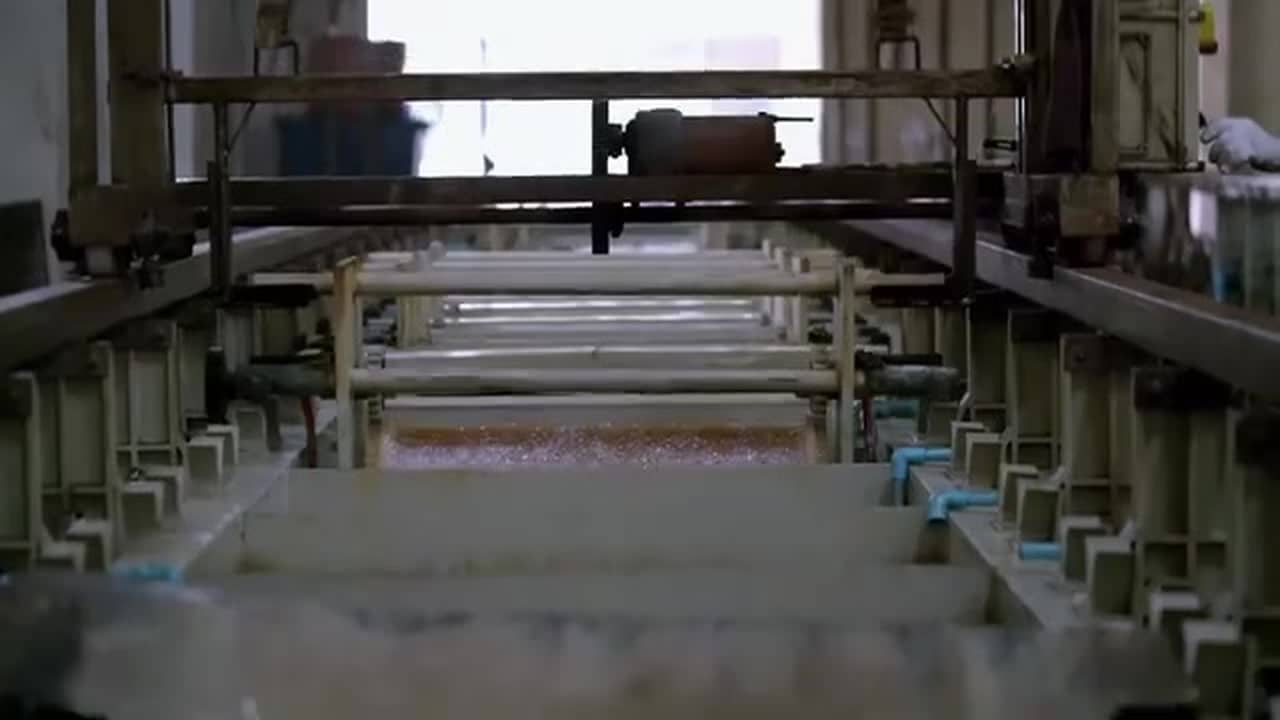
What follows is the sequence a typical zinc line runs. Read it as a map you can walk with your own parts when you visit a plater.
Walking your parts through, tank by tank
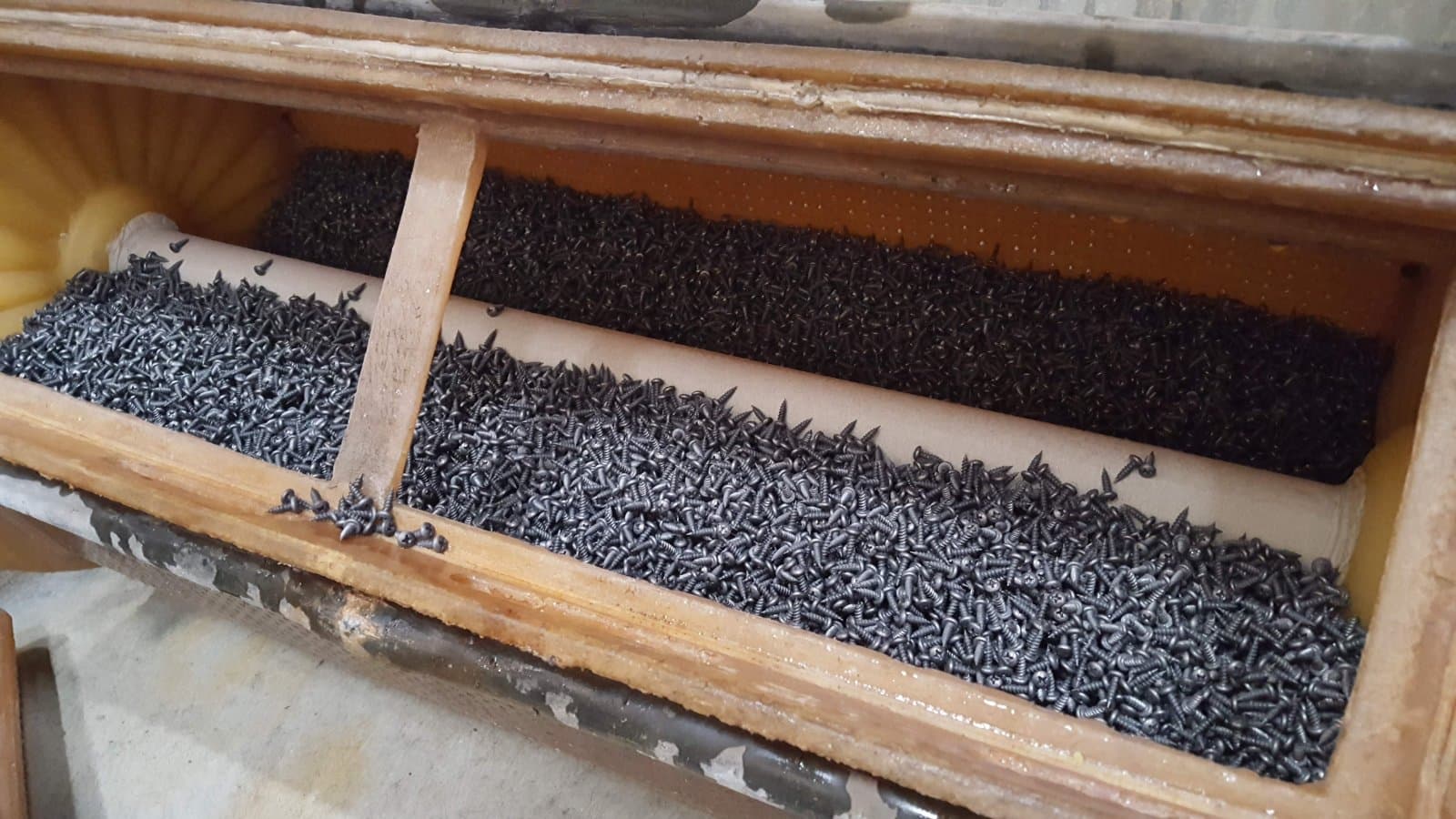
- Loading — bulk fasteners go into a rotating barrel; parts that must not knock into each other, that need a fixed orientation, or that tangle easily go on a rack.
- Soak degreasing — a hot alkaline cleaner lifts forming lubricant, rust-preventive oil and shop soil. Temperature and immersion time are both process parameters, not "dip until wet".
- Electrolytic degreasing — current generates gas bubbles at the surface that scrub off the last thin films. Polarity matters: making the part the cathode generates hydrogen at the part, so lines handling high-strength steel commonly run anodic or periodic-reverse cleaning.
- Rinsing — usually multi-stage counterflow, with a drag-out tank that captures the chemistry carried on the parts.
- Acid pickling — hydrochloric or sulphuric acid removes oxide, rust and scale. Inhibitors limit attack on the base steel and the hydrogen it drives into it. Heat-treated parts carrying scale need this step most and are simultaneously the most vulnerable to it, so dwell time is a control, not a preference.
- Activation / pre-dip — a short, mild acid dip immediately before plating strips the flash oxide formed during rinsing and leaves a surface the deposit can bond to.
- Plating — zinc deposits under a controlled current density, bath chemistry, temperature and time. In a barrel the parts tumble so every face takes its turn near the current contact; thickness distribution depends on geometry, how full the barrel is, and rotation.
- Drag-out plus rinse — recovers zinc solution and keeps it out of the passivation tank.
- Bright dip / acid activation — a brief dip removes zinc smut so the chromate film forms evenly.
- Hydrogen-relief bake — for high-strength or high-hardness parts, this is where it belongs: after plating and before passivation, because chromate films degrade at bake temperatures. When the clock starts and how long the bake runs follow the governing specification (for fasteners, the ISO 4042 family).
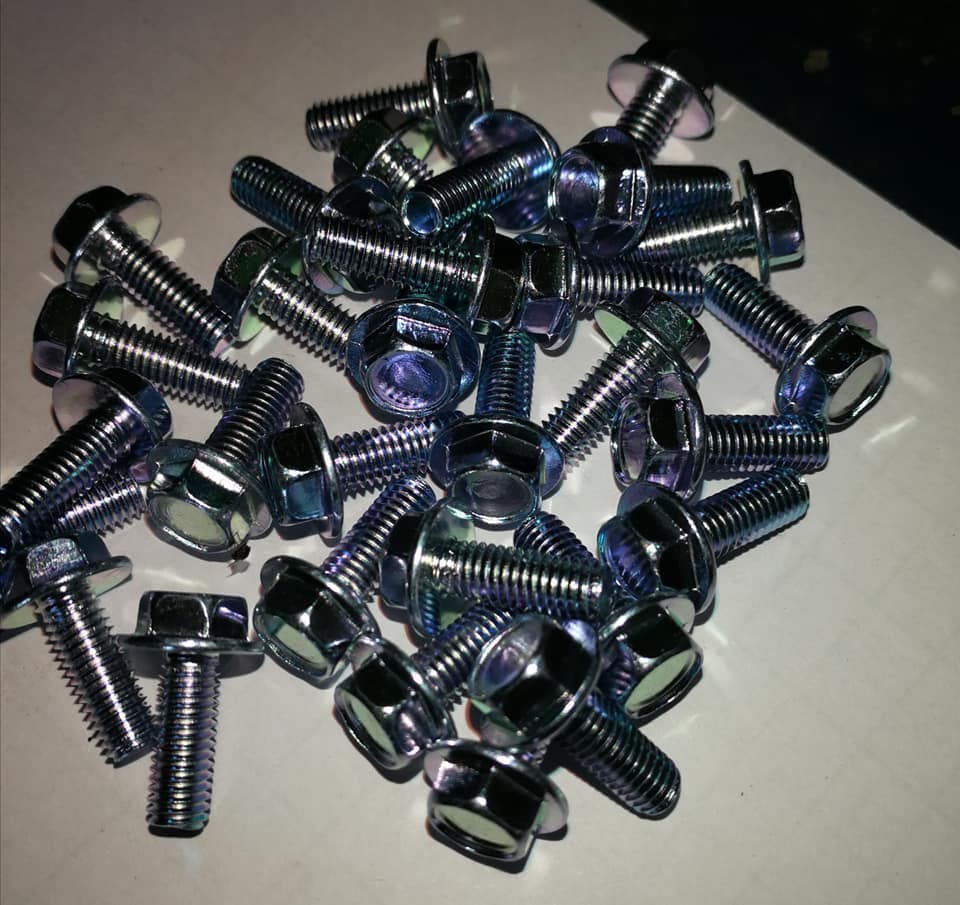
- Cr3+ passivation — forms the conversion film: clear/blue, iridescent/yellow, black or olive, controlled by concentration, pH, temperature and immersion time.
- Seal / topcoat (optional) — raises corrosion protection, and some systems also control the friction coefficient for torque-critical joints.
- Drying — hot air or centrifugal. Drying temperature has a ceiling: a fresh trivalent film is still curing and excessive heat damages it.
- Unload, sort, count, pack — lot segregation has to be protected here, not corrected later at your line.
Barrel or rack: same line, different outcome
Barrel plating is what makes tens of thousands of screws, nuts and bolts affordable. Parts tumble constantly, so thickness averages out well across the load — but a part buried in the middle and a part against the barrel wall do not see the same current at the same moment, and parts do knock into each other.
Rack plating fixes orientation, gives better control of thickness by location and avoids impact marks, at a far higher cost per piece. It suits delicate parts, parts that nest or tangle, and parts where thickness matters on one specific feature.
The consequence for your specification: if you state a thickness, also state where on the part it is measured. Thread crest, thread root and the area under the head naturally receive different thicknesses — that is electroplating physics, not a plater making a mistake.
What a buyer can ask for at each stage
Walk your lot and ask, in order: how incoming parts are identified and segregated; bath analysis records (concentration, additives); the current and time recipe used for your barrel load; XRF thickness readings after plating; an adhesion check; the bake oven record with the time the clock started; passivate colour consistency across the lot; and how the parts are packed.
Two questions catch more problems than any others: "where on the part is the thickness measured?" and "when did the bake clock start?" If both are answered immediately, with records, the line is genuinely under control.
Also ask what happens when a lot fails: is the coating stripped and re-plated, or plated over? Those two routes have very different consequences for thread fit and for hydrogen risk, and the rule should be agreed before there is a problem to argue about.
Ordering properly: what one line of specification should contain
A specification a plater can quote from carries: the base material and the condition of the part (heat treated or not, hardness or property class); the coating metal and thickness together with the measuring location; the passivation type (colour and Cr3+ system); whether a seal or topcoat is required; the hydrogen-relief bake requirement; the thread tolerance class after coating; and the test evidence to be supplied.
The standards usually referenced in this area include ISO 4042 for electroplated coating systems on fasteners, ASTM B633 for zinc on iron and steel generally, and ISO 19598 for hexavalent-chromium-free zinc systems. Read the actual documents and confirm with your design authority — this article explains them in our own words and is not a substitute for them.
A common trap: the words "zinc plated" alone are not a specification. They say nothing about thickness, passivate type or bake requirement — and those three decide both corrosion life and the safety of a high-strength part.
The V.S. Heat Treatment plating line
We plate zinc by both barrel and rack, using a trivalent (Cr3+) passivation system since 2020, in blue/clear, yellow and black. Thicknesses seen in production work typically sit around 5–25 µm as guidance, depending on the specification, the geometry and the thread class.
Thickness is verified by XRF. The in-house lab also runs Vickers and Rockwell hardness testing and a salt-spray cabinet along the lines of ASTM B117 — used as a comparative test: hours in the cabinet screen process consistency, they are not a prediction of service life in the field.
We take small parts in bulk only (screws, nuts, bolts, washers, pins, springs, anchor bolts). Plant capacity is 2,000 tons per month, our quality system is ISO 9001:2015, and we reply to quotes within 24 hours. Send the drawing or the specification and we will state exactly where thickness will be measured and which reports you will receive.
FAQ
Why are there so many rinse tanks?+
Because solution carried out on the parts will wreck the chemistry of the next bath. Multi-stage counterflow rinsing leaves a surface clean enough for the passivate film to form evenly, and when designed well it also reduces total effluent.
Our parts are brand new — do they still need pickling?+
Usually yes. A surface that looks clean still carries a thin oxide film, forming lubricant residue or scale from heat treatment. The deposit has to bond to steel, not to a film that will later let go and take the coating with it.
Does the hydrogen bake come before or after passivation?+
The usual practice is to bake after plating and before passivation, because chromate films degrade at baking temperatures. When the clock starts after plating and how long the bake runs follow the specification the drawing references.
Why is the measured thickness different across one part?+
That is how electroplating works: current density concentrates on edges and thread crests and is lower in thread roots and recesses. This is exactly why the specification must state the measuring location and not just a number.
Standards and references
Free Engineering Tools
- Hardness Converter HRC ↔ HV ↔ HB
- Which Steel Grades Harden — and How Far
- Fastener Weight: pcs ↔ kg
- Finishing Specification Builder for Purchasing and QC
- Salt Spray Test Plan Builder
- Coating thickness → thread fit (GO/NO-GO)
- Hydrogen Embrittlement — is baking required?
- Bolt Tightening Torque & Proof Load
- Thread Engagement Length
- Bolt Size Estimator (from load)
- Bolt Property Class — Mechanical Properties (ISO 898-1)
What this article covers at our plant
Related comparison guides
- Zinc plating vs Dacromet / zinc flakeZinc plating vs Dacromet: which coating for screws and bolts?
- Black oxide vs PhosphateBlack oxide vs phosphate: which finish for screws, nuts and bolts?
- Electroplated zinc vs Hot-dip galvanizingZinc plating vs hot-dip galvanizing: which one does your fastener need?
- Zinc plating vs Zinc-nickelZinc plating vs zinc-nickel: when is the upgrade worth paying for?
- Barrel plating vs Rack platingBarrel plating vs rack plating: how small fasteners are actually plated
- Zinc phosphate vs Manganese phosphateZinc phosphate vs manganese phosphate: match the coating to the job it does
Technical content review
Reviewed by the V.S. Heat Treatment QA and production team—heat-treatment and finishing operations since 1994 under an ISO 9001:2015 quality system.
View evidence and report format