
Small-Part Hardening SpecialistsScrews, Nuts & Bolts at Volume
High-volume heat treatment of screws, nuts, bolts, washers and small fasteners on continuous mesh-belt furnaces — plus eco-safe Cr3+ zinc plating, phosphate coating and an in-house testing lab, delivered on time to international standards.
- Years of experience
- 32+
- EST 1994
- CERTIFIED
- ISO
- 9001:2015
- tons / month
- 2000+
- CAPACITY
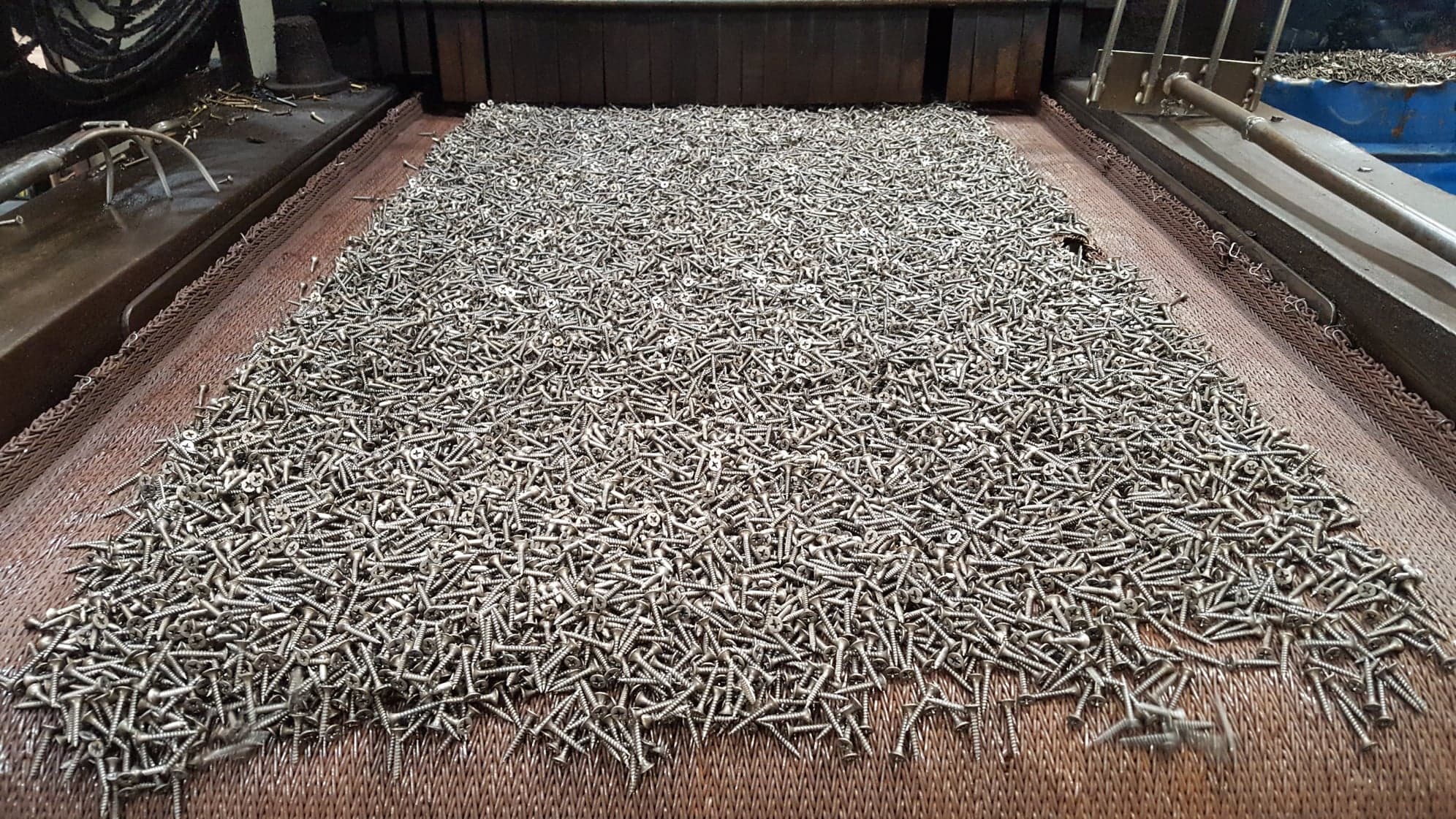
Heat Treatment
Small-parts heat treatment service · 2,000+ tons/month
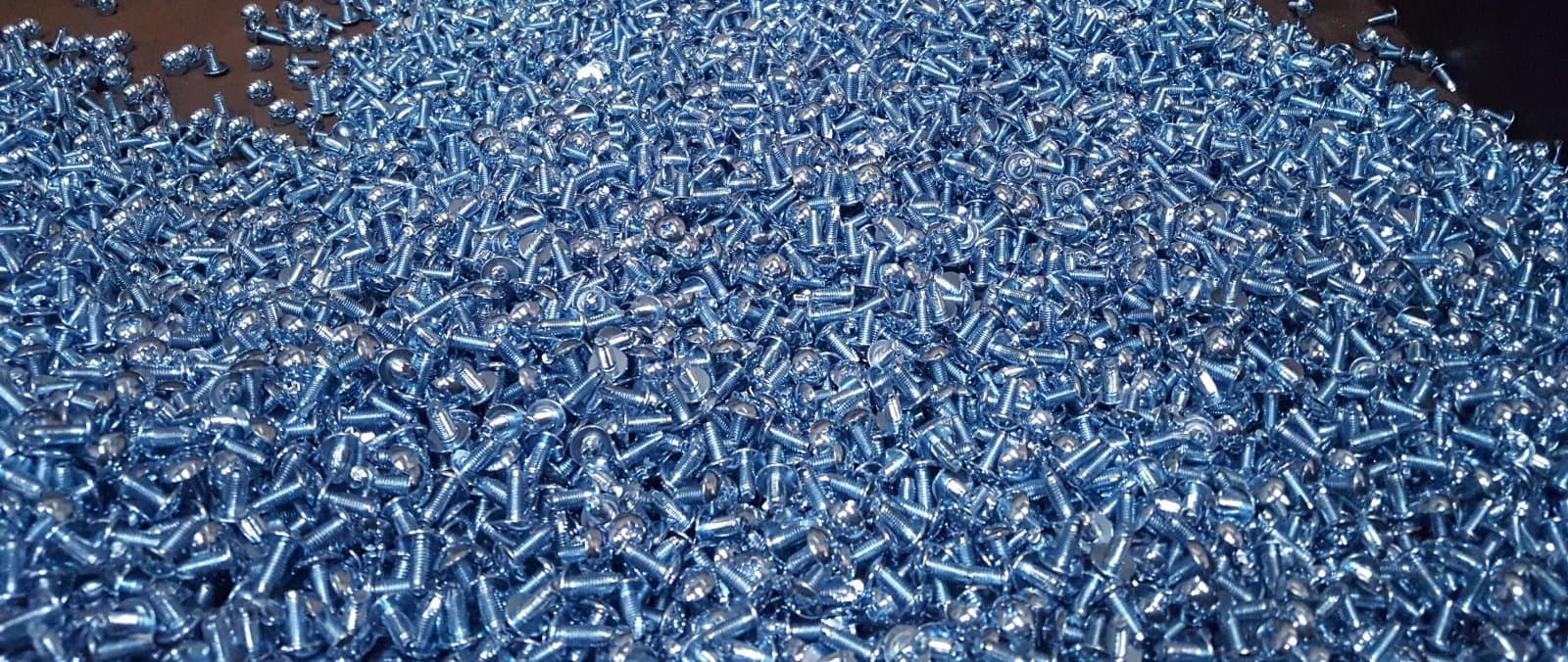
Zinc Plating Cr3+
Cr3+ zinc plating service · RoHS-safe
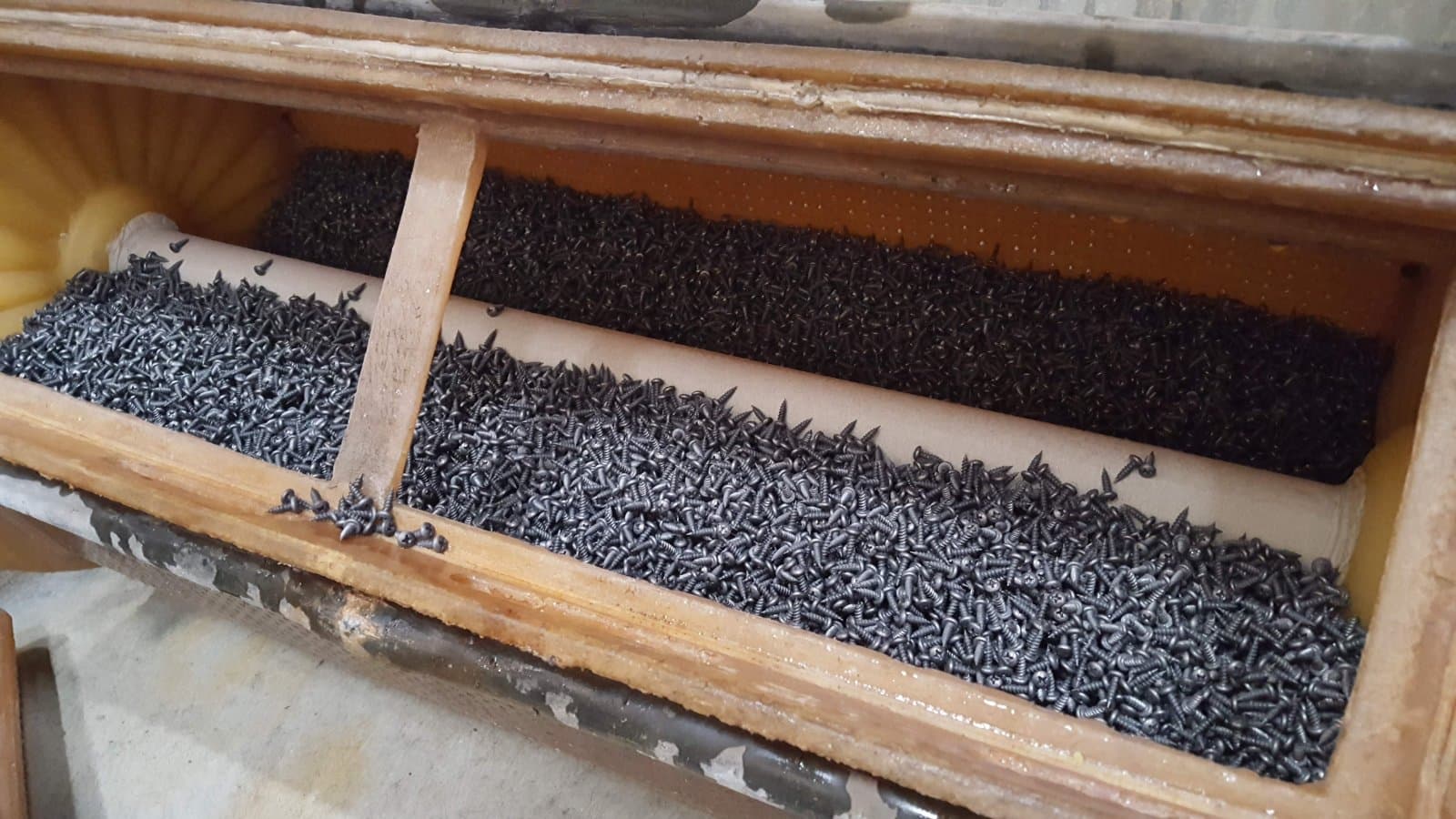
Phosphate Coating
Paint base layer and friction reduction
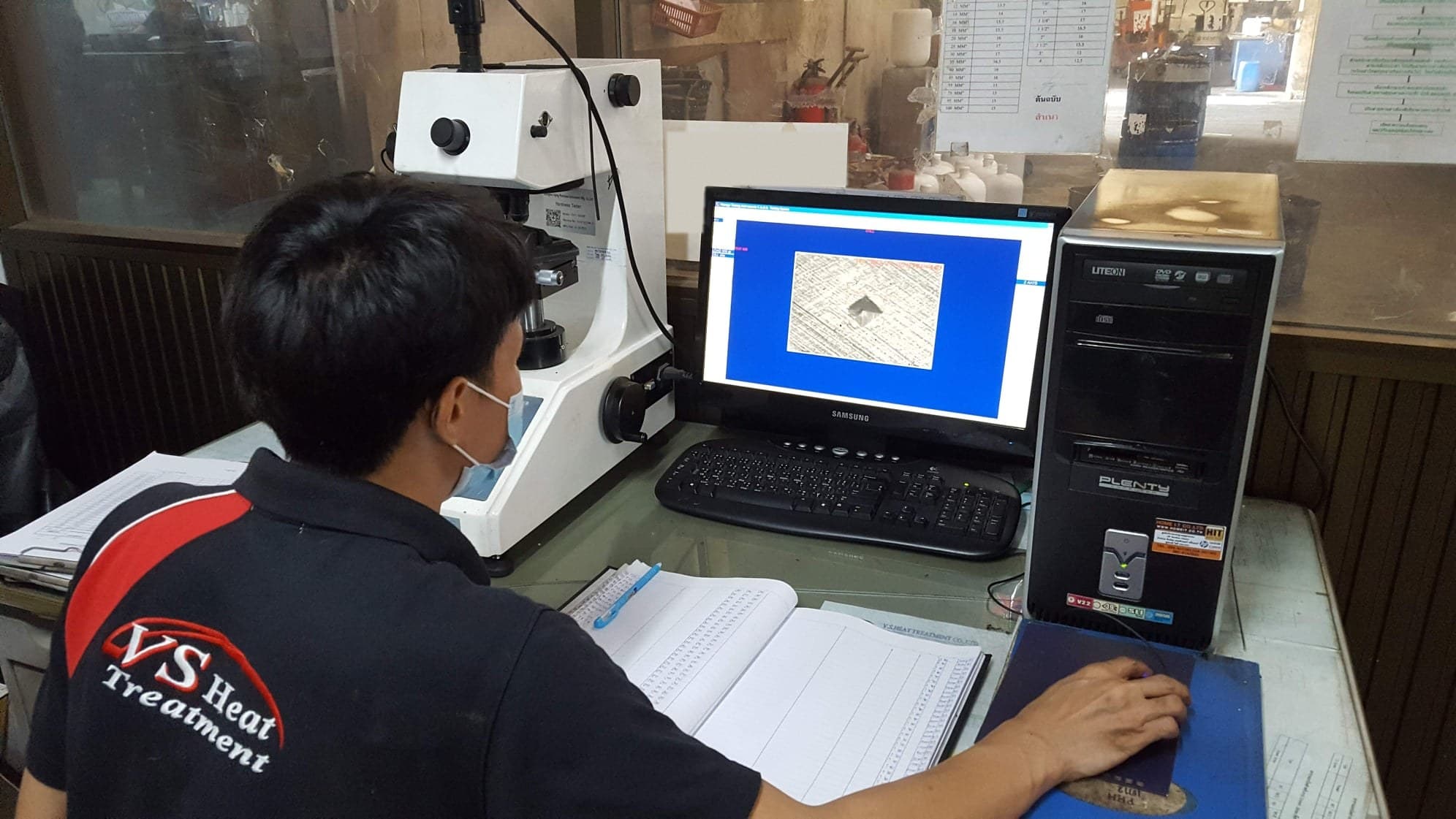
Testing Laboratory
Precise inspection and certification
Why customers trust us
Flexible
We adapt processes to your part — from one-off prototypes to high-volume production.
Efficient
Continuous mesh-belt furnaces deliver consistent quality on schedule and reduce your cost.
Reliable
Every batch is tested with Vickers and X-ray instruments and shipped with a quality certificate.
Technical answers buyers are searching for
Recently updated pages and the decisions engineering, purchasing and QC teams make in real work.
S45C vs SCM440: which steel should you harden?
Compare S45C and SCM440 carbon, hardenability, HRC ranges, toughness, section-size effects and the information needed on a heat-treatment order.
Read the answerSalt Spray Test Plan Builder
Build a salt-spray test request with method, duration, inspection interval, specimen count, corrosion criteria and reporting. Copy or save it for RFQ and QC.
Read the answerHow Hard Can SCM440, SCM435 and S45C Get? Choosing a Steel Grade
S45C tops out near 50–58 HRC but is specified at 40–55 HRC in service. A 13-grade table for small parts separating the as-quenched ceiling from the after-temper value, plus which stainless grades harden at all.
Read the answerWhat Is HRC? Metal Hardness HRC, HV, HB with Conversion Table
HRC is the Rockwell C hardness scale, measured with a 120° diamond cone at 150 kgf and usable from about 20 to 65 HRC. Includes an HRC ↔ HV ↔ HB ↔ tensile conversion table and the reference values for each bolt property class.
Read the answerZinc Plating Colour Chart: White, Blue, Yellow, Rainbow, Black, Green
The colour of zinc plating comes from the chromate passivation layer on top—it is not just looks; it also signals corrosion resistance. Here is the chart.
Read the answerSalt Spray Test (ASTM B117) — How to Read It
The salt-fog corrosion test: what the “hours” number means and how much to trust it.
Read the answerPhosphate Coating: Zinc vs Manganese
What the gray-black phosphate surface is for, how it differs from zinc plating, and choosing zinc vs manganese.
Read the answerEffective Case Depth: 550 HV, ISO 2639 and ISO 18203:2026 Explained
Effective versus total case depth, the 550 HV hardness traverse, and the transition from legacy ISO 2639 to current ISO 18203:2026—with an unambiguous callout example.
Read the answerPriority paths
Our Services
Plating and testing — all under one roof
Standards, steel grades and defects for this process
Phosphate Coating
Tested and accepted to
Defects we control
Testing Laboratory
Tested and accepted to
Steel grades we run
Industries we serve
Trusted by manufacturers across Thailand and beyond
Foreign-owned factories in Thailand trust us
Japanese, Chinese, Taiwanese and Korean manufacturers choose V.S. Heat Treatment — supported in their own language and export-ready.
Your language
Full support in 日本語 / 中文 / 한국어 / English — quotation, certificates and engineering advice.
Export-ready
Cr3+ (Cr6-free) plating with RoHS / REACH documentation for EU and Japanese supply chains.
Tier-1 quality
ISO 9001:2015 with lab testing on every lot — meets automotive and electronics maker specs.
Estate pickup
We collect and deliver across Amata, WHA, Bang Poo, Laem Chabang and other estates in our pickup area.
Cr3+ vs Cr6+ — what's the difference?
We migrated entirely to RoHS-compliant Cr3+ in 2020. Here's why it matters.
Cr6+
Hexavalent · Legacy
- Carcinogenic — banned by RoHS / REACH
- High-toxicity wastewater
- Workplace exposure risk
- EU-banned for export
Cr3+
Trivalent · Eco-safe
- Non-carcinogenic, RoHS / REACH compliant
- Lower-toxicity wastewater
- Safer for plant workers
- EU export-ready
✓ V.S. Heat Treatment uses Cr3+ exclusively since 2020
Find exactly what you need
Browse by service area, industrial estate, part type or finish — or dive into our metallurgy knowledge base.
Need a metal-plating expert?
Our engineers reply with a tailored quote within 24 hours.
Frequently asked questions
How much do your services cost?
Pricing depends on material, part size, quantity and certification needs. Send us a photo and details — we'll quote within 24 hours. The spec builder walks you through the details we need before you send anything.
What is Cr3+, and is it safer than Cr6+?
Cr3+ (Trivalent Chromium) zinc plating uses chromium-3 ions, which are non-carcinogenic and meet RoHS/REACH directives. It replaces the older, hazardous Cr6+ (Hexavalent). We migrated entirely to Cr3+ in 2020.
How many hours does your salt spray test pass?
Hours depend on the passivation, the zinc thickness and which endpoint you measure. In an ASTM B117 chamber our Cr3+ zinc on small parts typically reaches, to white rust: clear/blue 72–120 h · yellow/iridescent 120–200 h · black 72–96 h. Thickness is what buys hours — ASTM B633 sets the service-condition classes SC1 5 µm · SC2 8 µm · SC3 13 µm · SC4 25 µm. A common automotive benchmark for clear trivalent zinc is 72 h to white rust and 168 h to red rust. These are accelerated test results, not outdoor service life. Tell us the standard and the endpoint your drawing requires and we will build the process to it.
Which steels do you support?
Carbon and boron steels (S20C, S45C, SWCH10B21, SWCH10B33) · alloy steels (SCM435, SCM440, SCr440) · spring steel (SUP9) · bearing steel (SUJ2) · tool steels (SK85, SKS3) · stainless (SUS304, SUS420J2). Our line is a continuous mesh-belt furnace running 750–950 °C, so grades that austenitize above that range are outside it. We take small parts in bulk — screws, nuts, bolts, pins, springs, washers — priced by weight rather than per piece. Send the drawing and the grade and we will confirm before you ship.
Can you issue test reports?
Yes — Hardness Test Report (HV/HRC), Coating Thickness Report (X-ray), Salt Spray Test Report (ASTM B117), Material Test Certificate. Issued with the order or separately.
What's the minimum order quantity?
Flexible — from a few prototype pieces to mass production of tens of thousands per month.