Answer read from our own grade table
What hardness can S45C actually reach?
Attainable hardness depends on grade and section size. S45C is the most economical carbon steel for small parts; SCM435 and SCM440 add chromium and molybdenum, so they harden further through a thick section and hold it more uniformly. The figures below separate the as-quenched ceiling from the hardness actually specified in service after tempering — two different numbers.
- S45C
- As-quenched ceiling 50–58 HRC · Specified in service 40–55 HRC
- SCM435
- As-quenched ceiling 48–55 HRC · Specified in service 33–44 HRC
- SCM440
- As-quenched ceiling 50–58 HRC · Specified in service 28–48 HRC
- SWCH10B21
- As-quenched ceiling 40–48 HRC · Specified in service 28–40 HRC
The hardness specified in service after tempering is always below the as-quenched ceiling — specify the service range on the order, not the ceiling.
Why the grade sets the hardness
Peak attainable hardness is governed mainly by carbon content. Alloying elements such as chromium (Cr), molybdenum (Mo) and manganese (Mn) improve hardenability—the ability to harden right through the core, not just the surface.
Steel below roughly 0.25%C cannot be through-hardened and must be surface-hardened (carburized) instead. Medium-carbon steel and up can take a quench-and-temper cycle.
Final HRC also depends on tempering temperature: the higher the temper, the lower the hardness but the tougher the part.
Before the table: there are always two hardness numbers
Ask "how hard does this grade get" and there are two correct answers, and they mean different things.
- Peak attainable (as-quenched) — what the steel reaches straight out of the quench, before tempering. This is the ceiling for the grade.
- Specified in service (after temper) — what the drawing actually calls out, once the part has been tempered to trade hardness for toughness.
SCM440 is the classic source of confusion: the ceiling is around 50–58 HRC, but most SCM440 bolts in service are specified at just 28–48 HRC — left at peak hardness they would be brittle and snap in the threads.
The table below gives both numbers, not one.
Hardness by grade — the 13 grades used on small parts
Plain carbon steels
- S20C (AISI 1020 / DIN C22, C 0.18–0.23%) — too low in carbon to through-harden; carburize instead for a 55–62 HRC case over a tough core. Tapping screws, pins.
- S45C (AISI 1045 / DIN C45, C 0.42–0.48%) — quench and temper; ceiling 50–58 HRC, specified in service at 40–55 HRC. The default for pins and general-purpose bolts.
Cr-Mo alloy steels — for thicker sections that must harden through
- SCM435 (AISI 4135 / DIN 34CrMo4, C 0.33–0.38%) — ceiling 48–55 HRC, specified 33–44 HRC. The mainstream grade for class 10.9 high-strength bolts.
- SCM440 (AISI 4140 / DIN 42CrMo4, C 0.38–0.43%) — ceiling 50–58 HRC, specified 28–48 HRC. Markedly better hardenability than S45C.
- SCr440 (AISI 5140 / DIN 41Cr4, C 0.38–0.43%) — ceiling 50–57 HRC, specified 28–45 HRC. The alternative when molybdenum is not required.
Boron steels — what fastener plants actually cold-head
- SWCH10B21 (AISI 10B21, C 0.18–0.23% + B) — ceiling 40–48 HRC, specified 28–40 HRC. Cold-heading wire for class 8.8 screws and bolts.
- SWCH10B33 (AISI 10B33, C 0.30–0.36% + B) — ceiling 45–52 HRC, specified 32–42 HRC. Used where 10B21 falls short on strength.
Spring and tool steels
- SUP9 (AISI 5155 / DIN 55Cr3, C 0.52–0.60%) — ceiling 50–58 HRC, specified 40–50 HRC; tuned for fatigue and spring-back, and can be austempered.
- SK85 / SK5 (AISI 1084–1086 / DIN C85, C 0.80–0.90%) — ceiling 58–64 HRC, specified 45–60 HRC. Spring washers and flat springs.
- SKS3 (close to AISI O1 / DIN 100MnCrW4, C 0.90–1.00%) — ceiling 58–63 HRC, specified 56–62 HRC. Oil-hardening tool steel with low distortion.
Bearing and stainless steels
- SUJ2 (AISI 52100 / DIN 100Cr6, C 0.95–1.10%) — ceiling 60–64 HRC, specified 58–64 HRC. The hardest grade in this table; small bearing and wear parts.
- SUS420J2 (AISI 420 / DIN X30Cr13, C 0.26–0.40%) — ceiling 48–55 HRC, specified 45–52 HRC. The martensitic stainless that genuinely hardens.
- SUS304 (AISI 304 / DIN X5CrNi18-10, C ≤0.08%) — cannot be hardened by heat treatment. See the next section.
Can stainless steel be hardened? Only some families
This is one of the most common questions we get, and the short answer is that it depends entirely on the family.
- SUS304 / SUS316 (austenitic) — cannot be hardened by heat treatment at all, no matter how many times they are heated and quenched. The structure is already stable austenite and will not transform to martensite. The only route to higher hardness is work hardening through cold forming.
- SUS420J2 / SUS410 (martensitic) — carry enough carbon and do transform, so they quench and temper normally to 45–52 HRC.
If a drawing says "SUS304, harden to 45 HRC", the drawing is wrong — it is not that the heat treater is unwilling. We flag this before accepting the job rather than after.
Steels below about 0.25% carbon such as S20C or SS400 cannot through-harden either, with one difference: they can still be carburized to build a hard case.
How to choose cost-effectively
Work down this list — most parts are decided by the first three.
- Thin section, tight budget, moderate hardness is fine — S45C. No reason to pay for alloy steel.
- Thicker section, or hardness must be uniform across the whole cross-section — move to the Cr-Mo group (SCM435/SCM440). Note the reason: higher hardenability, not a higher HRC ceiling. The ceilings of SCM440 and S45C are nearly identical, which is where most people go wrong.
- Cold-headed in volume as screws or bolts — boron steel, SWCH10B21 or 10B33: it forms well cold and is hardened afterwards.
- Hard wearing skin over a tough impact-resistant core — low-carbon steel (S20C) plus carburizing, rather than through-hardening.
- Must resist corrosion and be hard — SUS420J2, not SUS304.
Not sure of the grade? Send a spec or a sample — we verify composition/hardness and recommend a process that hits your target HRC.
What to specify when you send parts in
The more of this is on the order, the less chance of a second pass. Four lines is enough.
- Steel grade, per the material certificate. No certificate? Send a sample for lab analysis first.
- Target HRC as a range, not a single number — e.g. 32–39 HRC — and make it the after-temper value, not the ceiling.
- Where to measure: surface or mid-section. On case-hardened parts these two read very differently.
- Whether plating follows. If the part is zinc-plated and harder than 39 HRC, allow for the hydrogen bake step required by ISO 4042.
Our capacity is over 2,000 tonnes per month, and we take both production lots and sample lots.
FAQ
How hard can S45C get?+
The ceiling is roughly 50–58 HRC as-quenched, but drawings normally specify 40–55 HRC after tempering. If you need above 55 HRC in a thicker section, look at the Cr-Mo group instead.
What is the difference between SCM440 and S45C?+
The hardness ceilings are close (50–58 HRC for both). The difference is hardenability — SCM440 carries chromium and molybdenum, so it hardens right through to the core in thicker sections, whereas S45C hardens mostly near the surface as the part grows.
What is SCM435 used for?+
A chromium-molybdenum alloy steel at 0.33–0.38% carbon, equivalent to AISI 4135 / DIN 34CrMo4. It is the mainstream grade for class 10.9 high-strength bolts, typically specified at 33–44 HRC.
Can stainless steel be hardened?+
Only the martensitic family — SUS420J2 or SUS410 — which reach 45–52 HRC. Austenitic SUS304 and SUS316 cannot be hardened by heat treatment at all; their only route to higher hardness is cold work.
Which steel is used for class 10.9 bolts?+
Usually SCM435 or SCM440, because they have enough hardenability to hold uniform hardness across the section. For cold-headed class 8.8 work, boron steel SWCH10B21 is the common choice.
What is the maximum HRC?+
It depends on the grade — SUJ2 tops this table at 60–64 HRC. Typical hardened screws and bolts land at 28–48 HRC after tempering. Tell us your target and we control it via temper temperature.
How do I know the grade?+
Check the material certificate, or send a sample to our lab for composition analysis and a hardness test.
Can you hold a narrow HRC band?+
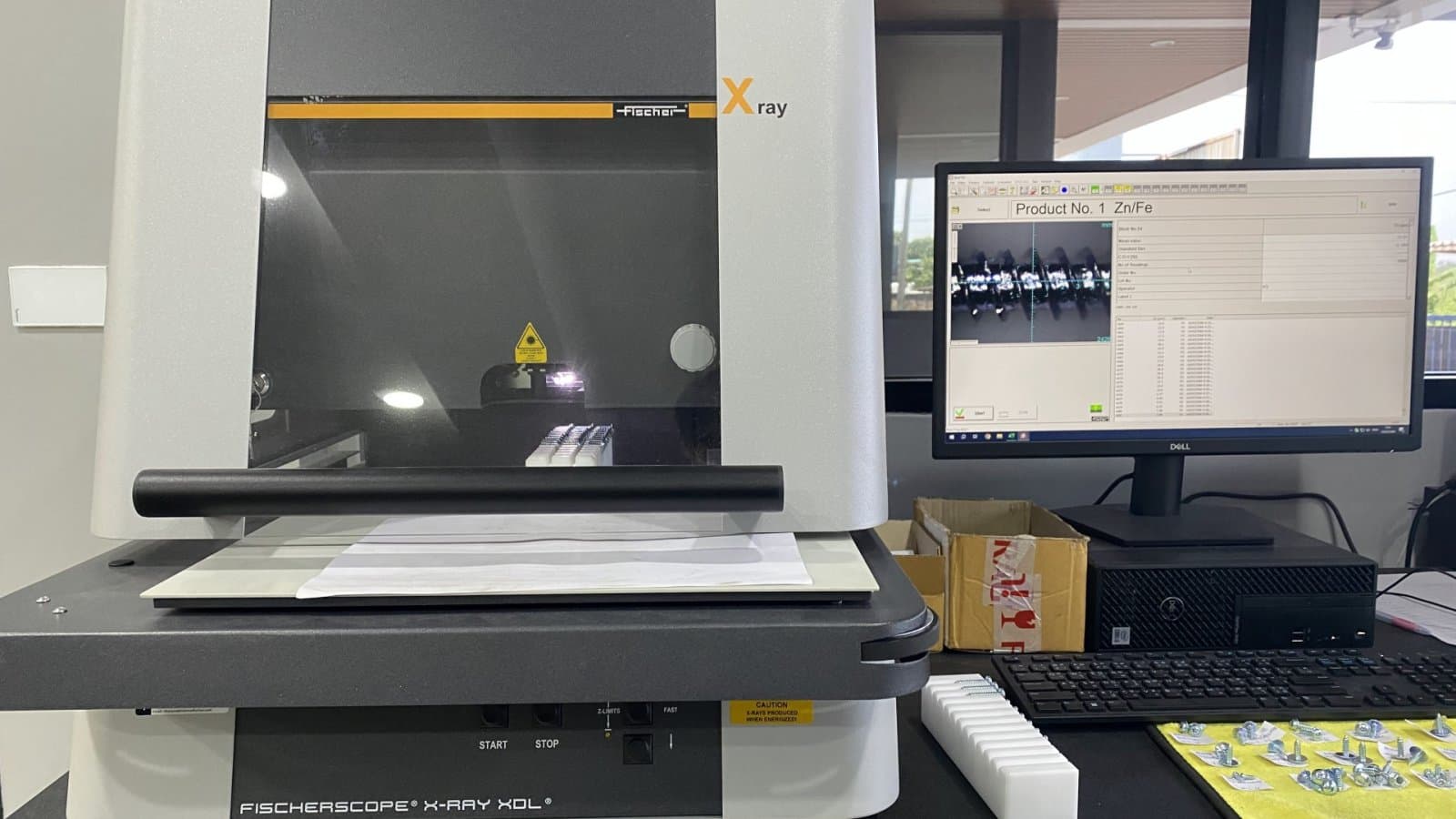
Yes, e.g. 58–60 HRC. We sample-test HV/HRC every lot and issue a certificate with the job. Bands tighter than about 3 HRC are worth discussing first — some grades scatter more than that naturally.
Free Engineering Tools
- Hardness Converter HRC ↔ HV ↔ HB
- Which Steel Grades Harden — and How Far
- Fastener Weight: pcs ↔ kg
- Finishing Specification Builder for Purchasing and QC
- Salt Spray Test Plan Builder
- Coating thickness → thread fit (GO/NO-GO)
- Hydrogen Embrittlement — is baking required?
- Bolt Tightening Torque & Proof Load
- Thread Engagement Length
- Bolt Size Estimator (from load)
- Bolt Property Class — Mechanical Properties (ISO 898-1)
What this article covers at our plant
Related comparison guides
- Case hardening vs Through hardeningCase hardening vs through hardening: which one for screws and bolts?
- Annealing vs Tempering vs NormalizingAnnealing vs tempering vs normalizing: which one does your part need?
- Quenching vs TemperingQuenching vs tempering: two halves of one process
- Carburising vs NitridingCarburising vs nitriding: what a screw, nut or bolt actually gets
- Carbonitriding vs CarburizingCarbonitriding vs carburizing: which case-hardening for fasteners?
- S45C vs SCM440S45C vs SCM440: which steel should you harden?
- SCM435 vs SCM440SCM435 vs SCM440: one alloy step apart, and it shows
- Grade 8.8 vs Grade 10.9 vs Grade 12.9Grade 8.8 vs 10.9 vs 12.9 bolts: what actually differs?
- Class 10.9 vs Class 12.9Class 10.9 vs 12.9: what you gain, and what you take on
Technical content review
Reviewed by the V.S. Heat Treatment QA and production team—heat-treatment and finishing operations since 1994 under an ISO 9001:2015 quality system.
View evidence and report format