Why harden only the surface
Many parts need two conflicting properties: a hard wear-resistant surface and a tough core that won’t snap. Case hardening delivers both by hardening only the outer skin while the core stays tough.
It suits low-carbon steel that can’t be through-hardened, because we first add an element to the surface, then harden.
Carburizing (adding carbon to the surface)
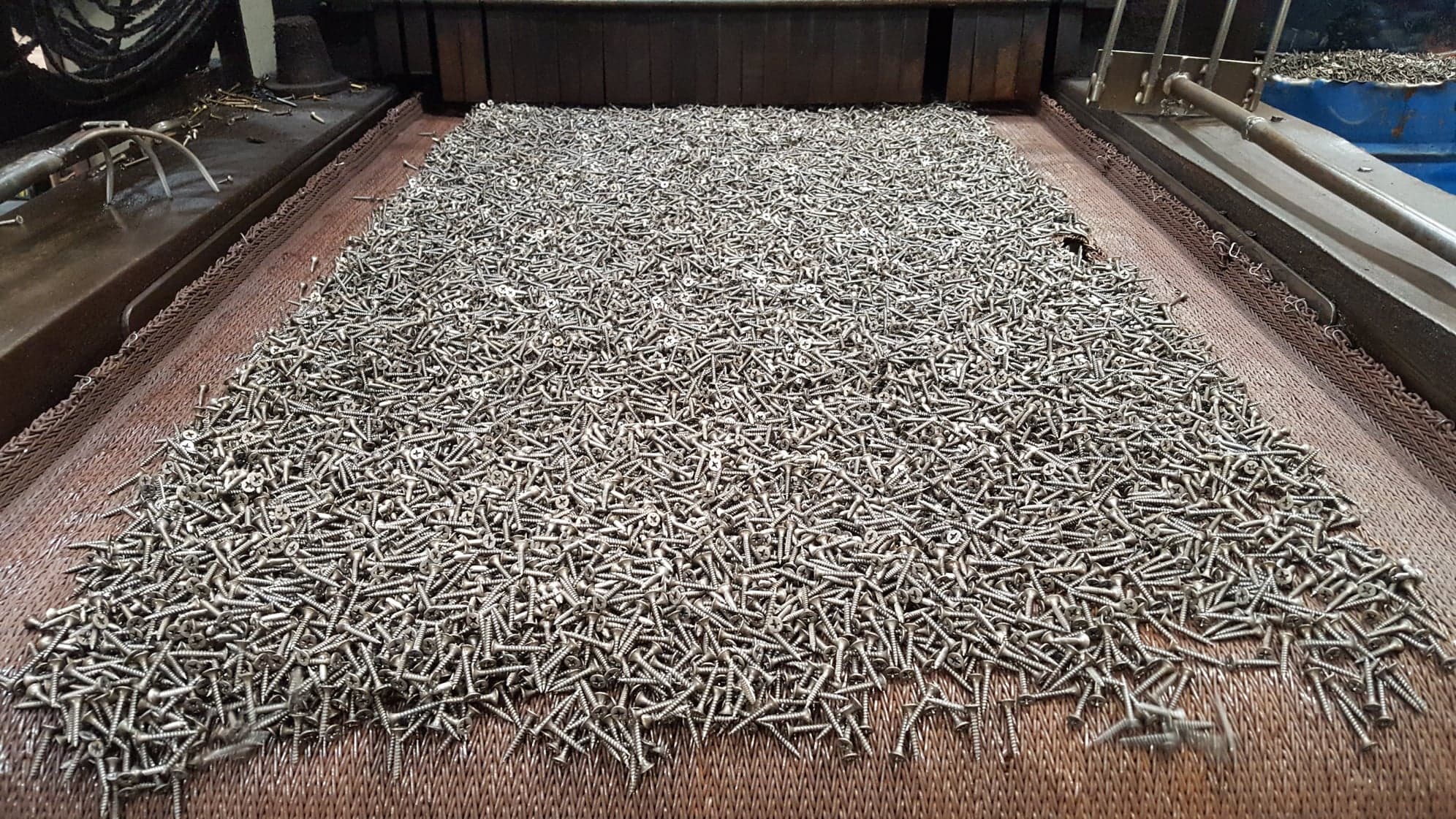
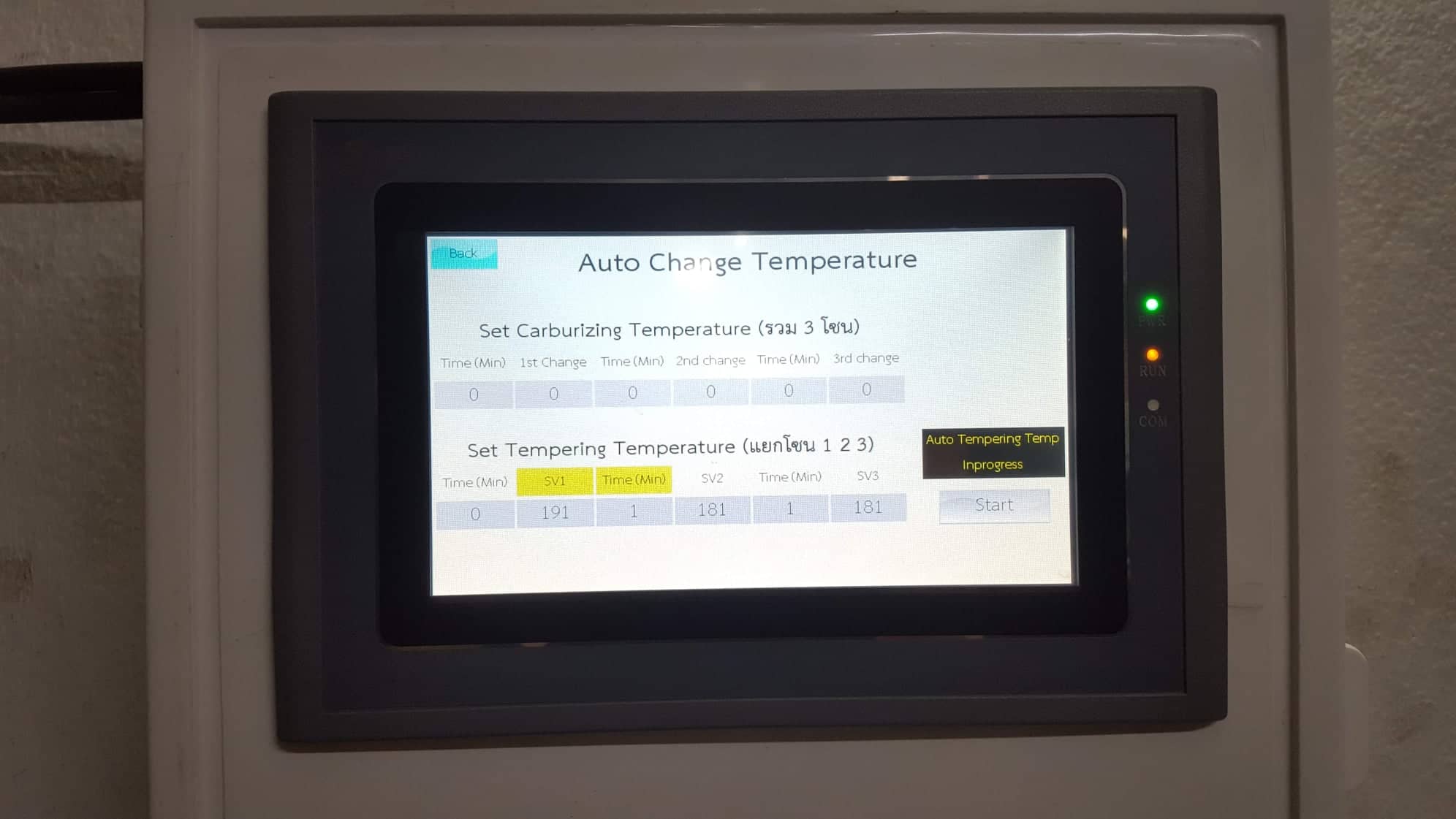
Carburizing holds the part in a carbon-rich atmosphere at ~850–940°C so carbon diffuses into the surface, then quenches it to form a hard martensitic case (a core process offered by V.S. Heat Treatment).
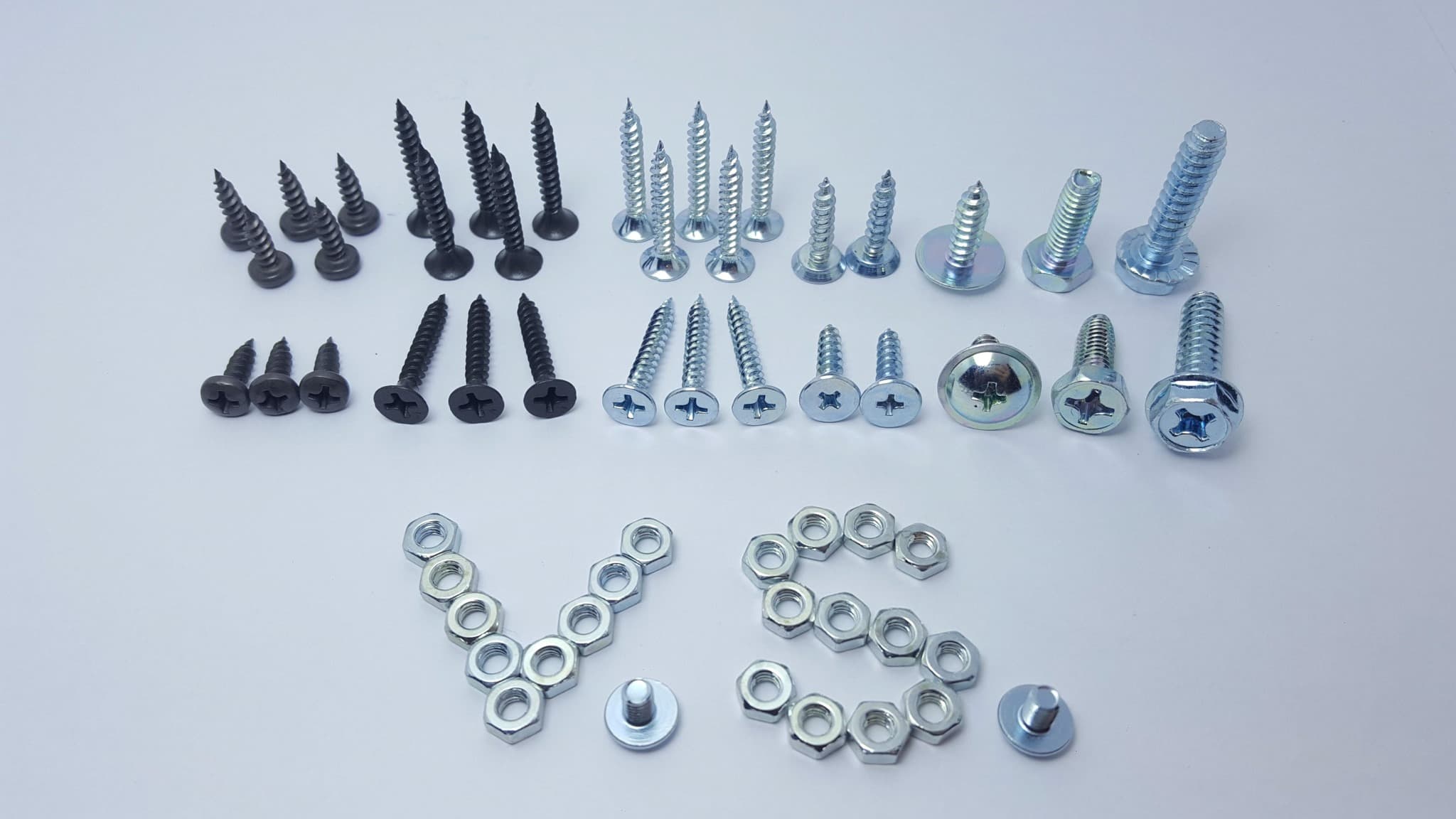
Case depth runs 0.2–2 mm at 58–62 HRC with a tough core — ideal for special-grade screws, pins, studs and nuts needing a hard case with a tough core.
Nitriding (adding nitrogen to the surface)
Nitriding diffuses nitrogen at lower temperature (~500–550°C) with no quench, so distortion is minimal — great for high-precision parts.
The surface is very hard (equivalent to ~900–1100 HV) with good wear and fatigue resistance and a slight corrosion benefit, though the case is usually thinner than carburizing.
Carbonitriding (carbon + nitrogen)
A hybrid: both carbon and nitrogen are added at ~800–870°C. Nitrogen improves hardenability and wear resistance, making it ideal for high-volume small parts such as self-tapping and set screws that need an economical hard surface.
Quick comparison
- Carburizing — deep, very hard case; high temperature; moderate distortion; quench required.
- Nitriding — thin but very hard case; low temperature; least distortion; no quench.
- Carbonitriding — cost/quality balance; ideal for high-volume small parts.
FAQ
Carburizing or nitriding?+
For a deep, heavily loaded case choose carburizing; for precision and minimal distortion choose nitriding.
What about self-tapping screws?+
Carbonitriding is popular — a hard enough case to tap/drill at a cost suited to volume.
Free Engineering Tools
- Hardness Converter HRC ↔ HV ↔ HB
- Which Steel Grades Harden — and How Far
- Fastener Weight: pcs ↔ kg
- Finishing Specification Builder for Purchasing and QC
- Salt Spray Test Plan Builder
- Coating thickness → thread fit (GO/NO-GO)
- Hydrogen Embrittlement — is baking required?
- Bolt Tightening Torque & Proof Load
- Thread Engagement Length
- Bolt Size Estimator (from load)
- Bolt Property Class — Mechanical Properties (ISO 898-1)
What this article covers at our plant
Related comparison guides
- Case hardening vs Through hardeningCase hardening vs through hardening: which one for screws and bolts?
- Annealing vs Tempering vs NormalizingAnnealing vs tempering vs normalizing: which one does your part need?
- Quenching vs TemperingQuenching vs tempering: two halves of one process
- Carburising vs NitridingCarburising vs nitriding: what a screw, nut or bolt actually gets
- Carbonitriding vs CarburizingCarbonitriding vs carburizing: which case-hardening for fasteners?
- S45C vs SCM440S45C vs SCM440: which steel should you harden?
- SCM435 vs SCM440SCM435 vs SCM440: one alloy step apart, and it shows
- Grade 8.8 vs Grade 10.9 vs Grade 12.9Grade 8.8 vs 10.9 vs 12.9 bolts: what actually differs?
- Class 10.9 vs Class 12.9Class 10.9 vs 12.9: what you gain, and what you take on
Technical content review
Reviewed by the V.S. Heat Treatment QA and production team—heat-treatment and finishing operations since 1994 under an ISO 9001:2015 quality system.
View evidence and report format