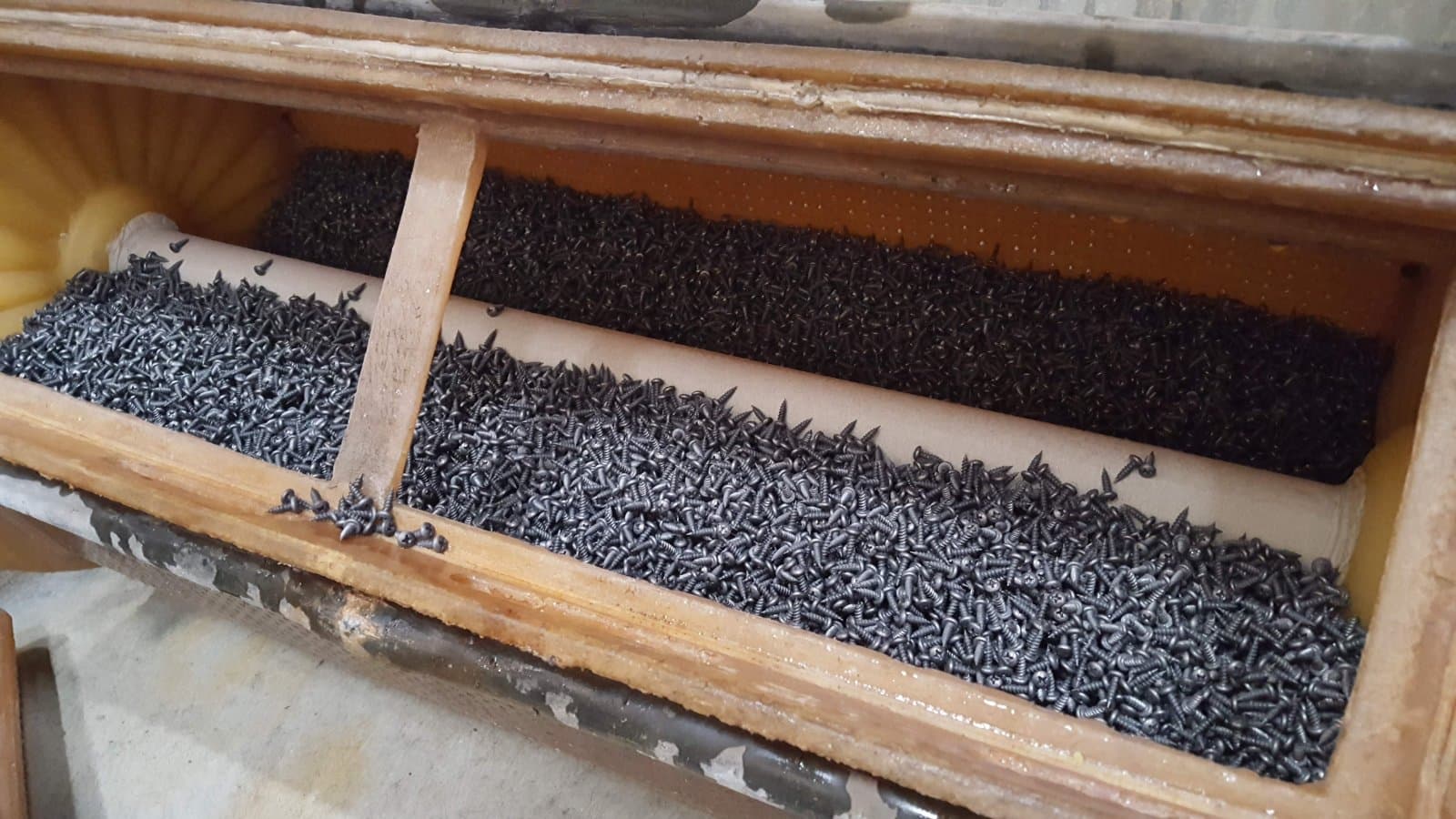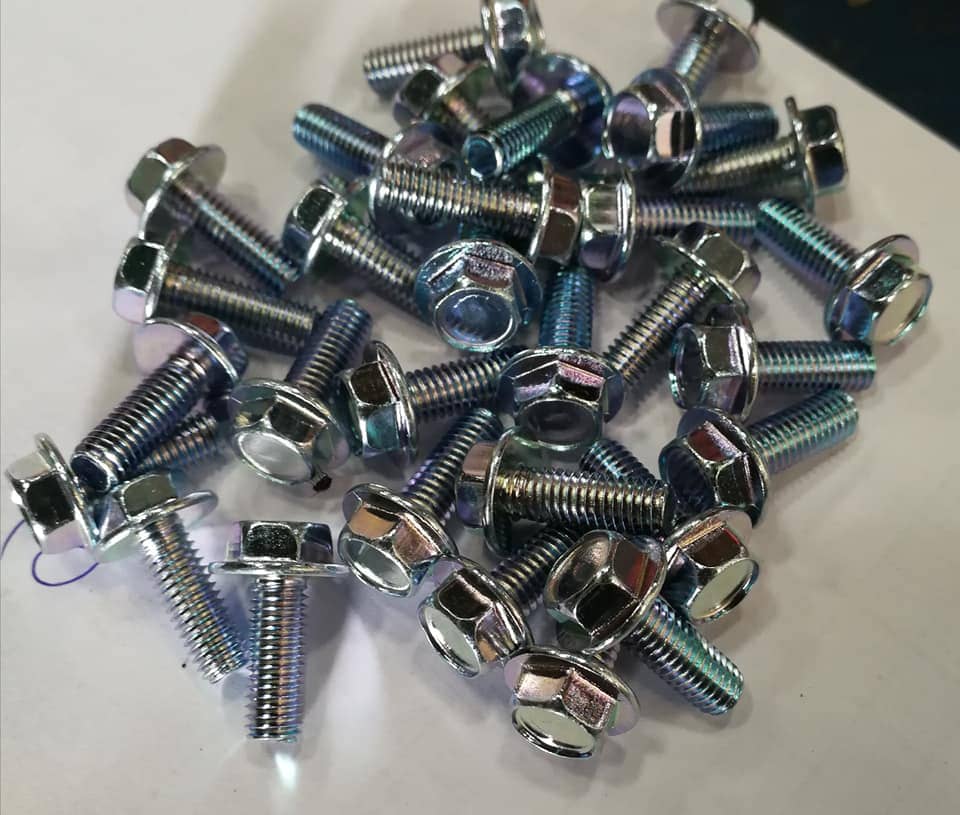
Cr3+ colour reference
What colour can Cr3+ zinc passivation be?
Trivalent passivation is a chemical system, not one fixed colour. Clear/blue, iridescent yellow, black and olive tones can all be produced by different approved systems; the final shade also changes with zinc thickness, substrate, geometry, sealer and lighting.
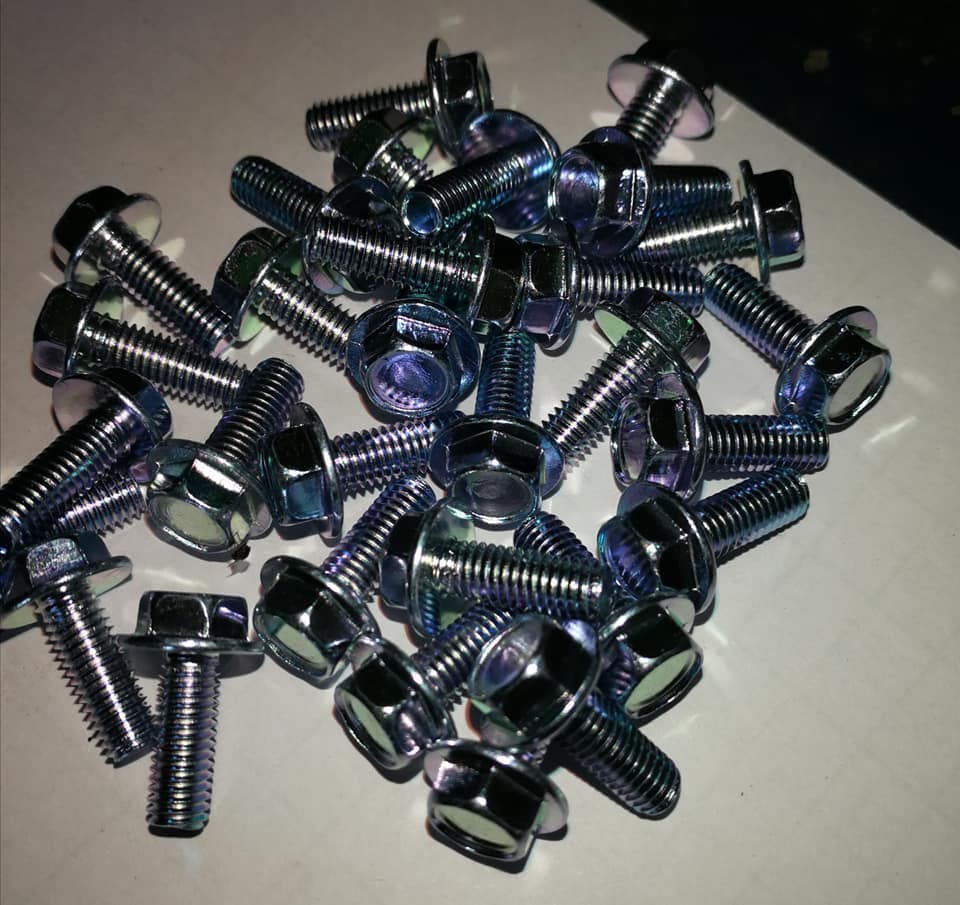
Clear / blue Cr3+
- Typical appearance
- Silver to pale blue; bright or slightly cloudy
- Common selection intent
- Neutral appearance, dimensional inspection
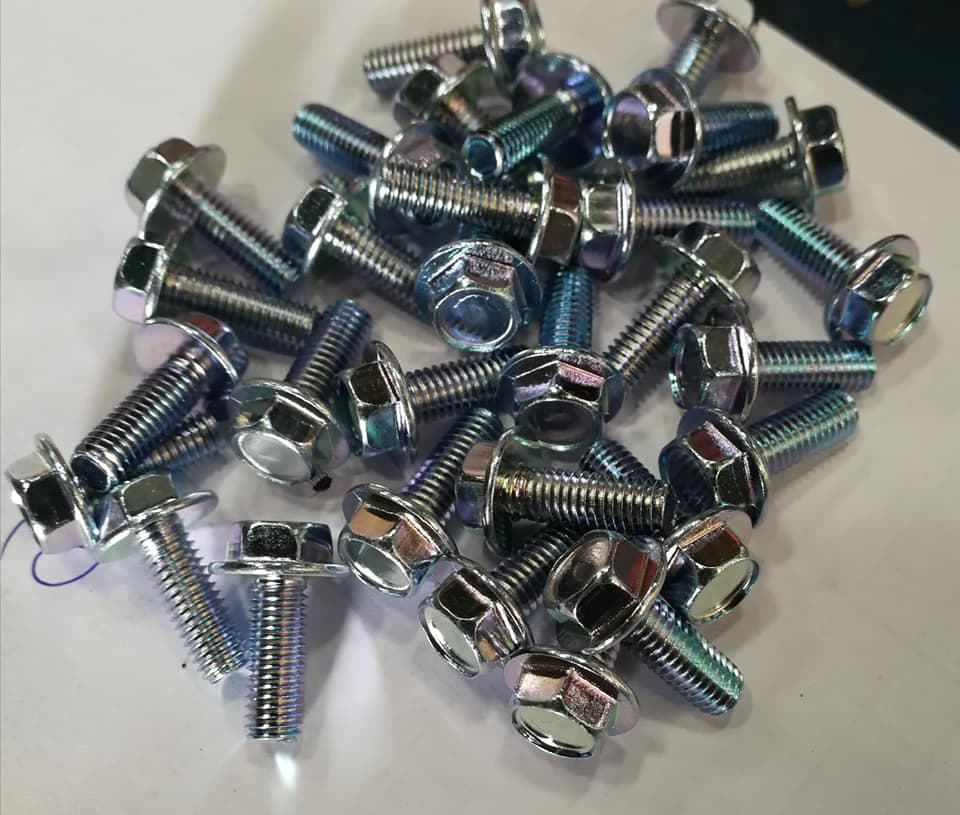
Yellow / iridescent Cr3+
- Typical appearance
- Gold with blue, green or violet iridescence
- Common selection intent
- Visible finish identification and corrosion system
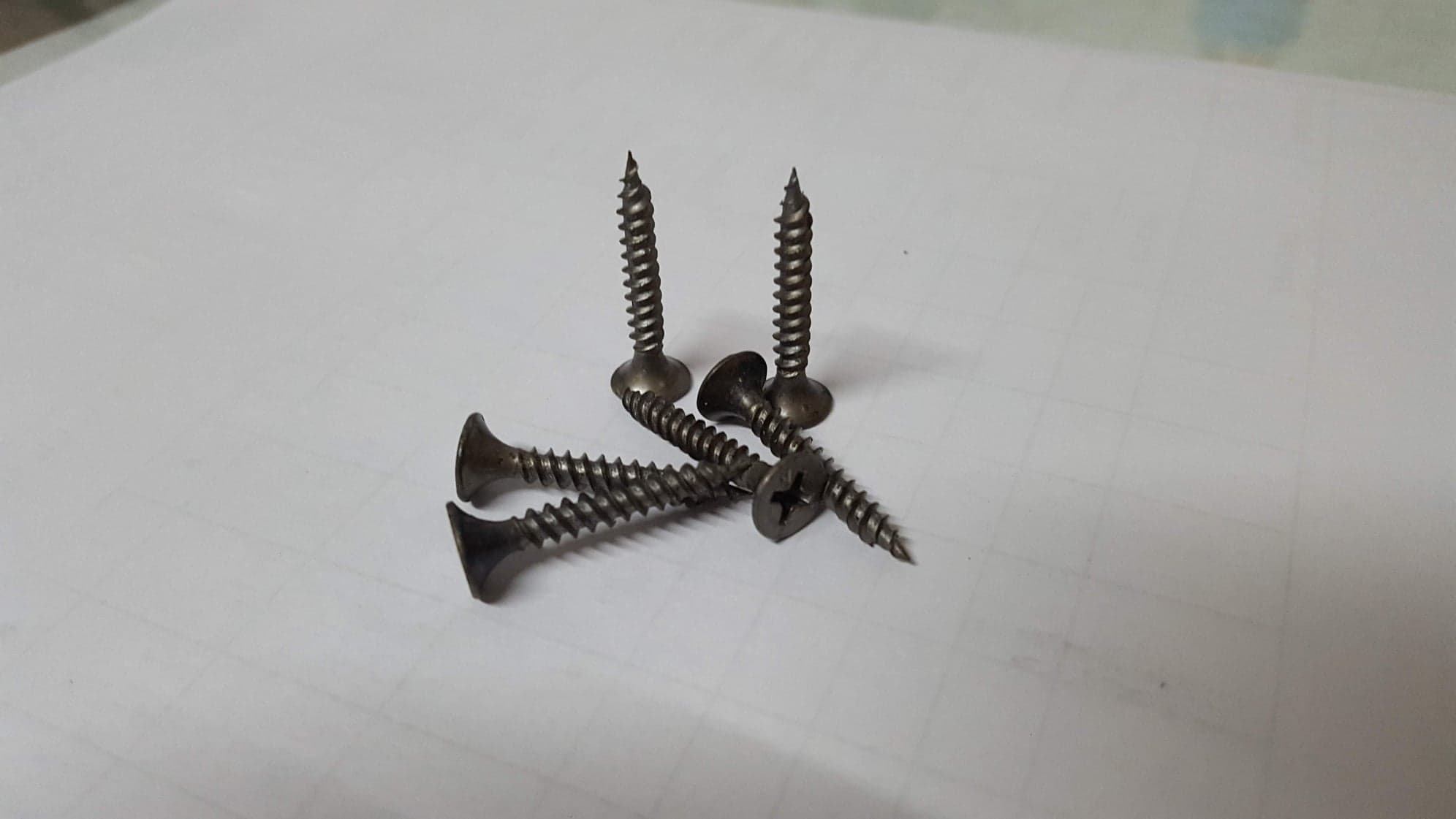
Black Cr3+
- Typical appearance
- Black to charcoal; matte or glossy by sealer
- Common selection intent
- Dark appearance with specified topcoat
Olive / green Cr3+
- Typical appearance
- Olive green to brown-green
- Common selection intent
- Drawing-specific colour identification
Colour alone cannot prove Cr3+ versus Cr6+ or RoHS compliance. Verify the approved chemistry and supplier declaration or analytical test when required.
What purchasing and QC should verify
- Passivation chemistry and Cr(VI)-free declaration
- Zinc thickness on significant surfaces
- Sealer/topcoat and friction requirement
- Approved colour range or physical master sample
- White/red corrosion criteria and test method
Photos are real V.S. Heat Treatment production examples. Screen colour and illumination are not acceptance standards.
Where the colour comes from
Zinc plating starts as a silver-grey zinc layer, then gets a chromate passivation dip that adds both colour and corrosion protection.
Modern work uses trivalent (Cr3+) chromate, free of hexavalent chromium (Cr6), per RoHS.
Colour chart and uses
- White/Blue — silvery, clean look; common for general indoor parts; baseline corrosion protection.
- Yellow/Rainbow — iridescent gold tint; thicker chromate; better protection than white.
- Yellow — deep gold; good protection; popular in automotive/hardware.
- Black — black finish; looks and protection; popular for decorative/electronics parts.
- Olive/Green — highest corrosion protection of the chromates; outdoor/military use.
How to choose
For corrosion priority, darker tints (yellow/rainbow/green/black) usually outlast white-blue.
For appearance or to match an assembly, choose by design.
For a measurable rating, specify the salt-spray hours you need and we select the chromate/thickness to suit.
FAQ
Does colour really indicate protection?+
It indicates a trend—darker chromates (yellow/green) usually protect better than white-blue—but confirm the real number with a salt-spray test.
Rainbow vs white zinc?+
They differ in chromate: rainbow has a thicker layer so it protects better and shows iridescence; white is cleaner but baseline.
Can I choose the colour?+
Yes—tell us the colour and protection level (salt-spray hours) and we set the process to match.
Free Engineering Tools
- Hardness Converter HRC ↔ HV ↔ HB
- Which Steel Grades Harden — and How Far
- Fastener Weight: pcs ↔ kg
- Finishing Specification Builder for Purchasing and QC
- Salt Spray Test Plan Builder
- Coating thickness → thread fit (GO/NO-GO)
- Hydrogen Embrittlement — is baking required?
- Bolt Tightening Torque & Proof Load
- Thread Engagement Length
- Bolt Size Estimator (from load)
- Bolt Property Class — Mechanical Properties (ISO 898-1)
What this article covers at our plant
Related comparison guides
- Black oxide vs PhosphateBlack oxide vs phosphate: which finish for screws, nuts and bolts?
- Zinc plating vs Dacromet / zinc flakeZinc plating vs Dacromet: which coating for screws and bolts?
- Zinc phosphate vs Manganese phosphateZinc phosphate vs manganese phosphate: match the coating to the job it does
Technical content review
Reviewed by the V.S. Heat Treatment QA and production team—heat-treatment and finishing operations since 1994 under an ISO 9001:2015 quality system.
View evidence and report format