Types of metal coloring
Metal coloring isn’t spray paint — it changes the surface color through chemical or electrochemical reactions, so the color bonds in and resists peeling. It splits into groups by metal and process.
Black oxide (blackening)
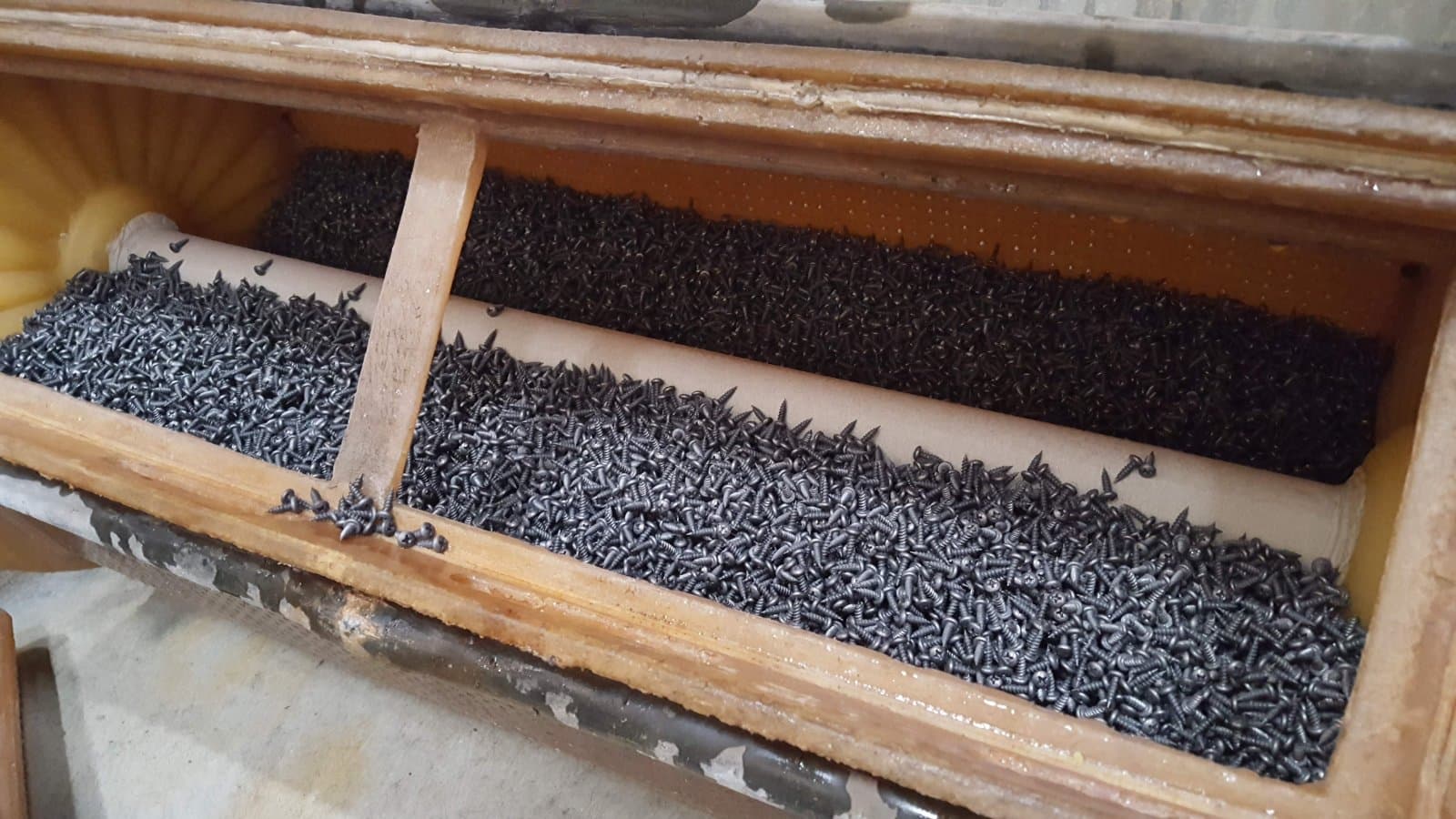
Black oxide forms a black magnetite film on steel in a hot alkaline bath, giving a deep black with almost no added dimension (it doesn’t eat thread size) — ideal for screws, nuts, bolts and tools that need looks and reduced glare.
On its own it offers little corrosion protection and needs an oil or wax topcoat. Its strengths are low cost, good looks and preserved tolerances.
Colors from zinc plating + passivation
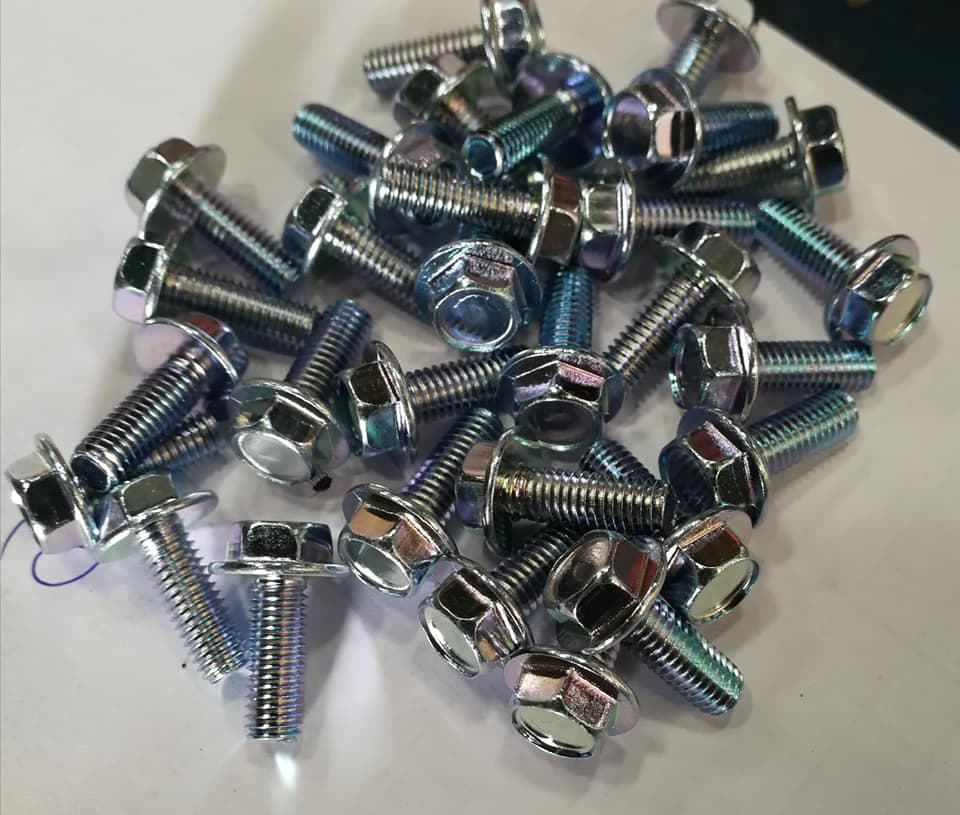
Zinc plating colors come from the Cr3+ passivation layer: clear/blue, yellow/iridescent, black or olive drab. These give appearance and corrosion protection together — a popular choice for fasteners (see the Cr3+ zinc article).
Anodizing (for aluminum)
Aluminum is colored by anodizing: a porous oxide layer is grown, dye fills the pores, then it is sealed. The result is vivid color (black, red, blue, gold) with a hard, corrosion-resistant surface.
Unlike plating, the colored layer is integral to the metal and won’t flake. It is popular on aluminum parts, hardware and trim.
Other coloring routes
- Gray-black phosphate — a matte gray-to-black base for paint and oil adhesion.
- Heat/temper tinting — colors (blue, purple, straw) from heat on steel; seen on springs and fasteners.
- Electrophoretic / E-coat — even black color by electrodeposition; high corrosion resistance.
- PVD coating — ultra-thin film colors (gold, rose gold, black) with high wear resistance; premium parts.
Which to choose
For low cost, black color and preserved thread size → black oxide; for color + corrosion in one → colored zinc passivation; for vivid color and a hard surface on aluminum → anodizing. Ask our team to match process to real use.
FAQ
Does black oxide prevent rust?+
Very little without an oil/wax topcoat. Its strengths are appearance and dimensional accuracy, not corrosion protection.
I want gold-colored steel screws.+
Use yellow/iridescent zinc passivation for a gold tone with corrosion protection.
Can you anodize steel?+
No — anodizing is for aluminum (and a few metals). Steel uses black oxide or colored zinc instead.
Free Engineering Tools
- Hardness Converter HRC ↔ HV ↔ HB
- Which Steel Grades Harden — and How Far
- Fastener Weight: pcs ↔ kg
- Finishing Specification Builder for Purchasing and QC
- Salt Spray Test Plan Builder
- Coating thickness → thread fit (GO/NO-GO)
- Hydrogen Embrittlement — is baking required?
- Bolt Tightening Torque & Proof Load
- Thread Engagement Length
- Bolt Size Estimator (from load)
- Bolt Property Class — Mechanical Properties (ISO 898-1)
What this article covers at our plant
Related comparison guides
- Black oxide vs PhosphateBlack oxide vs phosphate: which finish for screws, nuts and bolts?
- Zinc plating vs Dacromet / zinc flakeZinc plating vs Dacromet: which coating for screws and bolts?
- Zinc phosphate vs Manganese phosphateZinc phosphate vs manganese phosphate: match the coating to the job it does
Technical content review
Reviewed by the V.S. Heat Treatment QA and production team—heat-treatment and finishing operations since 1994 under an ISO 9001:2015 quality system.
View evidence and report format