Why plating affects the thread
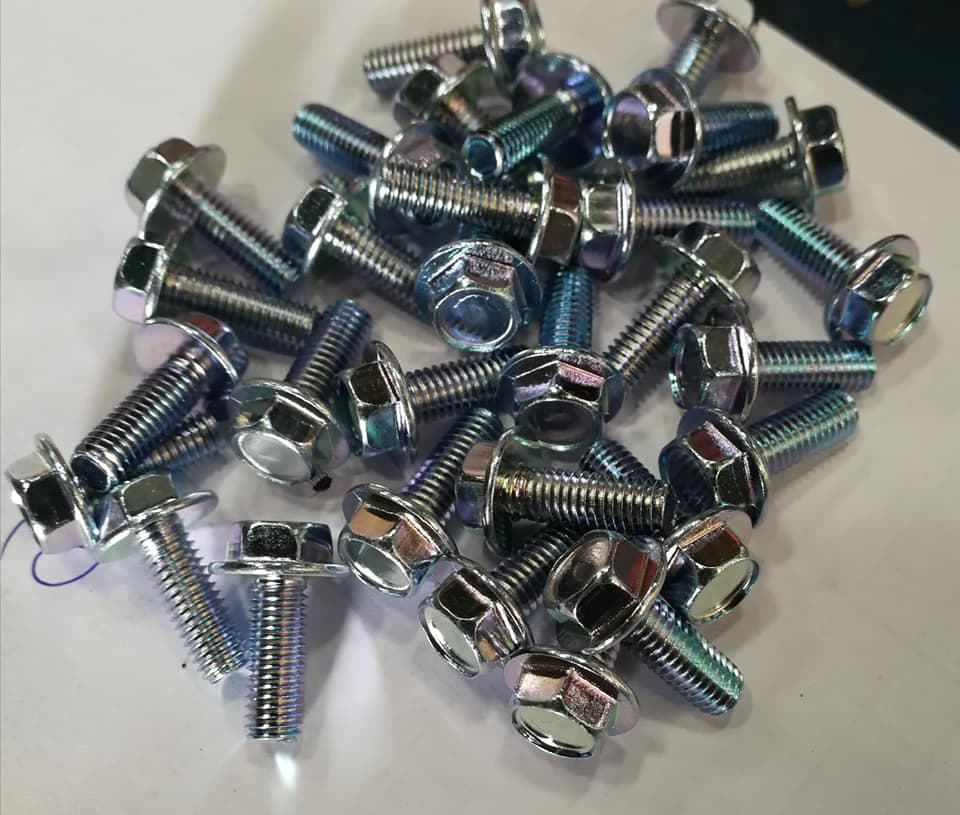
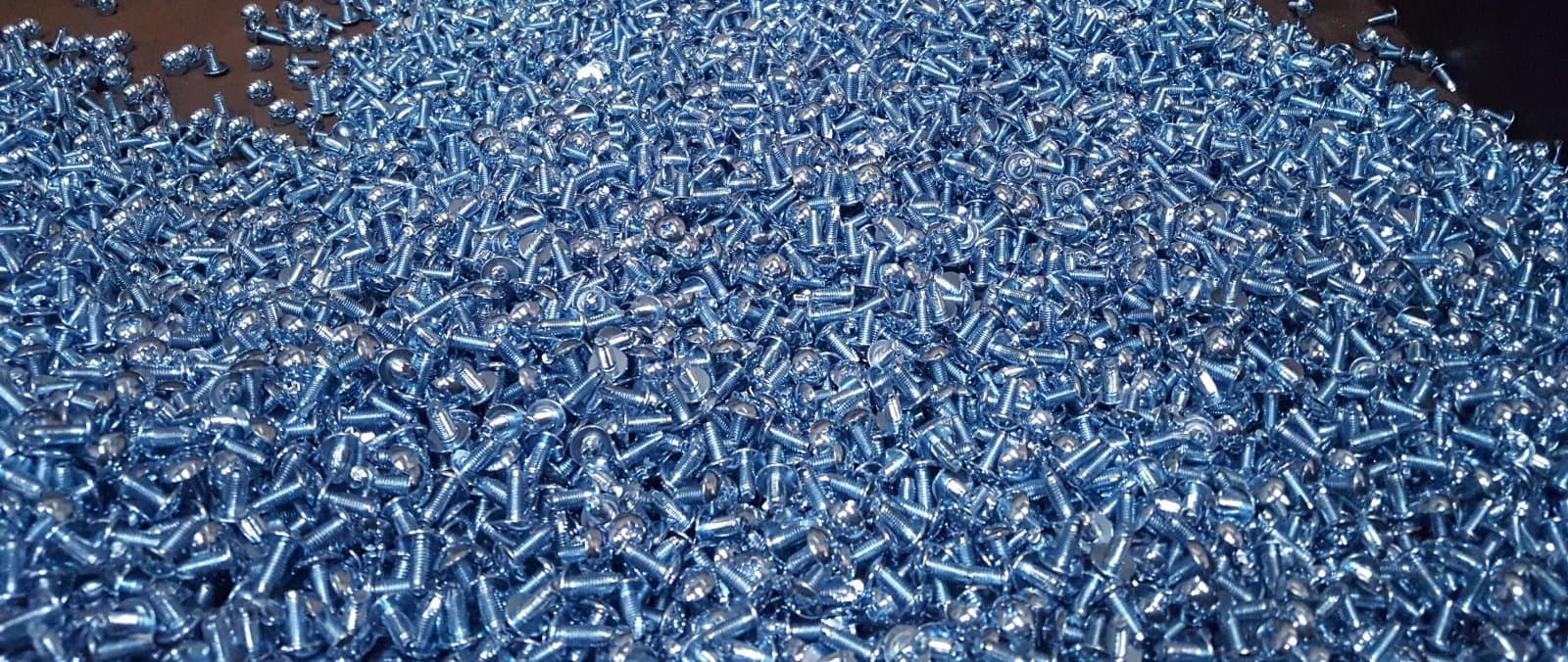
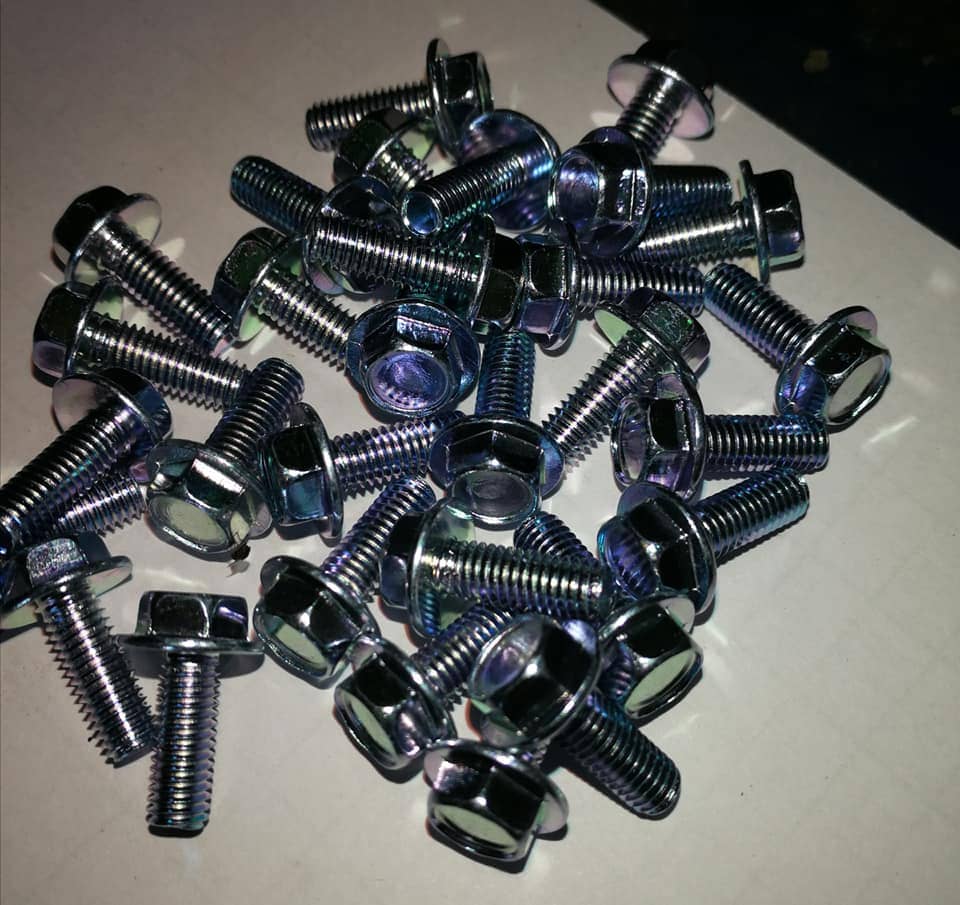
Screw threads are a very tight-tolerance feature, and plating (zinc, phosphate, black oxide) adds a metal/coating layer onto every surface — including the flanks of each thread tooth.
When both flanks grow thicker, the gap between the external thread (bolt) and internal thread (nut) shrinks. Allow too little and the nut binds or will not start; conversely, cut generous clearance then plate thin and the thread can be loose.
So for plated threaded parts, "coating thickness" is not only about corrosion — it is about assembly.
The key rule: coating eats ~4× its thickness from the thread
The rule engineers need to know is that a coating of thickness t reduces the assembled pitch diameter by roughly 4 × t.
That is because the layer sits on both flanks of the tooth, and thread geometry multiplies its effect on pitch diameter to about 4× the actual thickness.
Example: an 8-micron (µm) zinc coating consumes about 32 µm of pitch-diameter tolerance — for small threads (M3–M6) that is a large enough share to prevent assembly if no allowance is made.
How to allow tolerance so it assembles after plating
In practice there are standard ways to manage this:
- Bolts (external thread): cut the thread to a 6g class (a slight undersize allowance) to leave room for the coating.
- Nuts (internal thread): often tapped oversize (e.g. a 6AZ class) before plating, so that after plating they still meet 6H and mate with the bolt.
- Control the coating thickness to a range that protects against rust yet still assembles — not so thick it locks the thread.
What to specify when ordering: target coating thickness, thread class, and the mating pair (are both bolt and nut plated?), so we set it correctly.
Plating changes torque and clamp load (torque–tension)
Plating changes more than size — it changes the thread’s friction coefficient, which shifts the relationship between applied torque and the actual clamp load (tension).
Bare zinc is often grabbier with inconsistent friction, so a topcoat/lubricant is commonly added to make friction stable and predictable, so a given torque delivers the intended clamp load.
For parts where clamp load must be tightly controlled (e.g. automotive), specify the required friction coefficient or coating system as well.
Do not forget: high-strength parts need hydrogen baking
For high-strength screws and bolts (grade 10.9, 12.9, or ≥ 320 HV / ~32 HRC), electroplated zinc drives hydrogen into the steel, risking hydrogen embrittlement.
They therefore need a hydrogen-relief bake at ~200°C within a set time after plating, per standard.
See the dedicated article on hydrogen embrittlement baking — it is a step you must not skip for high-strength threaded parts.
We control thickness so threads still assemble
V.S. Heat Treatment plates threaded parts in volume while keeping them assemblable:
- Coating thickness controlled to the corrosion spec, accounting for its effect on thread tolerance.
- Advice on allowance / oversize tapping for bolt-and-nut pairs.
- Hydrogen-relief baking for high-strength threaded parts, plus thickness measurement and a test certificate.
Send the thread class, target coating thickness and the mating pair, and we set the process so it fits — with a quote within 24 business hours.
FAQ
How thick can zinc be and still let the nut turn?+
It depends on the thread class and size. Remember the coating eats about 4× its thickness from the pitch diameter — e.g. 8 µm consumes ~32 µm — so allowance or oversize tapping must suit the thread size.
Why will the nut not go on after plating?+
Usually the coating is too thick or no allowance was left before plating. Fix it by oversize-tapping the nut / cutting the bolt to 6g and controlling coating thickness.
Does plating affect tightening torque?+
Yes — it changes thread friction, so a topcoat/lubricant is often added to keep friction stable so a set torque delivers the intended clamp load.
How do I get advice and a price for plated threads?+
Send the thread class, target coating thickness and the mating pair; we advise the right allowance and reply with a quote within 24 business hours.
Free Engineering Tools
- Hardness Converter HRC ↔ HV ↔ HB
- Which Steel Grades Harden — and How Far
- Fastener Weight: pcs ↔ kg
- Finishing Specification Builder for Purchasing and QC
- Salt Spray Test Plan Builder
- Coating thickness → thread fit (GO/NO-GO)
- Hydrogen Embrittlement — is baking required?
- Bolt Tightening Torque & Proof Load
- Thread Engagement Length
- Bolt Size Estimator (from load)
- Bolt Property Class — Mechanical Properties (ISO 898-1)
What this article covers at our plant
Related comparison guides
- Zinc plating vs Dacromet / zinc flakeZinc plating vs Dacromet: which coating for screws and bolts?
- Black oxide vs PhosphateBlack oxide vs phosphate: which finish for screws, nuts and bolts?
- Electroplated zinc vs Hot-dip galvanizingZinc plating vs hot-dip galvanizing: which one does your fastener need?
- Zinc plating vs Zinc-nickelZinc plating vs zinc-nickel: when is the upgrade worth paying for?
- Barrel plating vs Rack platingBarrel plating vs rack plating: how small fasteners are actually plated
- Zinc phosphate vs Manganese phosphateZinc phosphate vs manganese phosphate: match the coating to the job it does
Technical content review
Reviewed by the V.S. Heat Treatment QA and production team—heat-treatment and finishing operations since 1994 under an ISO 9001:2015 quality system.
View evidence and report format