The problem both routes exist to solve
Conventional hardening drops a hot part straight into a cold medium. The surface passes the martensite-start temperature (Ms) long before the core does, which means different parts of the same piece transform at different moments.
Martensite occupies more volume than the austenite it replaces. When the skin expands while the core has not yet transformed, stress builds — and it stacks on top of the purely thermal stress from the temperature difference. Those two together are the origin of distortion and, at worst, of a quench crack.
Austempering and martempering do not change the steel. They change when the transformation happens. Both quench into a hot bath — molten salt or hot oil — held above Ms, let the part equalise in temperature first, and only then allow it to transform.
Martempering (also called marquenching)
The sequence is: austenitise → quench into a bath held just above Ms → hold until surface and core are at the same temperature, but not long enough for austenite to begin turning into bainite → remove and cool in air through the Ms range.
The product is still martensite, so the part still has to be tempered exactly as in ordinary hardening. What you gain is that the whole section transforms at nearly the same time, so residual stress is far lower and distortion and cracking drop sharply.
The limit is hardenability. Cooling down to the bath is slower than a direct quench, so the grade must survive that pause without forming pearlite first. The thicker the section, the more alloy content is required — which is why the route belongs mainly to thin and medium sections.
Austempering
The start is similar; the end is not. The part is quenched into a bath above Ms — typical guidance is roughly 250–400 °C depending on grade and target hardness — and held there until the austenite has fully transformed to bainite, then air-cooled.
The result is lower bainite, not martensite, so no tempering step follows. Hardness in suitable steels typically lands around 40–50 HRC as general guidance, and at equal hardness lower bainite usually offers better toughness and bend ductility than tempered martensite.
Because no fresh martensite forms at the end, residual stress is low: thin parts come out flatter, and there is no untempered martensite waiting to crack later. The costs are a lower hardness ceiling and much longer hold times.
What a small fastener gains, and what it gives up
The clear winners are thin parts that must stay flat and must bend: spring washers, retaining rings and circlips, clips, thin wire springs and small stampings. These parts fail by distorting, cracking and fatiguing — not by being insufficiently hard.
What you give up: (1) the hardness ceiling — if the drawing wants 58–62 HRC, austempering cannot get there; (2) section and hardenability limits; (3) the running cost of a salt bath, including washing salt off the parts, waste handling and controlling water in the bath; (4) long isothermal hold times, so throughput per hour is far below a continuous line.
One more thing to know: an austempered part cannot have its hardness adjusted afterwards by tempering the way martensite can. Hardness is set by the bath temperature at the moment of processing, so it has to be right the first time.
Before you switch: this is a specification change
The property-class system for bolts and screws (8.8, 10.9, 12.9 and so on) as set out in ISO 898-1 is built around parts that are quenched and tempered to a tempered-martensitic structure. Substituting an austempered bainitic structure is therefore not a free choice of manufacturing route — it is a specification change that has to go back to the design authority and be re-qualified.
The difference is also provable in the lab: metallography distinguishes lower bainite from tempered martensite. So "the hardness passed" is not the end of the argument when the specification references structure.
When distortion is the real complaint, the safer first move is diagnosis: is it the quench medium, the load density, the tempering temperature, or residual stress left over from cold forming before heat treatment? Fixing one of those often solves the problem without changing the whole process route.
What V.S. Heat Treatment can and cannot do here
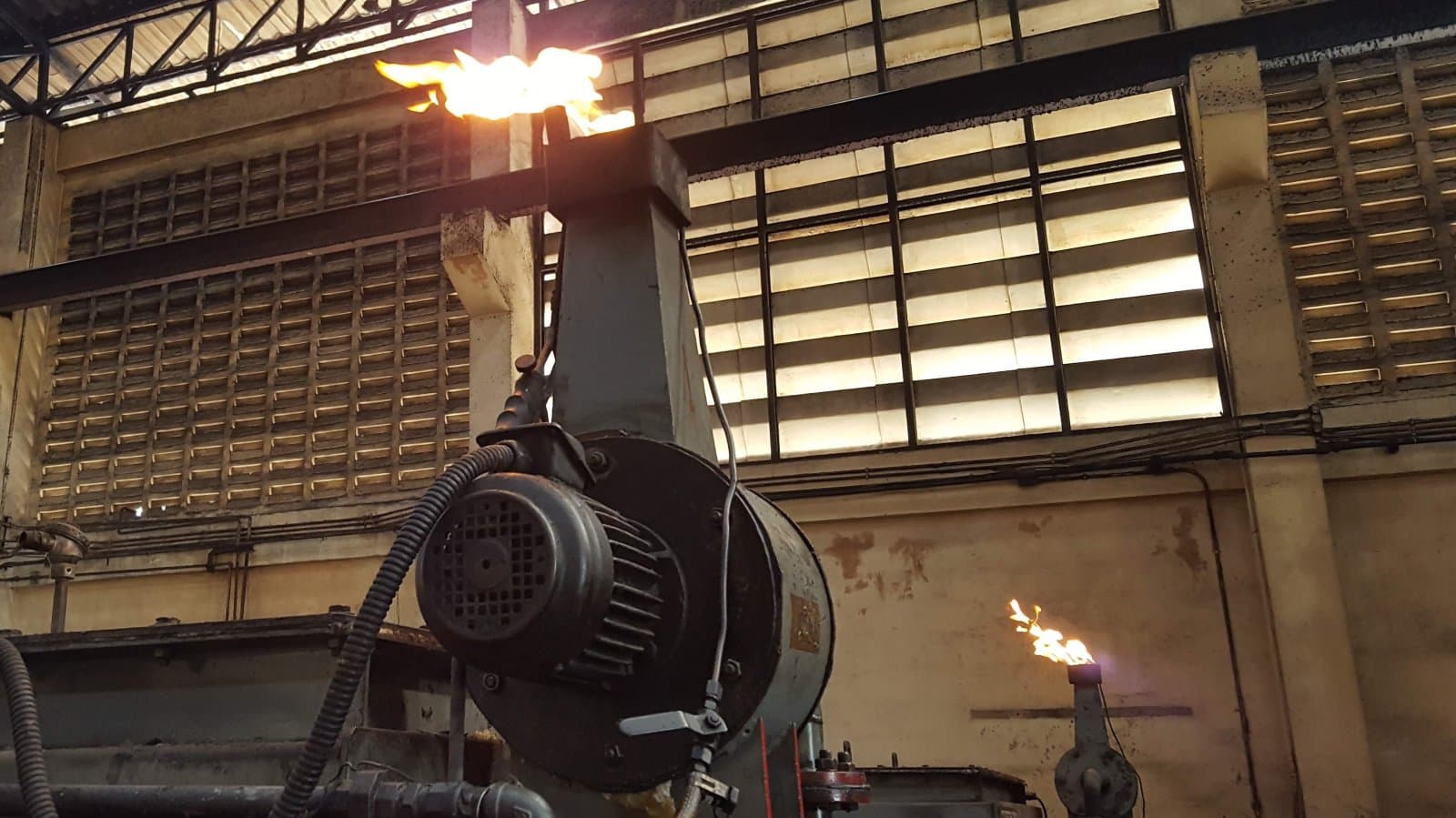
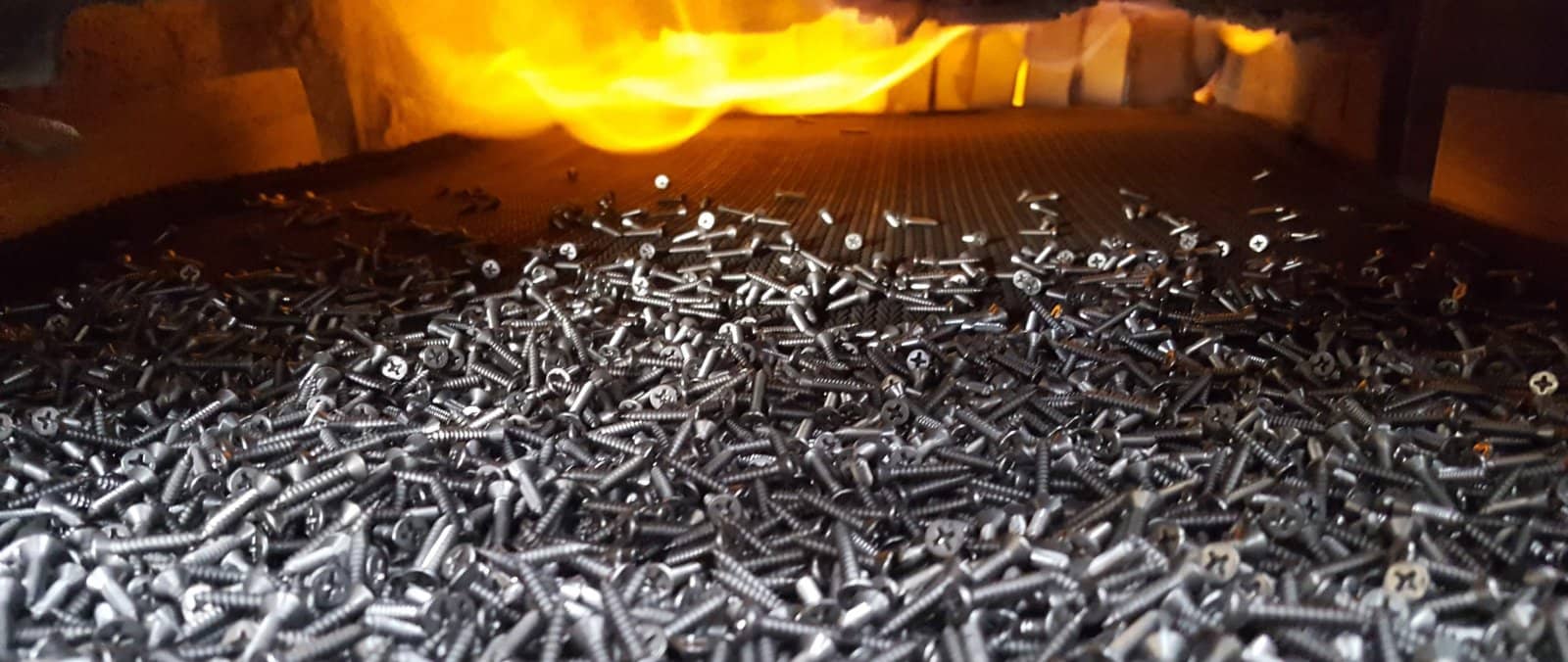
We run quench-and-temper on a continuous mesh-belt line with temperature-controlled oil, for screws, nuts, bolts, washers, pins and springs in bulk. We do not operate a salt bath for austempering or martempering — saying so plainly beats wasting your time.
If your actual problem is thin parts distorting or cracking after hardening, talk to us early. Several levers do exist on our line: choosing a grade whose hardenability matches the section, changing how densely parts are loaded, adjusting the tempering temperature to trade hardness for toughness, and checking whether cold-forming stress should be relieved before the parts enter the furnace.
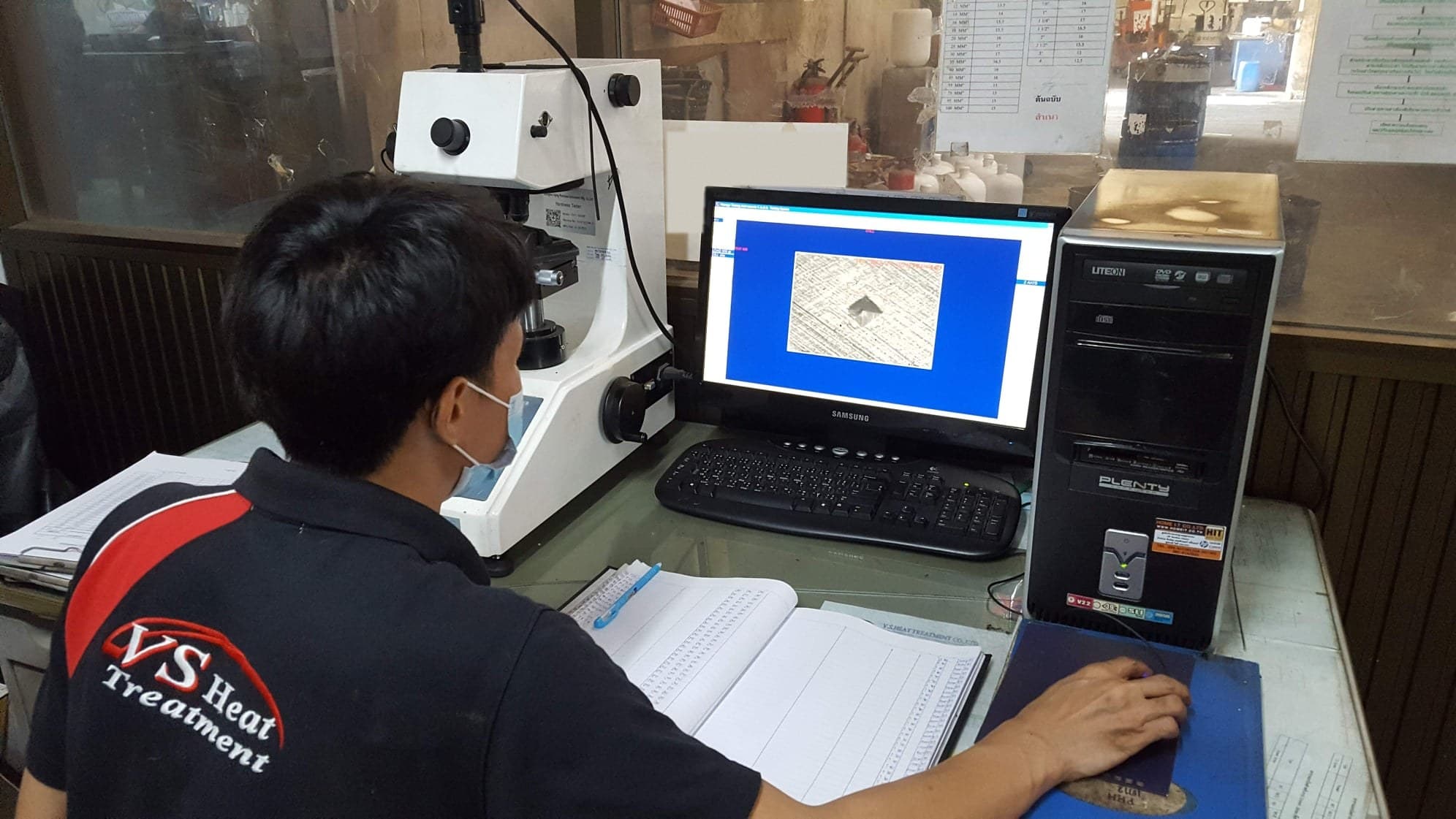
Every lot ships with hardness readings from our own lab, and microstructure examination is available when a specification asks for structural evidence. Our quality system is ISO 9001:2015 and we reply to quotes within 24 hours.
FAQ
What is the difference between austempering and martempering?+
Martempering holds the part in a hot bath only long enough to equalise temperature, then cools it to form martensite — so it still needs tempering. Austempering holds it until the austenite has fully transformed to bainite — so no tempering follows.
Does an austempered part need tempering afterwards?+
No. No brittle fresh martensite is formed at the end, and a later temper does not adjust hardness the way it does for martensite. Hardness is set by the bath temperature during processing.
Can a class 10.9 bolt be austempered instead?+
Not as a unilateral substitution. ISO 898-1 property classes are written around a quenched-and-tempered martensitic structure, so a bainitic route is a specification change requiring approval from the design authority and re-qualification.
Why are thin spring washers often austempered?+
Because thin parts fail by distortion and cracking rather than by lack of hardness. Lower bainite at roughly 40–50 HRC gives better toughness and bend ductility, with low residual stress so the part stays flat.
Standards and references
Free Engineering Tools
- Hardness Converter HRC ↔ HV ↔ HB
- Which Steel Grades Harden — and How Far
- Fastener Weight: pcs ↔ kg
- Finishing Specification Builder for Purchasing and QC
- Salt Spray Test Plan Builder
- Coating thickness → thread fit (GO/NO-GO)
- Hydrogen Embrittlement — is baking required?
- Bolt Tightening Torque & Proof Load
- Thread Engagement Length
- Bolt Size Estimator (from load)
- Bolt Property Class — Mechanical Properties (ISO 898-1)
What this article covers at our plant
Related comparison guides
- Case hardening vs Through hardeningCase hardening vs through hardening: which one for screws and bolts?
- Annealing vs Tempering vs NormalizingAnnealing vs tempering vs normalizing: which one does your part need?
- Quenching vs TemperingQuenching vs tempering: two halves of one process
- Carburising vs NitridingCarburising vs nitriding: what a screw, nut or bolt actually gets
- Carbonitriding vs CarburizingCarbonitriding vs carburizing: which case-hardening for fasteners?
- S45C vs SCM440S45C vs SCM440: which steel should you harden?
- SCM435 vs SCM440SCM435 vs SCM440: one alloy step apart, and it shows
- Grade 8.8 vs Grade 10.9 vs Grade 12.9Grade 8.8 vs 10.9 vs 12.9 bolts: what actually differs?
- Class 10.9 vs Class 12.9Class 10.9 vs 12.9: what you gain, and what you take on
Technical content review
Reviewed by the V.S. Heat Treatment QA and production team—heat-treatment and finishing operations since 1994 under an ISO 9001:2015 quality system.
View evidence and report format