What SUJ2 is
SUJ2 (JIS G 4805) is a through-hardening bearing steel with high carbon (~0.95–1.10%) and chromium (~1.30–1.60%). It is equivalent to 100Cr6 (EN), AISI 52100 (SAE) and GCr15 (China).
The high carbon and chromium give a fine dispersion of carbides and let the steel harden all the way through to ~60–62 HRC, with good wear resistance, contact hardness and dimensional stability — which is why it is used for pins, rollers, balls, bushings and small shafts.
The international reference is ISO 683-17, which covers the through-hardening group of ball and roller bearing steels.
The core recipe: austenitize → quench → temper
Austenitizing: heat to about 830–860°C and soak so the right amount of carbide dissolves (not so much that grains coarsen). Furnace atmosphere must be controlled to prevent surface decarburization.
Quench: oil-quench (or another suitable medium) to form martensite. As-quenched hardness is high, around 63–65 HRC, but with retained austenite and high brittleness.
Temper: a low temper at about 150–180°C reduces brittleness while holding ~60–62 HRC. A higher temper trades hardness for more toughness where needed.
Retained austenite and dimensional stability
High-carbon steels like SUJ2 usually keep some retained austenite after quenching. It is softer than martensite and unstable — over time, or under service temperature and load, it slowly transforms to martensite and the part grows slightly. That is a serious problem for bearings, gauges and tight-tolerance parts.
When to sub-zero treat: for parts needing high dimensional stability or maximum hardness, deep-freeze at about −70 to −80°C (or lower, cryogenic) immediately after quenching to convert more retained austenite to martensite, gaining a little hardness and a more stable size.
Always temper after sub-zero, because the freshly formed martensite is brittle; tempering restores toughness and relieves stress.
Why it suits small parts
SUJ2 is common in small parts that see local contact and wear — dowels/pins, rollers, bushings, small shafts and balls. Through-hardening gives uniform hardness across the section, right for contact surfaces carrying Hertzian loads.
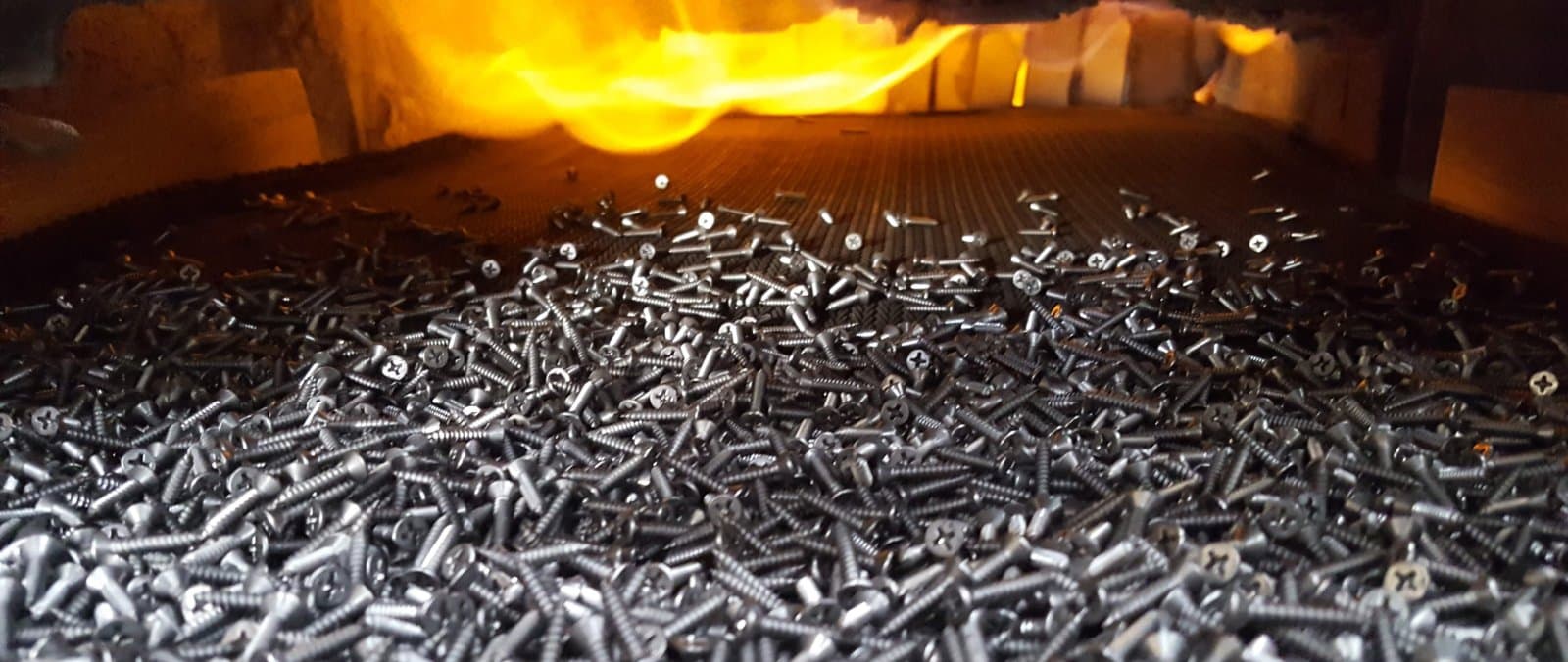
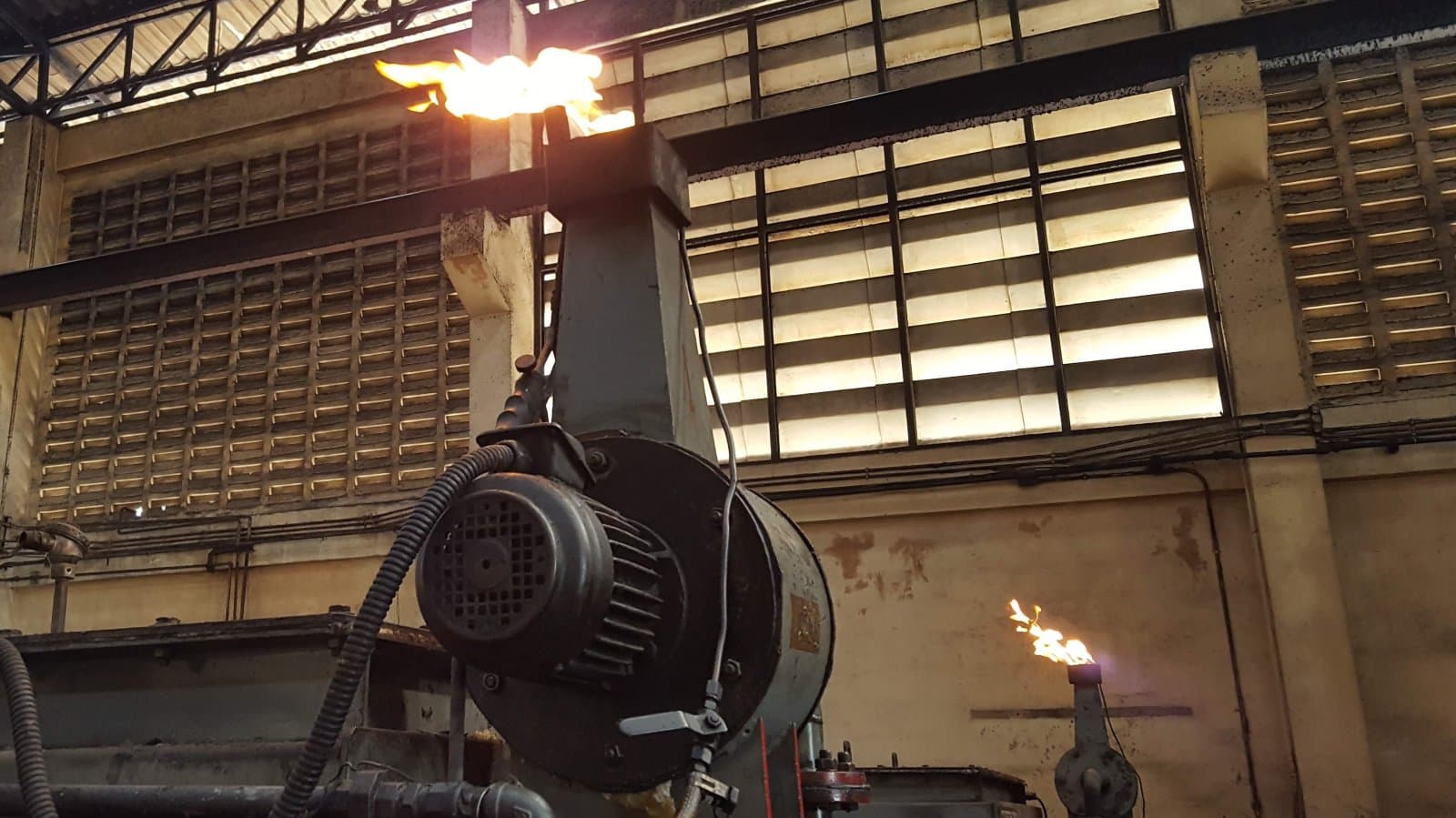
The challenge in high-count lots is hardness consistency across every piece, distortion of thin parts and preventing decarburization during heating. A controlled-atmosphere mesh-belt furnace heats large volumes of small parts evenly and continuously.
Tight-tolerance parts are usually ground after hardening, so allow grind stock and state the final tolerance clearly. (V.S. Heat Treatment handles small parts only — not large items such as gears or big shafts.)
How to order and accept
Specify: grade (SUJ2/100Cr6/52100), target hardness range (e.g. 60–62 HRC), any dimensional-stability requirement (sub-zero or not), distortion limits, grind allowance, and weight/count per lot.
Hardness can be reported as HRC, or measured/converted as HV on a prepared cross-section, random-sampled per lot with a certificate. For very thin parts where an HRC indenter punches through, specify HV.
Do not set an unnecessarily narrow hardness band — it raises rejection and cost. If unsure, state the function so the team can set a repeatable criterion.
FAQ
Are SUJ2, 100Cr6 and 52100 the same steel?+
They are equivalent in practice: SUJ2 (JIS), 100Cr6 (EN), AISI 52100 (SAE) and GCr15 (China) are the same high-carbon chromium bearing-steel family.
What hardness does SUJ2 reach?+
Typically ~60–62 HRC after an oil quench and a low temper (~150–180°C). As-quenched is higher but brittle and full of retained austenite.
Is sub-zero treatment always needed?+
No. Use it when dimensional stability or maximum hardness matters — gauges or tight-tolerance parts — and always temper after sub-zero.
Standards and references
Free Engineering Tools
- Hardness Converter HRC ↔ HV ↔ HB
- Which Steel Grades Harden — and How Far
- Fastener Weight: pcs ↔ kg
- Finishing Specification Builder for Purchasing and QC
- Salt Spray Test Plan Builder
- Coating thickness → thread fit (GO/NO-GO)
- Hydrogen Embrittlement — is baking required?
- Bolt Tightening Torque & Proof Load
- Thread Engagement Length
- Bolt Size Estimator (from load)
- Bolt Property Class — Mechanical Properties (ISO 898-1)
What this article covers at our plant
Related comparison guides
- Case hardening vs Through hardeningCase hardening vs through hardening: which one for screws and bolts?
- Annealing vs Tempering vs NormalizingAnnealing vs tempering vs normalizing: which one does your part need?
- Quenching vs TemperingQuenching vs tempering: two halves of one process
- Carburising vs NitridingCarburising vs nitriding: what a screw, nut or bolt actually gets
- Carbonitriding vs CarburizingCarbonitriding vs carburizing: which case-hardening for fasteners?
- S45C vs SCM440S45C vs SCM440: which steel should you harden?
- SCM435 vs SCM440SCM435 vs SCM440: one alloy step apart, and it shows
- Grade 8.8 vs Grade 10.9 vs Grade 12.9Grade 8.8 vs 10.9 vs 12.9 bolts: what actually differs?
- Class 10.9 vs Class 12.9Class 10.9 vs 12.9: what you gain, and what you take on
Technical content review
Reviewed by the V.S. Heat Treatment QA and production team—heat-treatment and finishing operations since 1994 under an ISO 9001:2015 quality system.
View evidence and report format