Short answer: where ~1000 HV comes from
If you are asking "which process reaches ~1000 HV surface hardness", the usual answer is the nitriding and nitrocarburizing family, which diffuses nitrogen into the surface to form a very hard layer — around 900–1100 HV in suitably alloyed steels.
Note this is reported in HV (Vickers), not HRC, because the hard layer is thin enough that an HRC indenter punches through. It is measured on a cross-section at low load (e.g. HV0.3, HV0.5) per ISO 6507.
Why nitriding reaches ~900–1100 HV
Unlike ordinary hardening, which relies on martensite, nitriding works at low temperature (~500–570°C): nitrogen diffuses in and combines with alloying elements such as chromium, aluminium, molybdenum and vanadium to form fine nitride precipitates throughout the surface. These block dislocation movement and make the surface very hard.
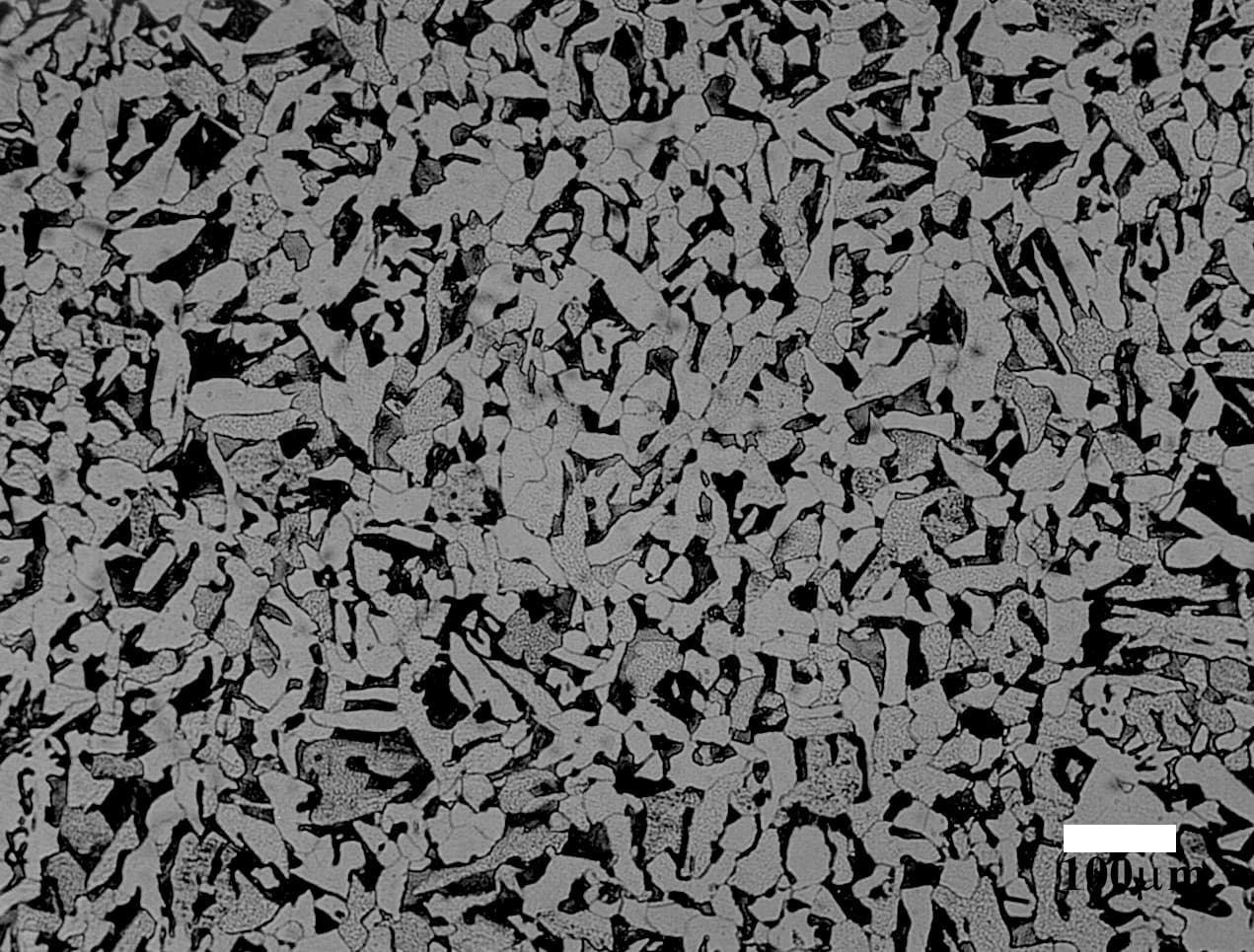
The outermost surface may form a compound layer (white layer) of iron nitrides (ε and γ′) that is hard and resists scuffing, with a diffusion zone beneath that raises hardness and fatigue strength.
Dedicated nitriding steels (aluminium-bearing grades like Nitralloy, or certain tool steels) reach the top of the range, ~1100–1200 HV; ordinary low-alloy steels sit lower.
Nitriding vs carburizing
Carburizing adds carbon at ~850–950°C then quenches to form martensite, giving a ~58–63 HRC surface (about 700–800 HV) and a case depth (CHD) that can run ~0.3–2 mm — good for high contact loads.
Nitriding gives a "harder" surface (~900–1100 HV) but a thinner case, at low temperature and without quenching, so distortion is very low — ideal for high-precision parts.
As a rule of thumb: maximum surface hardness with minimal distortion → nitriding; deep case for high contact/impact load → carburizing.
The case-depth and load trade-off
The ultra-hard nitride layer is usually thin (NHD typically ~0.1–0.6 mm). That is excellent for wear, scuffing resistance and surface fatigue, but gives limited sub-surface "support" for contact pressure.
Under high Hertzian contact, a too-thin case can collapse below the surface (case crushing); there, the deeper case from carburizing is usually the better fit. The choice depends on the actual loading at the surface, not the hardness number alone.
Depth is measured per ISO 18203, with NHD taken to core hardness + 50 HV. State the reference hardness and load when specifying.
Related services and testing
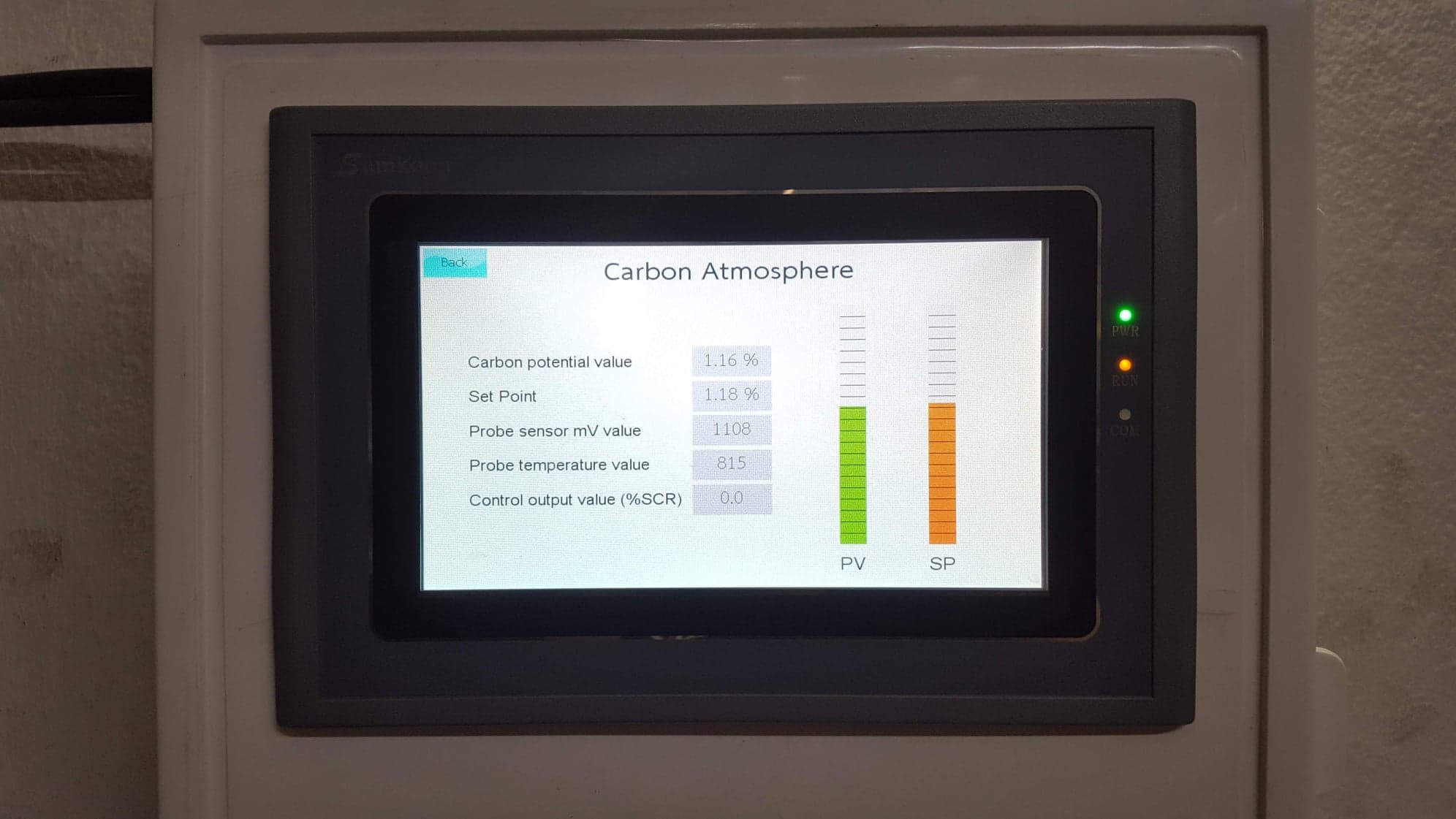
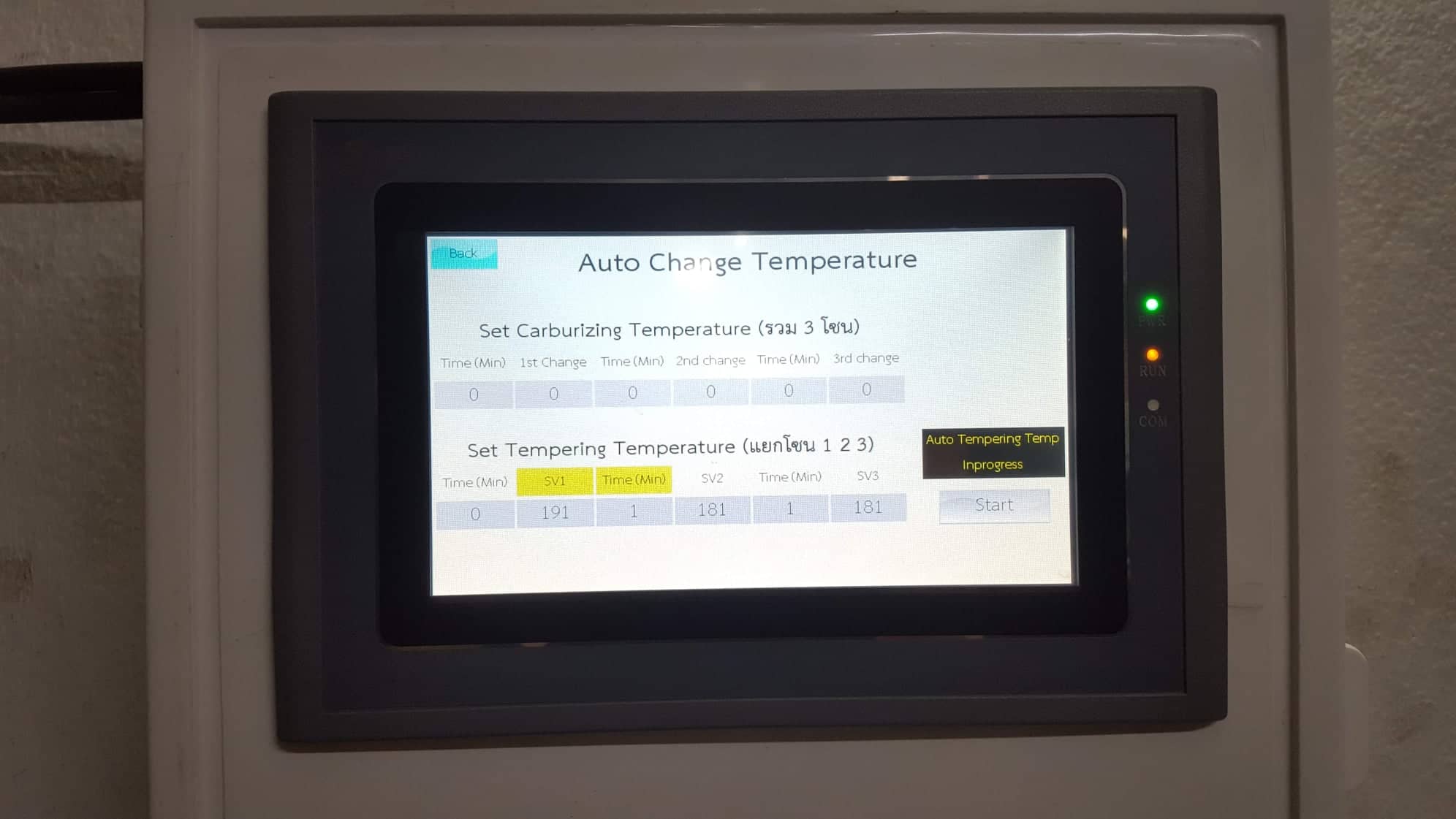
For information: V.S. Heat Treatment provides case hardening by carburizing and carbonitriding on a mesh-belt line. We do not run a dedicated nitriding line, so a true nitrided ~1000 HV surface is a separate, specialised gas/plasma nitriding process.
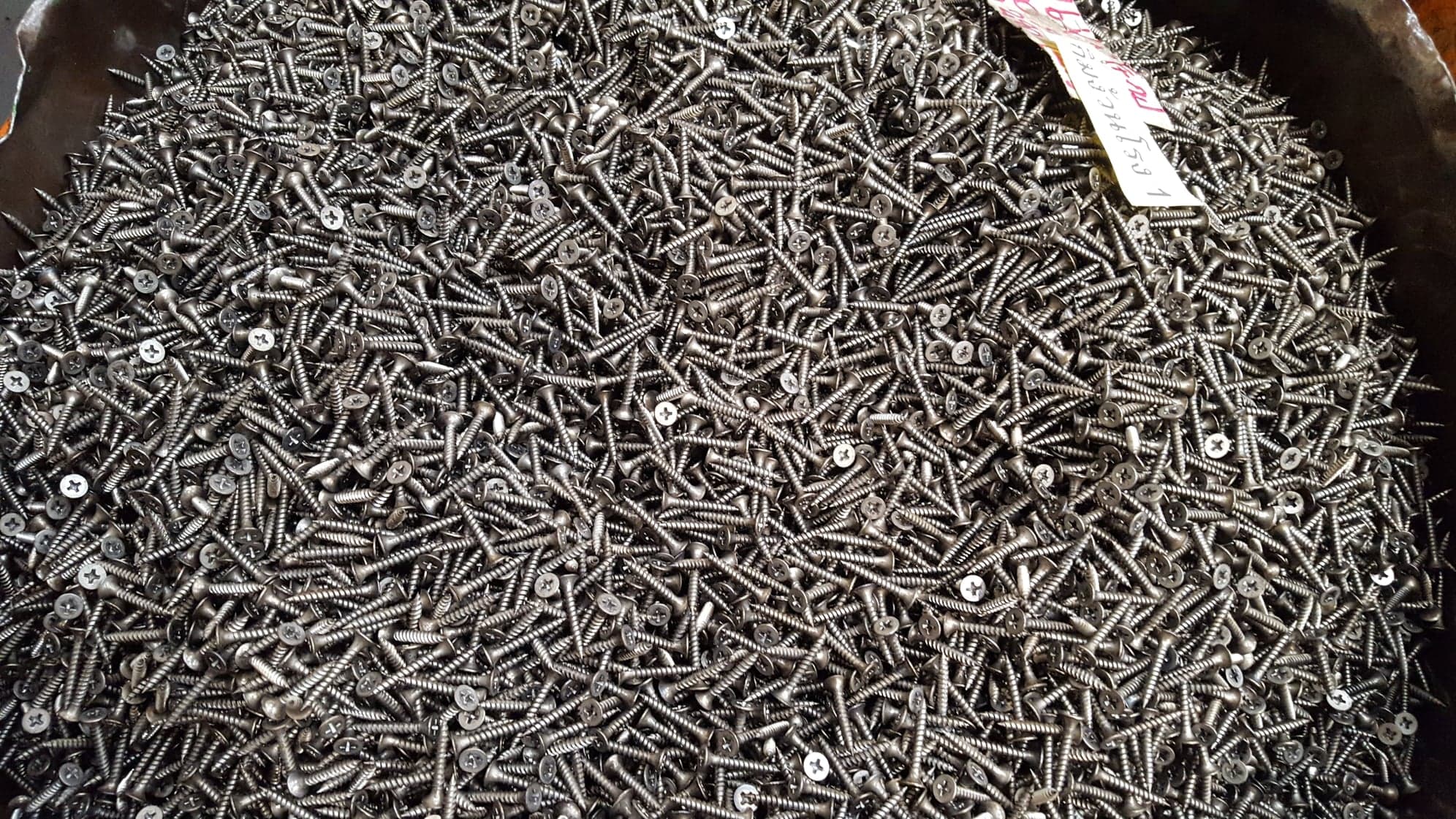
For high-count small parts, carbonitriding is a strong option — it adds both carbon and nitrogen at ~800–870°C, often giving a harder, more wear-resistant case than plain carburizing, well suited to screws, pins and small parts that need a hard surface at controlled cost.
Whichever process is chosen, define the target surface hardness (HV) and case depth clearly, then confirm with cross-section micro-hardness and case-depth measurement per ISO 18203/ISO 6507. The team can advise on process selection and test points to match the function.
FAQ
Which process reaches ~1000 HV?+
The nitriding/nitrocarburizing family in suitably alloyed steel gives ~900–1100 HV surfaces — higher than a carburized surface (~700–800 HV) but with a thinner case.
Why does nitriding distort so little?+
It runs at low temperature (~500–570°C) and does not quench to form martensite, so transformation stress is small — good for precision parts.
Does V.S. Heat Treatment offer nitriding?+
We focus on carburizing and carbonitriding on a mesh-belt line for small parts, not a dedicated nitriding line. For a hard, wear-resistant surface, carbonitriding is a good fit — define the surface hardness/case depth and verify by lab testing.
Standards and references
Free Engineering Tools
- Hardness Converter HRC ↔ HV ↔ HB
- Which Steel Grades Harden — and How Far
- Fastener Weight: pcs ↔ kg
- Finishing Specification Builder for Purchasing and QC
- Salt Spray Test Plan Builder
- Coating thickness → thread fit (GO/NO-GO)
- Hydrogen Embrittlement — is baking required?
- Bolt Tightening Torque & Proof Load
- Thread Engagement Length
- Bolt Size Estimator (from load)
- Bolt Property Class — Mechanical Properties (ISO 898-1)
What this article covers at our plant
Related comparison guides
- S45C vs SCM440S45C vs SCM440: which steel should you harden?
- Annealing vs Tempering vs NormalizingAnnealing vs tempering vs normalizing: which one does your part need?
- SCM435 vs SCM440SCM435 vs SCM440: one alloy step apart, and it shows
- Case hardening vs Through hardeningCase hardening vs through hardening: which one for screws and bolts?
Technical content review
Reviewed by the V.S. Heat Treatment QA and production team—heat-treatment and finishing operations since 1994 under an ISO 9001:2015 quality system.
View evidence and report format