What decarburization is
When steel is heated in an oxygen-bearing atmosphere, surface carbon reacts and escapes, leaving the skin lower in carbon than the interior.
The surface ends up softer than intended even though the core meets spec, hurting wear resistance and fatigue life—especially at screw threads.
Why it matters
Screws, bolts and springs carry load at the surface/threads; a soft skin risks thread stripping, fast wear or early spring fatigue.
You cannot see it by eye—detect it by comparing surface vs. core hardness, or by a cross-section microstructure check.
How to prevent it
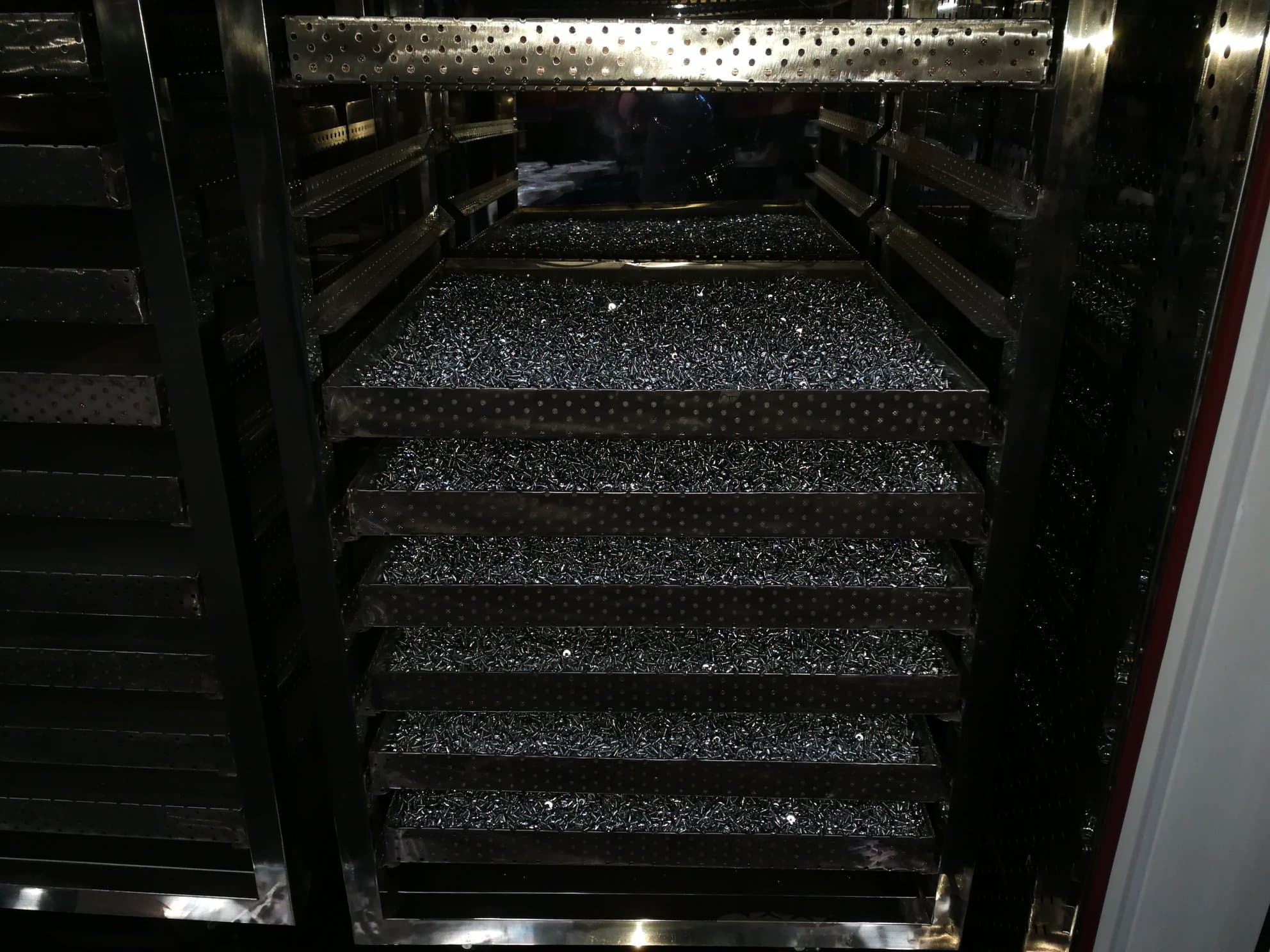
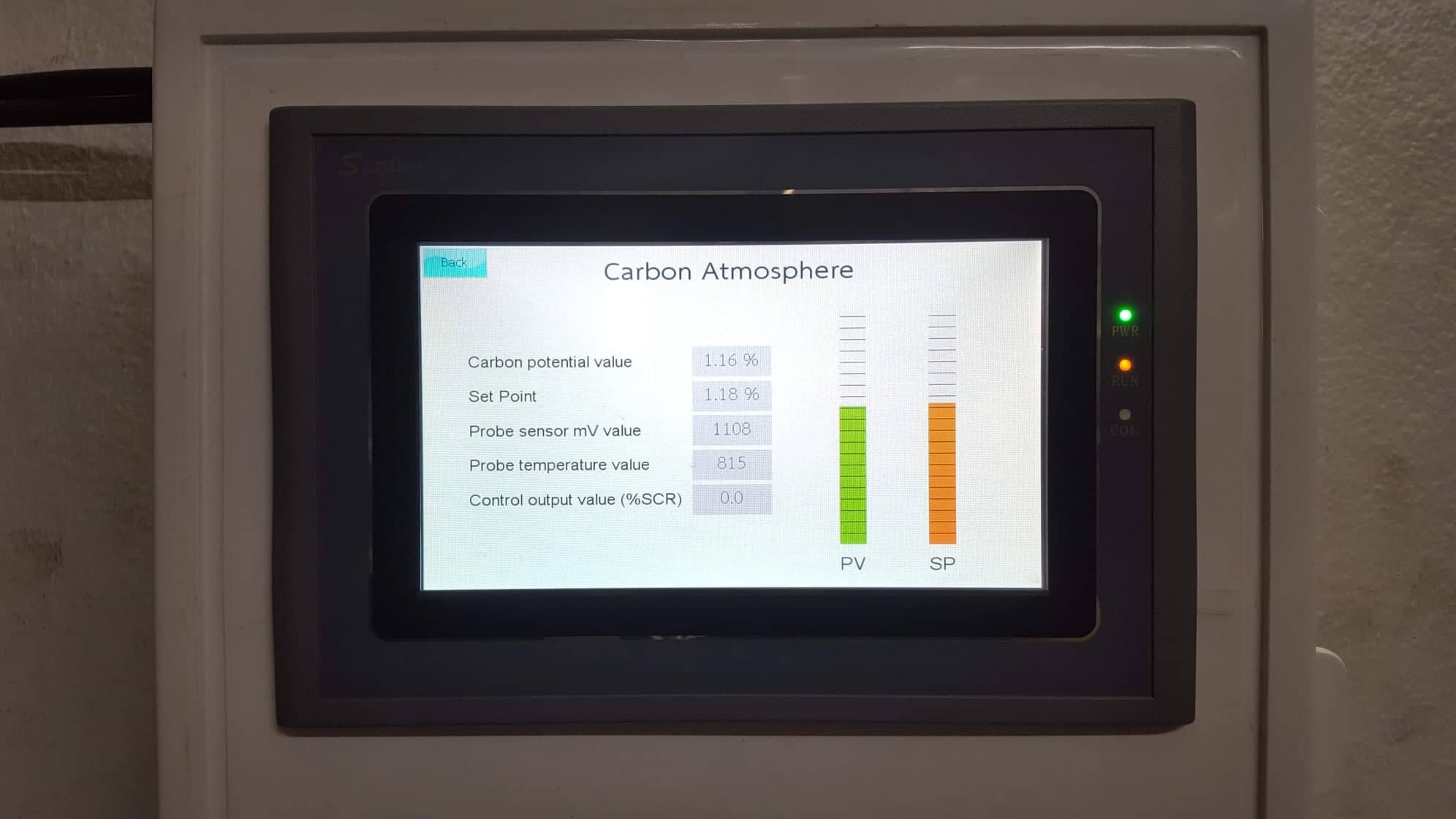
- Heat in a controlled (endothermic) gas atmosphere to keep oxygen out.
- Keep temperature and time no longer than necessary.
- Leave a surface allowance and grind off the decarb layer where a truly hard skin is required.
- Check surface hardness every lot to confirm the skin meets spec.
FAQ
How do I detect decarburization?+
Compare surface vs. core hardness; an abnormally soft surface—or a cross-section showing a ferrite layer at the skin—reveals it.
Can a decarburized surface be fixed?+
A thin layer can be ground off, but a thick one must be prevented at the heating stage. Furnace atmosphere control is the key.
Does a belt furnace reduce decarb?+
Yes—a controlled gas atmosphere keeps oxygen out and limits surface carbon loss.
Free Engineering Tools
- Hardness Converter HRC ↔ HV ↔ HB
- Which Steel Grades Harden — and How Far
- Fastener Weight: pcs ↔ kg
- Finishing Specification Builder for Purchasing and QC
- Salt Spray Test Plan Builder
- Coating thickness → thread fit (GO/NO-GO)
- Hydrogen Embrittlement — is baking required?
- Bolt Tightening Torque & Proof Load
- Thread Engagement Length
- Bolt Size Estimator (from load)
- Bolt Property Class — Mechanical Properties (ISO 898-1)
What this article covers at our plant
Related comparison guides
- S45C vs SCM440S45C vs SCM440: which steel should you harden?
- Annealing vs Tempering vs NormalizingAnnealing vs tempering vs normalizing: which one does your part need?
- SCM435 vs SCM440SCM435 vs SCM440: one alloy step apart, and it shows
- Case hardening vs Through hardeningCase hardening vs through hardening: which one for screws and bolts?
Technical content review
Reviewed by the V.S. Heat Treatment QA and production team—heat-treatment and finishing operations since 1994 under an ISO 9001:2015 quality system.
View evidence and report format