How the three differ
When you need to stop a steel part from rusting, the three most common routes are electroplated zinc, hot-dip galvanizing and chrome plating. They differ sharply in thickness, corrosion life, appearance, cost and which parts they suit — pick the wrong one and you either overspend or clog the threads.
- Electroplated zinc (Cr3+) — thin, even coating; ideal for high-volume screws, nuts and bolts at low cost.
- Hot-dip galvanizing — dipped in molten zinc; very thick; decades of outdoor protection; for large structural steel.
- Chrome plating — for a bright finish (decorative) or a hard, wear-resistant surface (hard chrome); not a primary corrosion choice for fasteners.
Electroplated zinc (Cr3+)
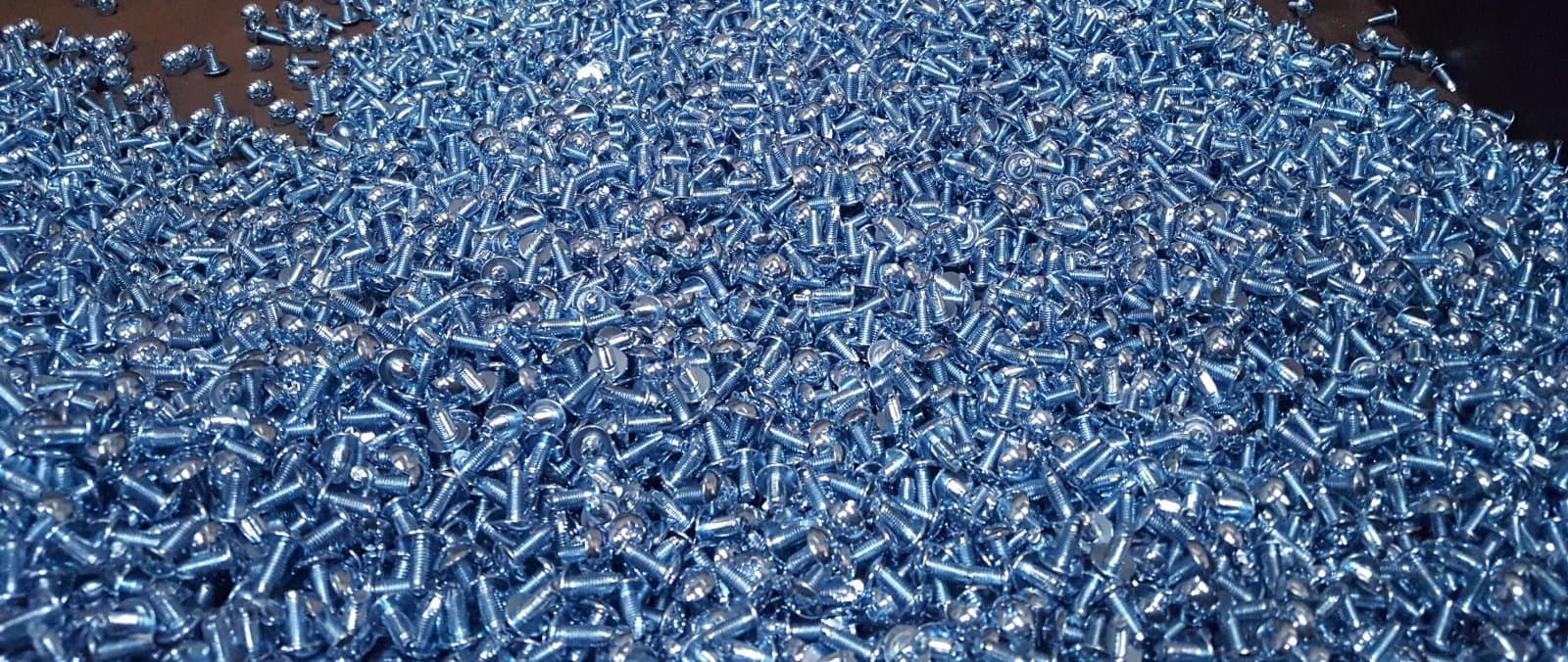
Electroplated zinc deposits a thin zinc layer onto steel using an electric current — typically 5–25 µm — then a Cr3+ (trivalent) passivation that is RoHS-safe, available in blue, yellow, black or olive.
Its strength is a thin, even film that does not clog threads on screws, nuts and bolts, and it runs in high volume on a barrel line — so the per-piece cost is the lowest of the three. Corrosion life depends on colour and thickness, with salt spray around 96–240 hours.
- Best for: screws, nuts, bolts, washers, pins — small parts in high volume; indoor / semi-outdoor use.
- Limits: thinner than hot-dip; not for heavy, continuous decades-long outdoor exposure.
Hot-dip galvanizing (HDG)
Hot-dip galvanizing dips the part into a bath of molten zinc at about 450°C, giving a very thick 45–85 µm+ alloy-bonded zinc layer that protects outdoors for decades.
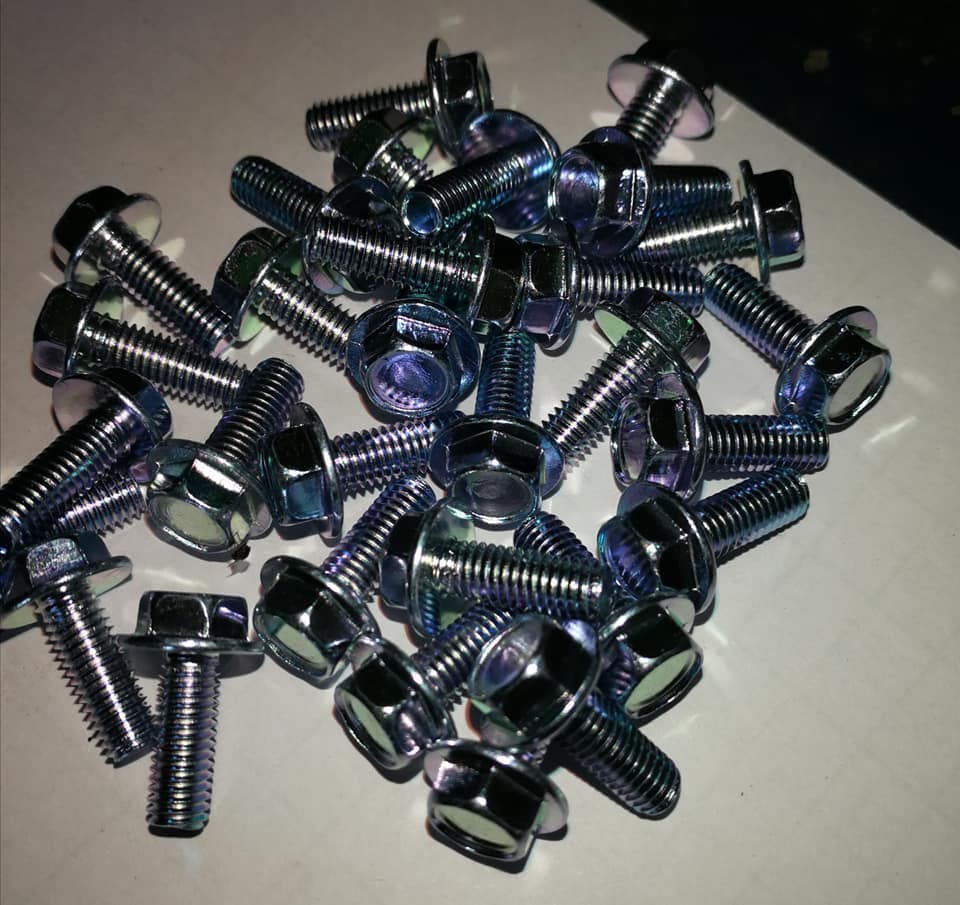
But because the coating is thick and uneven, it tends to clog the threads of fine fasteners — they must be over-tapped or chased — and it is not suited to precise small parts.
- Best for: structural steel, posts, railings, large brackets and big outdoor bolts.
- Limits: thick / rough finish clogs threads; not for high-volume small fasteners.
Chrome plating (decorative vs hard chrome)
Chrome plating comes in two very different forms. Decorative chrome is a thin chrome layer over nickel for a bright, attractive finish with moderate corrosion resistance. Hard (industrial) chrome is a thick layer for hardness and wear resistance on shafts, hydraulic rods and pistons.
Neither is a primary choice for "corrosion-proofing fasteners in volume" — the cost is high and the process differs from small-part corrosion plating.
- Best for: a bright look (decorative) or a hard, wear-resistant surface (hard chrome).
- Limits: expensive; not cost-effective for everyday fastener corrosion protection.
Side by side: corrosion, thickness, cost, threads
The key differences at a glance:
- Thickness: hot-dip (thickest) > electroplated zinc > decorative chrome.
- Long-term outdoor corrosion: hot-dip best; electroplated zinc good for indoor / semi-outdoor; decorative chrome moderate.
- Threads / small parts: electroplated zinc best; hot-dip worst (clogs threads).
- Cost per piece in high volume: electroplated zinc cheapest.
- Appearance: chrome shiniest; zinc available in colours (blue/yellow/black); hot-dip is a matte grey.
Which to choose for which job
Match the process to the job:
- Screws, nuts, bolts — small parts in high volume → electroplated zinc Cr3+ (best value, threads stay clean).
- Structural steel / heavy decades-long outdoor exposure → hot-dip galvanizing.
- Bright finish, or a hard wear surface (shafts/rods) → chrome plating.
Not sure? Send the spec and a photo and our engineering team will advise.
What V.S. Heat Treatment does
V.S. Heat Treatment specialises in small parts at high volume, so we focus on Cr3+ electroplated zinc plating (RoHS-safe, colour options) alongside heat treatment and phosphate coating, with an in-house lab issuing hardness testing and salt-spray reports.
We do not offer hot-dip galvanizing or decorative chrome — our focus is screws, nuts, bolts and small fasteners that need clean threads, lot-to-lot consistency and a competitive price.
FAQ
Which plating should screws, nuts and bolts use?+
Most choose Cr3+ electroplated zinc: a thin film that does not clog threads, runs in high volume, and costs little per piece, with a colour and corrosion level to match the application.
How different is corrosion protection between hot-dip and electroplated zinc?+
Hot-dip is much thicker and lasts far longer outdoors, but is rough and clogs threads. Electroplated zinc is thin and smooth — right for precise small parts and indoor / semi-outdoor use.
Does chrome plating resist corrosion well?+
Decorative chrome is mainly for looks with moderate corrosion resistance; hard chrome is for wear resistance, not corrosion. Neither is cost-effective for high-volume fastener protection.
Does V.S. Heat Treatment offer hot-dip or chrome plating?+
No — we focus on high-volume small parts: Cr3+ zinc plating, heat treatment and phosphate coating, with an in-house testing lab.
Free Engineering Tools
- Hardness Converter HRC ↔ HV ↔ HB
- Which Steel Grades Harden — and How Far
- Fastener Weight: pcs ↔ kg
- Finishing Specification Builder for Purchasing and QC
- Salt Spray Test Plan Builder
- Coating thickness → thread fit (GO/NO-GO)
- Hydrogen Embrittlement — is baking required?
- Bolt Tightening Torque & Proof Load
- Thread Engagement Length
- Bolt Size Estimator (from load)
- Bolt Property Class — Mechanical Properties (ISO 898-1)
What this article covers at our plant
Related comparison guides
- Zinc plating vs Dacromet / zinc flakeZinc plating vs Dacromet: which coating for screws and bolts?
- Black oxide vs PhosphateBlack oxide vs phosphate: which finish for screws, nuts and bolts?
- Electroplated zinc vs Hot-dip galvanizingZinc plating vs hot-dip galvanizing: which one does your fastener need?
- Zinc plating vs Zinc-nickelZinc plating vs zinc-nickel: when is the upgrade worth paying for?
- Barrel plating vs Rack platingBarrel plating vs rack plating: how small fasteners are actually plated
- Zinc phosphate vs Manganese phosphateZinc phosphate vs manganese phosphate: match the coating to the job it does
Technical content review
Reviewed by the V.S. Heat Treatment QA and production team—heat-treatment and finishing operations since 1994 under an ISO 9001:2015 quality system.
View evidence and report format