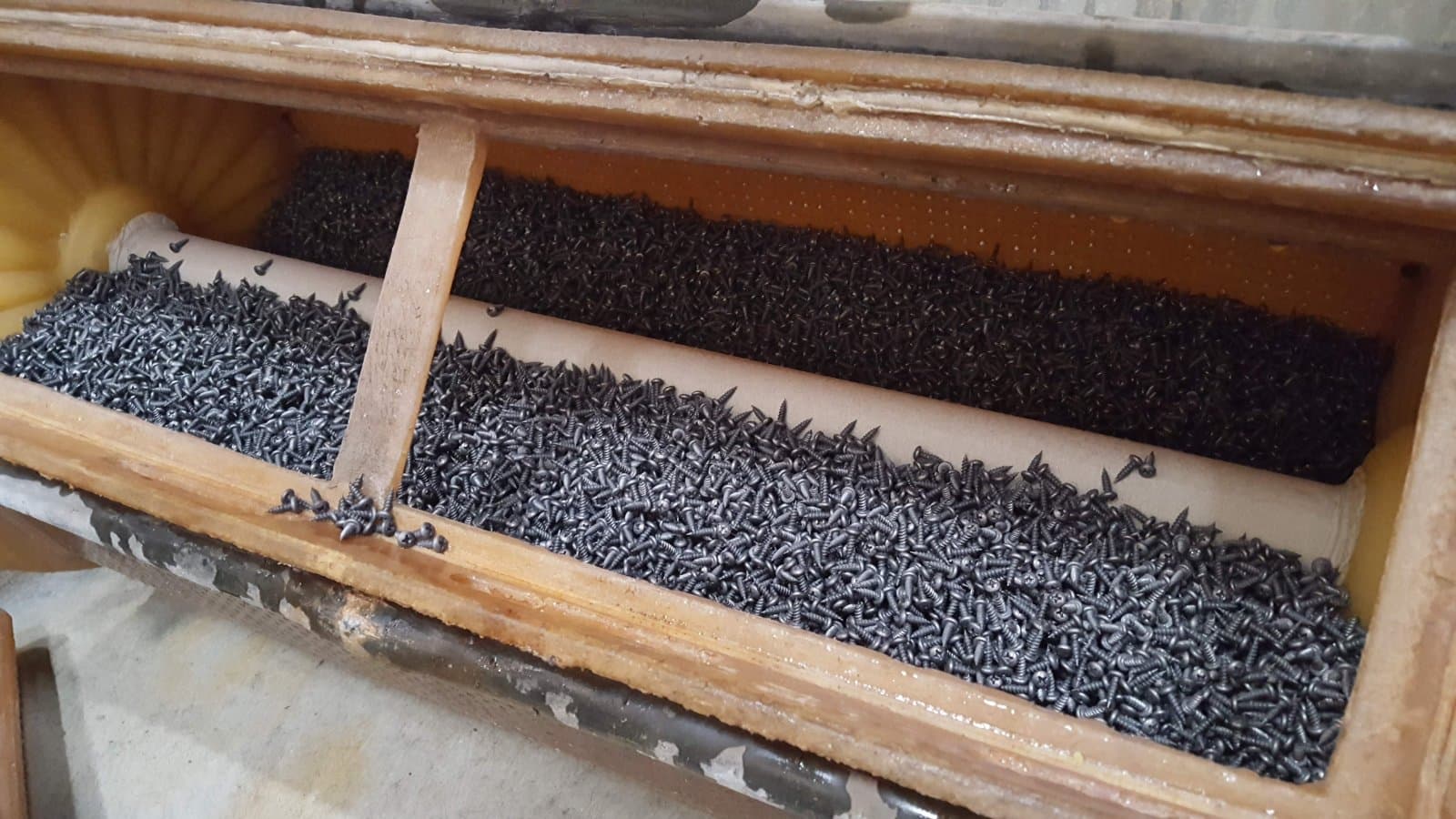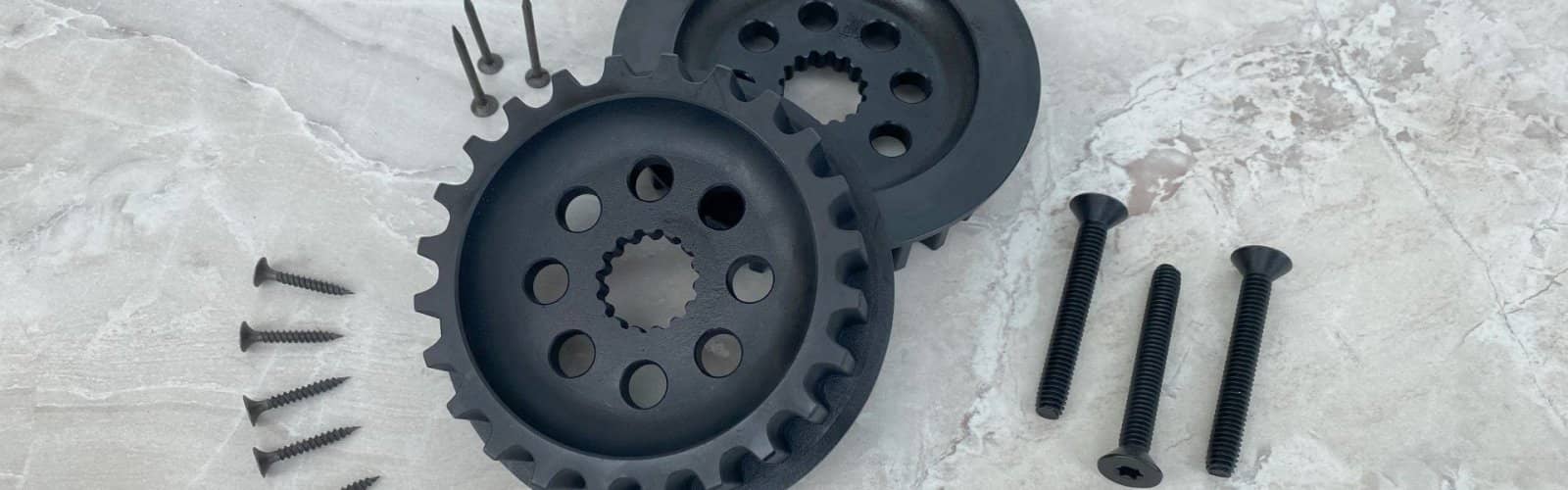
Start with function, not colour
Phosphate can act as a paint base, retain corrosion-protective oil, reduce run-in friction or support cold forming. Each function calls for a different coating type, mass and supplementary treatment.
“Black phosphate” is incomplete because appearance varies with chemistry, substrate and oil. State the use before choosing the system.
1) Choose zinc or manganese phosphate
Zinc phosphate is commonly used under paint and for corrosion systems with oil/sealer. Manganese phosphate generally has a heavier crystalline layer suited to oil retention and sliding run-in.
Choose from substrate, geometry, end use and post-treatment—not the name alone. On small threaded parts, control residue and crystal build-up around threads and holes.
2) Put these items in the coating callout
- Substrate grade and hardness.
- Phosphate type and governing standard/customer drawing.
- Coating mass or range, unit and test location.
- Supplementary oil, wax, sealer or paint.
- No-coat zones and critical dimensions/threads.
- End use: paint base, storage protection, run-in or forming.
3) Match tests to the intended function
If coating mass matters, define the method and sample area. For corrosion, specify the post-treatment and corrosion method/criterion; do not compare bare phosphate with an oiled phosphate system.
A paint-base system needs cleanliness, uniformity and whole-system adhesion checks. A friction application may require part-representative testing where risk is high.
4) Incoming surface condition directly affects the result
Oil, rust, scale and heat-treatment residue disturb crystal formation. Disclose prior shot blasting, pickling or heat treatment.
Base-metal defects do not disappear under phosphate, and acid cleaning of hard steel requires a hydrogen-risk review against the part specification.
5) Lot-acceptance checklist
- Lot and material match the order.
- Critical surfaces are covered without abnormal bare or loose deposits.
- Coating mass/test results meet the agreed limits.
- Oil, sealer or next paint step matches the system.
- Threads, holes and critical fits assemble.
- Packaging controls moisture and surface damage.
- Traceability and inspection records are complete.
Information needed for process review and quotation
Send a drawing/photo, material, part and lot weight, coating function, required phosphate type, oil/sealer, tests and due date. If no callout exists, the end use can be converted into initial acceptance items for a trial lot.
FAQ
How do I choose zinc versus manganese phosphate?+
Zinc phosphate is common for paint bases and corrosion systems; manganese phosphate suits oil retention and sliding run-in. The drawing and real use control the choice.
Does phosphate prevent rust without oil?+
Phosphate is porous and normally works with oil, wax, sealer or paint. Specify and evaluate the complete system.
Is “black phosphate” enough?+
No. State phosphate type, coating mass, supplementary treatment, function, significant areas and test criteria.
What is the current ISO reference?+
ISO 9717:2024 specifies requirements for phosphate conversion coatings within its scope; customer or sector specifications may add requirements.
Standards and references
Free Engineering Tools
- Hardness Converter HRC ↔ HV ↔ HB
- Which Steel Grades Harden — and How Far
- Fastener Weight: pcs ↔ kg
- Finishing Specification Builder for Purchasing and QC
- Salt Spray Test Plan Builder
- Coating thickness → thread fit (GO/NO-GO)
- Hydrogen Embrittlement — is baking required?
- Bolt Tightening Torque & Proof Load
- Thread Engagement Length
- Bolt Size Estimator (from load)
- Bolt Property Class — Mechanical Properties (ISO 898-1)
What this article covers at our plant
Related comparison guides
- Zinc plating vs Dacromet / zinc flakeZinc plating vs Dacromet: which coating for screws and bolts?
- Black oxide vs PhosphateBlack oxide vs phosphate: which finish for screws, nuts and bolts?
- Electroplated zinc vs Hot-dip galvanizingZinc plating vs hot-dip galvanizing: which one does your fastener need?
- Zinc plating vs Zinc-nickelZinc plating vs zinc-nickel: when is the upgrade worth paying for?
- Barrel plating vs Rack platingBarrel plating vs rack plating: how small fasteners are actually plated
- Zinc phosphate vs Manganese phosphateZinc phosphate vs manganese phosphate: match the coating to the job it does
Technical content review
Reviewed by the V.S. Heat Treatment QA and production team—heat-treatment and finishing operations since 1994 under an ISO 9001:2015 quality system.
View evidence and report format