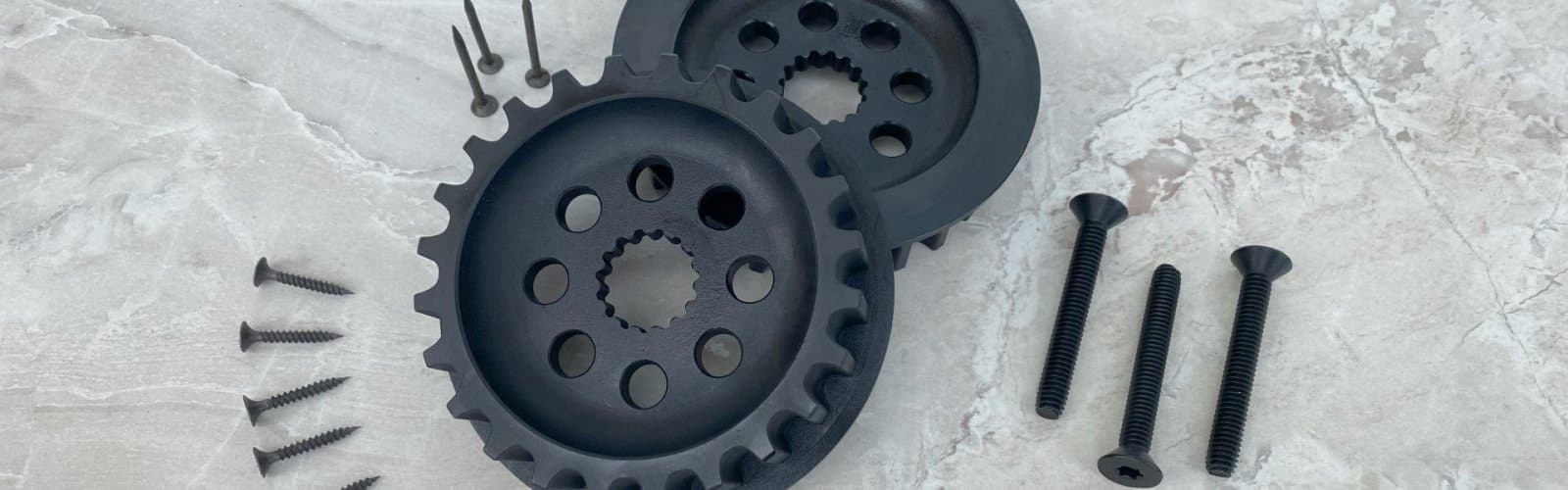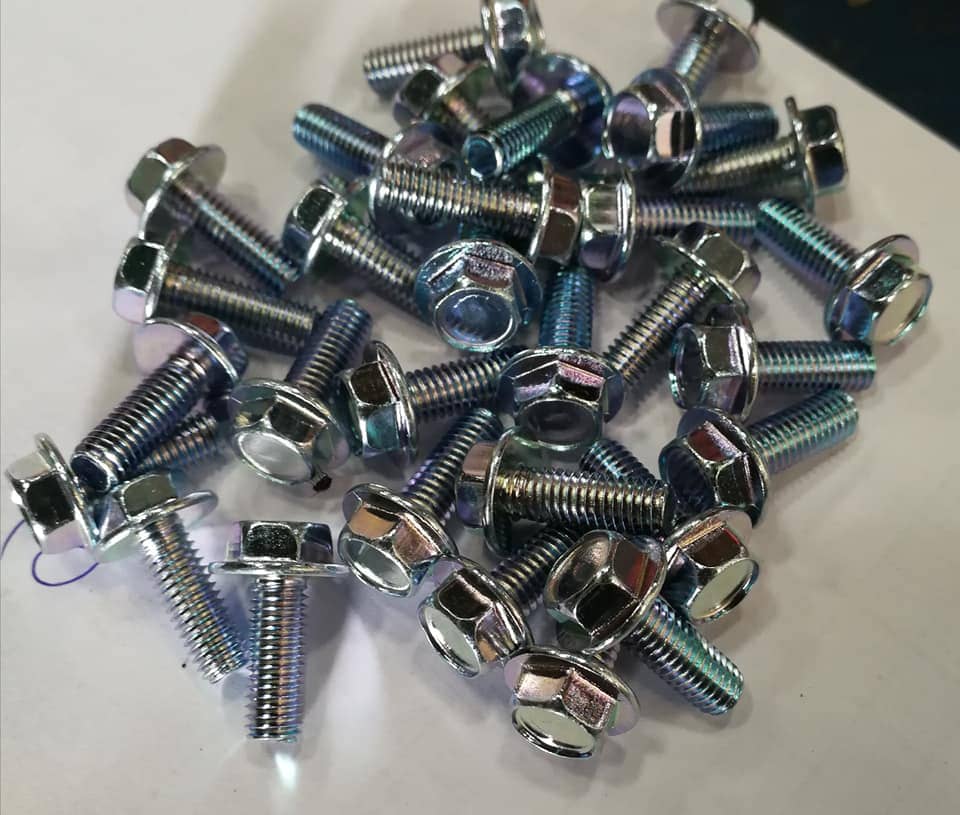
A one-line example to start the technical review
Example: SCM435 class 10.9 bolt, zinc electroplate to ISO 4042, Cr(VI)-free trivalent clear/blue passivation, 8–12 µm on significant surfaces, approved seal/topcoat, customer-defined white/red corrosion criteria, hydrogen-relief bake, GO-gauge thread acceptance, thickness report and lot traceability.
The numbers and coating system are not universal defaults. Select them from the customer drawing, service environment and dimensional allowance. The goal is one shared requirement before production.
1) State material, strength/hardness and incoming condition
Give the material grade—SWCH, S45C, SCM435—and property class or post-heat-treatment hardness. High-strength steel carries a different hydrogen-embrittlement risk from mild steel.
Attach the drawing, thread size/class, blind holes, welds, masking and no-plate zones. If grade or hardness is unknown, say so and plan verification rather than guessing.
2) Choose a standard suited to the part type
ISO 4042 addresses electroplated fasteners, dimensions and hydrogen-risk recommendations, with Amendment 1 published in 2026. ASTM B633 covers electrodeposited zinc on general iron and steel articles and points purchasers of fasteners toward a fastener-specific specification.
ISO 19598 covers Cr(VI)-free zinc and zinc-alloy systems within its scope. “Per ISO” alone is ambiguous; include the standard number and applicable edition/customer drawing.
3) Define thickness, significant surface and test location
State a range or minimum on the significant surface and show the measurement point. Barrel-plated parts vary with geometry and contact, so “8 microns” without a location is incomplete.
Coating adds size on every surface, especially threads, holes and grooves. Check allowance before calling for a thick deposit and agree on a measurement method suitable for the substrate and geometry.
4) Define passivation, colour, sealer/topcoat and substance restrictions
Clear/blue, yellow or black is not a corrosion specification by itself. State trivalent/Cr(VI)-free passivation and any sealer, topcoat or lubricant needed for corrosion or friction performance.
For controlled supply chains, attach the actual RoHS, REACH, ELV or customer restricted-substance requirement. Do not infer chemistry from appearance.
5) Make salt-spray acceptance unambiguous
State the test method, hours, separate white- and red-corrosion limits, excluded contact/edge areas and sampling plan.
Salt-spray hours are comparative laboratory criteria, not a direct conversion to service years. Add a representative environmental test when field exposure is critical.
6) Control hydrogen risk and thread fit
State part hardness/strength and any pre-treatment or post-coating bake required by the governing standard and customer drawing, including the maximum delay before baking. “Bake” without conditions is not auditable.
Define thread class, GO/NO-GO gauge, mating pair and any torque–tension or coefficient-of-friction requirement because coating changes both size and friction.
7) Close with sampling, documents and change control
Agree samples per lot, locations and acceptance for appearance, adhesion, thickness, corrosion and thread fit, plus the data required on the certificate.
For repeat work, approve a first article and require notice before changing passivation chemistry, topcoat, material source or another critical process. That prevents disputes more effectively than comparing colour by eye at delivery.
FAQ
Is “clear zinc, 8 µm” enough?+
No. Add material/hardness, standard, test location, passivation chemistry, Cr(VI) restriction, salt-spray criteria, hydrogen control and thread acceptance.
How do ISO 4042 and ASTM B633 differ?+
ISO 4042 is fastener-focused and includes dimensional/hydrogen issues. ASTM B633 covers general zinc electrodeposits on iron and steel and directs fastener buyers to fastener-specific requirements.
Does yellow always mean hexavalent chromium?+
No. Colour alone cannot prove chemistry; some trivalent systems are yellow. Verify the process and restricted-substance documentation.
What should I send for a quote?+
Drawing/photo, material and hardness, lot weight, coating thickness/system, salt-spray criteria, measurement points, thread requirements and required documents.
Standards and references
Free Engineering Tools
- Hardness Converter HRC ↔ HV ↔ HB
- Which Steel Grades Harden — and How Far
- Fastener Weight: pcs ↔ kg
- Finishing Specification Builder for Purchasing and QC
- Salt Spray Test Plan Builder
- Coating thickness → thread fit (GO/NO-GO)
- Hydrogen Embrittlement — is baking required?
- Bolt Tightening Torque & Proof Load
- Thread Engagement Length
- Bolt Size Estimator (from load)
- Bolt Property Class — Mechanical Properties (ISO 898-1)
What this article covers at our plant
Related comparison guides
- Zinc plating vs Dacromet / zinc flakeZinc plating vs Dacromet: which coating for screws and bolts?
- Black oxide vs PhosphateBlack oxide vs phosphate: which finish for screws, nuts and bolts?
- Electroplated zinc vs Hot-dip galvanizingZinc plating vs hot-dip galvanizing: which one does your fastener need?
- Zinc plating vs Zinc-nickelZinc plating vs zinc-nickel: when is the upgrade worth paying for?
- Barrel plating vs Rack platingBarrel plating vs rack plating: how small fasteners are actually plated
- Zinc phosphate vs Manganese phosphateZinc phosphate vs manganese phosphate: match the coating to the job it does
Technical content review
Reviewed by the V.S. Heat Treatment QA and production team—heat-treatment and finishing operations since 1994 under an ISO 9001:2015 quality system.
View evidence and report format