
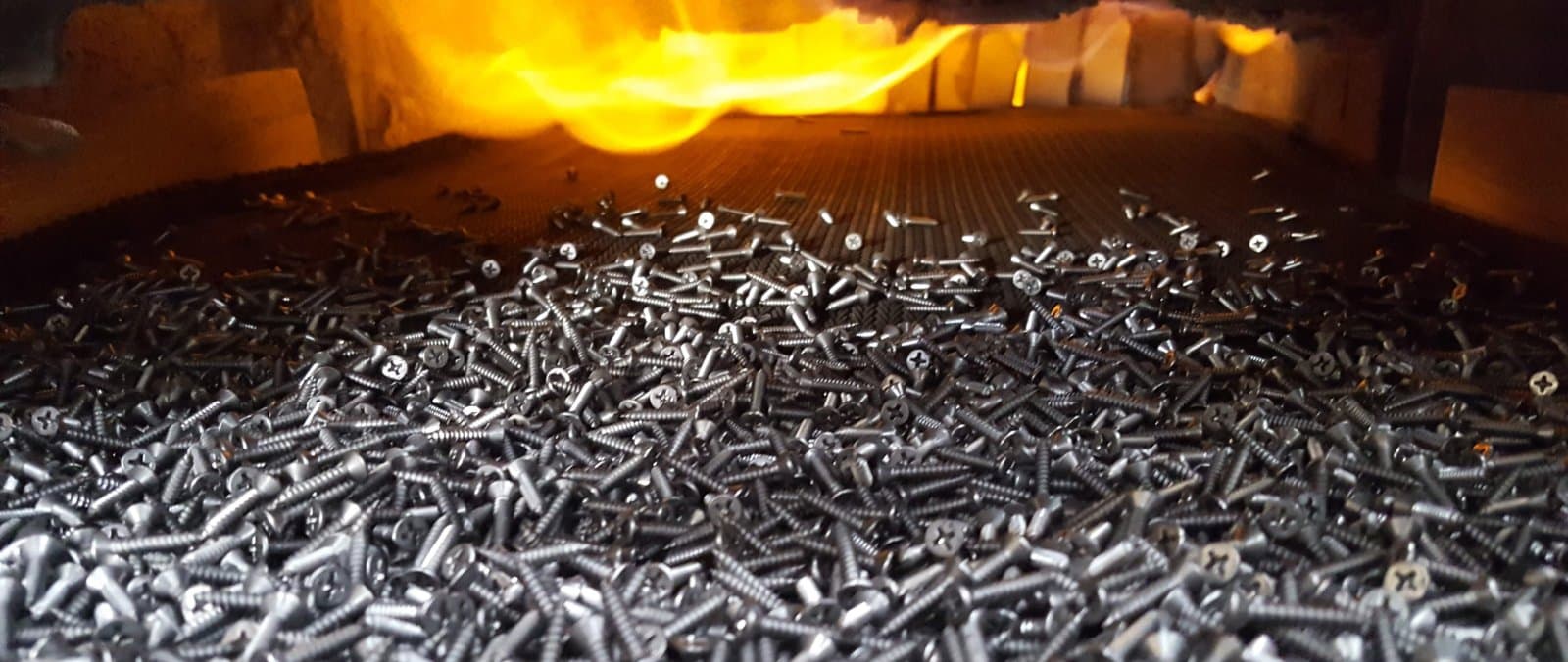
Heat-treating 120 tons of automotive bolts/month
- per month
- 120t
- Specification
- 38–42 HRC
Engineering case record
Specification, process control and measured outcome
A useful case study separates the incoming requirement from the process controls and the evidence used to accept the lot.
- Part / production scope
- M10 automotive bolts · recurring weekly lots
- Incoming requirement
- A Tier-1 automotive parts maker sends M10 bolts to be heat-treated to 38–42 HRC, 120 tons/month, weekly delivery.
- Process control
- Tuned our mesh-belt furnace line for 24/7 continuous production, with per-batch traceability.
- Verification evidence
- Per-batch traceability and hardness acceptance against the 38–42 HRC window
- Measured outcome
- 100% on-time delivery for 18 consecutive months. Defect rate under 0.05%.
- Disclosure scope
- Customer and drawing identifiers redacted
Evidence boundary
Customer identity and drawing details are withheld for confidentiality. Values summarize the stated project and do not guarantee the same result on a different material, geometry, coating system or test plan.
Inside the job
What was measured
Surface hardness on every batch, read as HRC to ISO 6508 against the 38–42 HRC window, with each reading written against the batch number rather than against the delivery.
What changed
The furnace line stopped being started and stopped. Run continuously, every batch meets the same belt speed and the same temperature band instead of a fresh warm-up curve — that is what makes 120 tons a month repeatable rather than a series of one-off loads.
The binding constraint
Weekly delivery at that volume leaves no room for a re-test after the fact. The accept-or-hold decision has to be made from the batch record before the lot ships, which is why traceability is per batch and not per shipment.