
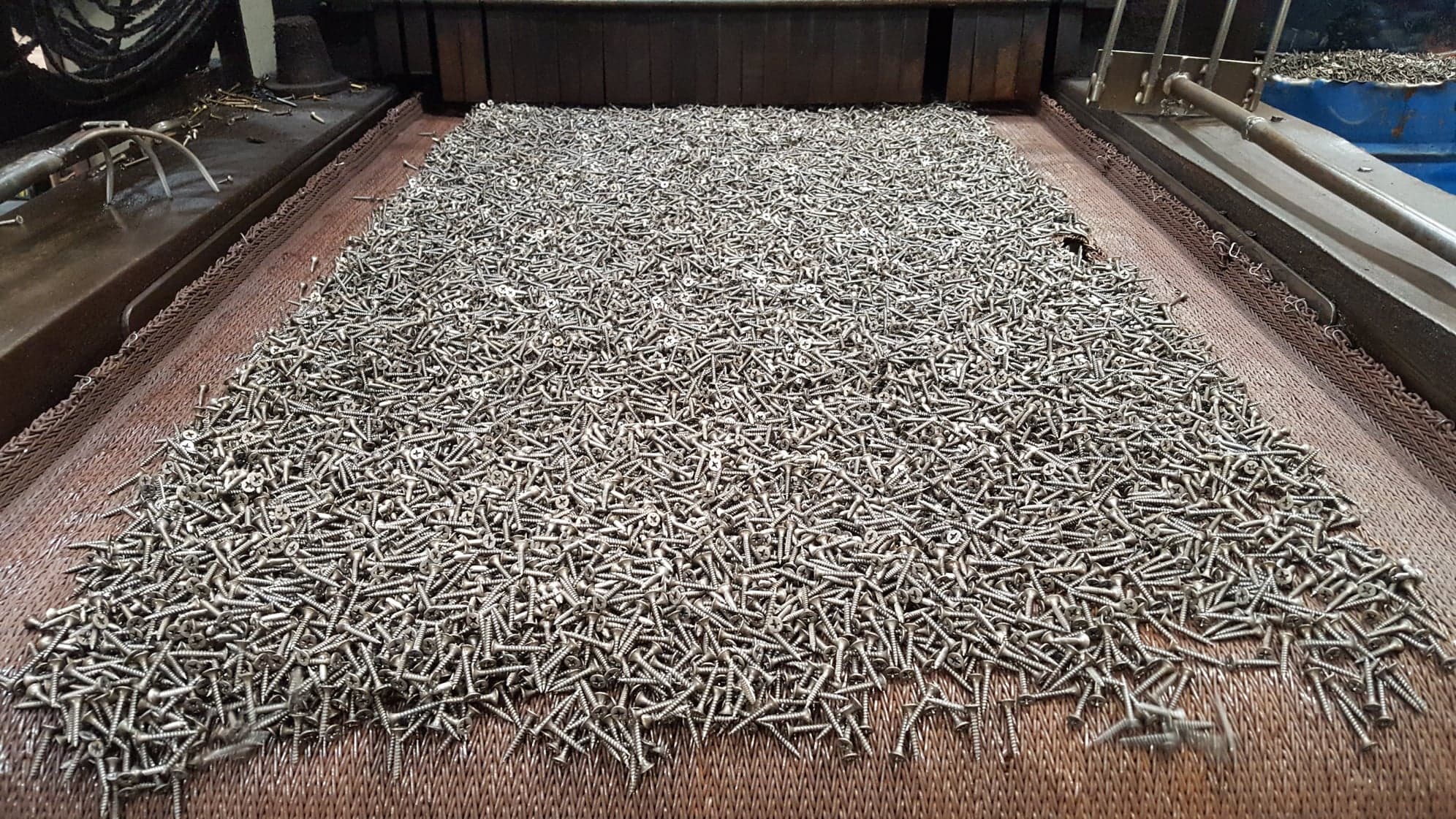
High-volume hardening of farm-machinery fasteners
- service life
- +40%
- Specification
- 55–58 HRC
Engineering case record
Specification, process control and measured outcome
A useful case study separates the incoming requirement from the process controls and the evidence used to accept the lot.
- Part / production scope
- Pins and bolts for agricultural machinery
- Incoming requirement
- A farm-machinery maker needed pins and bolts at a consistent 55–58 HRC across every lot, without brittleness.
- Process control
- Two-stage tempering with microstructure analysis on every lot before dispatch.
- Verification evidence
- Hardness check and microstructure review before each lot was released
- Measured outcome
- Hardness held steady at 55–58 HRC across every lot, extending service life by 40% versus the previous supplier. Scrap rates fell and the maker now ships farm machinery on time with predictable quality.
- Disclosure scope
- Customer and drawing identifiers redacted
Evidence boundary
Customer identity and drawing details are withheld for confidentiality. Values summarize the stated project and do not guarantee the same result on a different material, geometry, coating system or test plan.
Inside the job
What was measured
Hardness against the 55–58 HRC window, plus the microstructure of an etched cross-section, lot by lot before dispatch.
What changed
Tempering was split into two stages, so the window is reached by a controlled second temper rather than by stopping short of the first one.
The binding constraint
55–58 HRC on a pin sits close to where hardness starts costing toughness, so the temper has a floor as well as a ceiling: too low and the part passes the hardness check brittle, too high and it never reaches the window.