
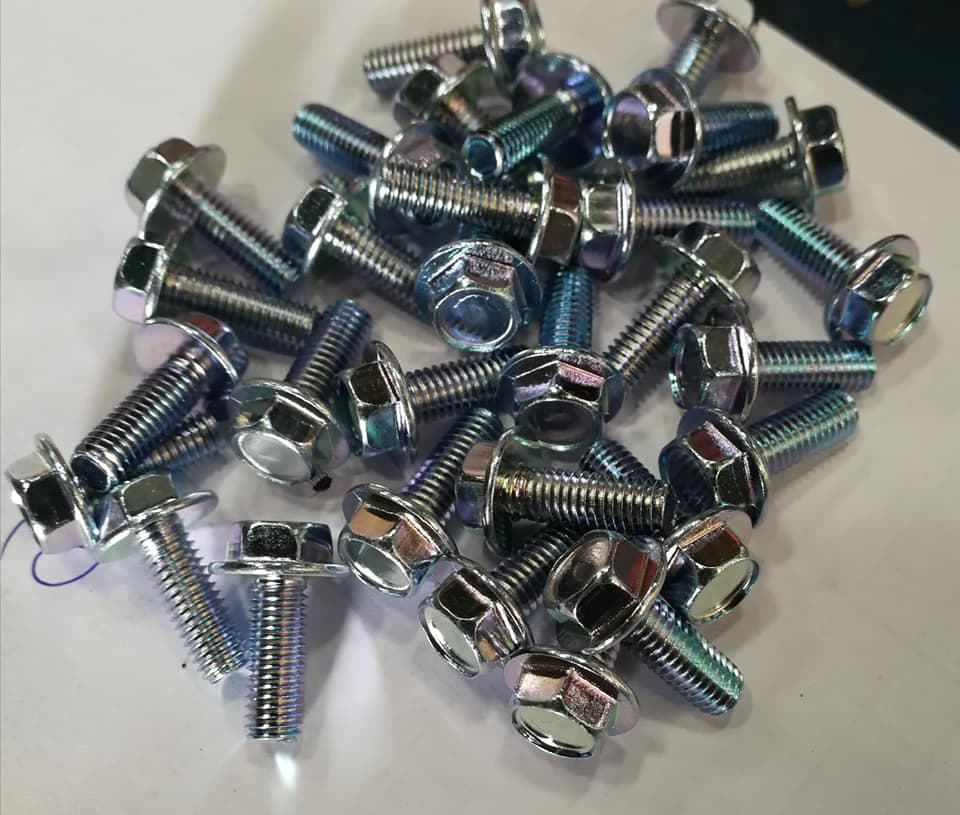
Cr3+ zinc plating for export anchor bolts
- salt spray
- 280h
- Specification
- Cr3+ Black
Engineering case record
Specification, process control and measured outcome
A useful case study separates the incoming requirement from the process controls and the evidence used to accept the lot.
- Part / production scope
- Construction anchor bolts for European export
- Incoming requirement
- A bolt manufacturer exporting to Europe needed RoHS-compliant zinc plating with a 240-hour salt spray rating.
- Process control
- Migrated process to Cr3+ Black Passivation with X-ray thickness verification on every batch.
- Verification evidence
- X-ray coating-thickness check on every batch plus agreed salt-spray exposure
- Measured outcome
- Passed 280-hour salt-spray testing (beating the 240-hour target) with consistent coating thickness every lot. The customer now exports to Europe continuously with zero returns and noticeably lower re-inspection costs.
- Disclosure scope
- Customer and drawing identifiers redacted
Evidence boundary
Customer identity and drawing details are withheld for confidentiality. Values summarize the stated project and do not guarantee the same result on a different material, geometry, coating system or test plan.
Inside the job
What was measured
Coating thickness by X-ray fluorescence to ISO 3497 on every batch, and hours to red rust in neutral salt spray to ASTM B117 / ISO 9227 against the 240-hour requirement.
What changed
Passivation moved to a trivalent (Cr3+) black system, which takes hexavalent chromium out of the part instead of declaring it below a limit — the form RoHS and REACH actually ask about.
The binding constraint
On an export part the corrosion hours and the chemistry cannot be traded against each other, and thickness is bounded from both sides: enough zinc to reach the salt-spray class, not so much that the thread fit goes (ASTM F1941).