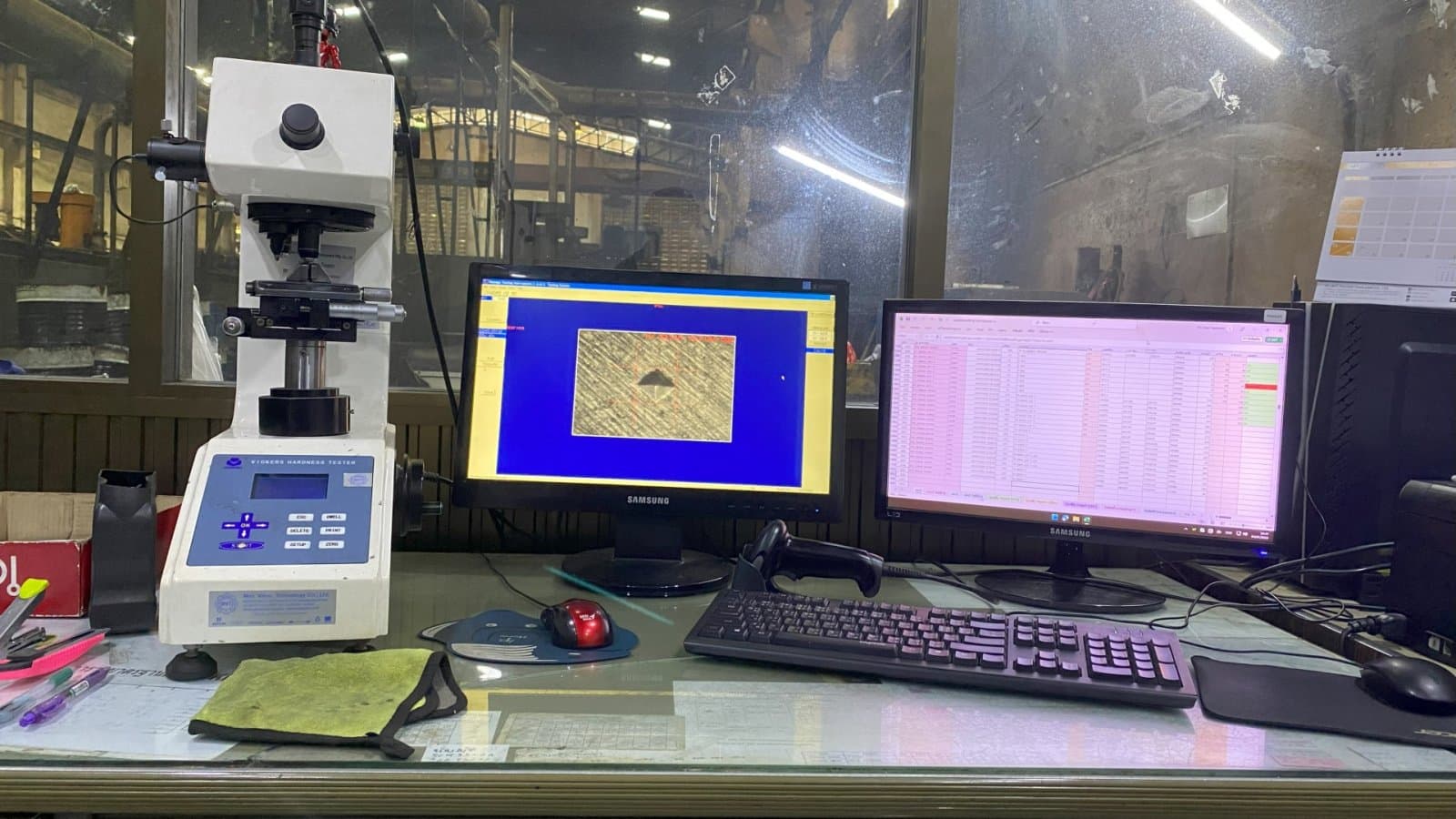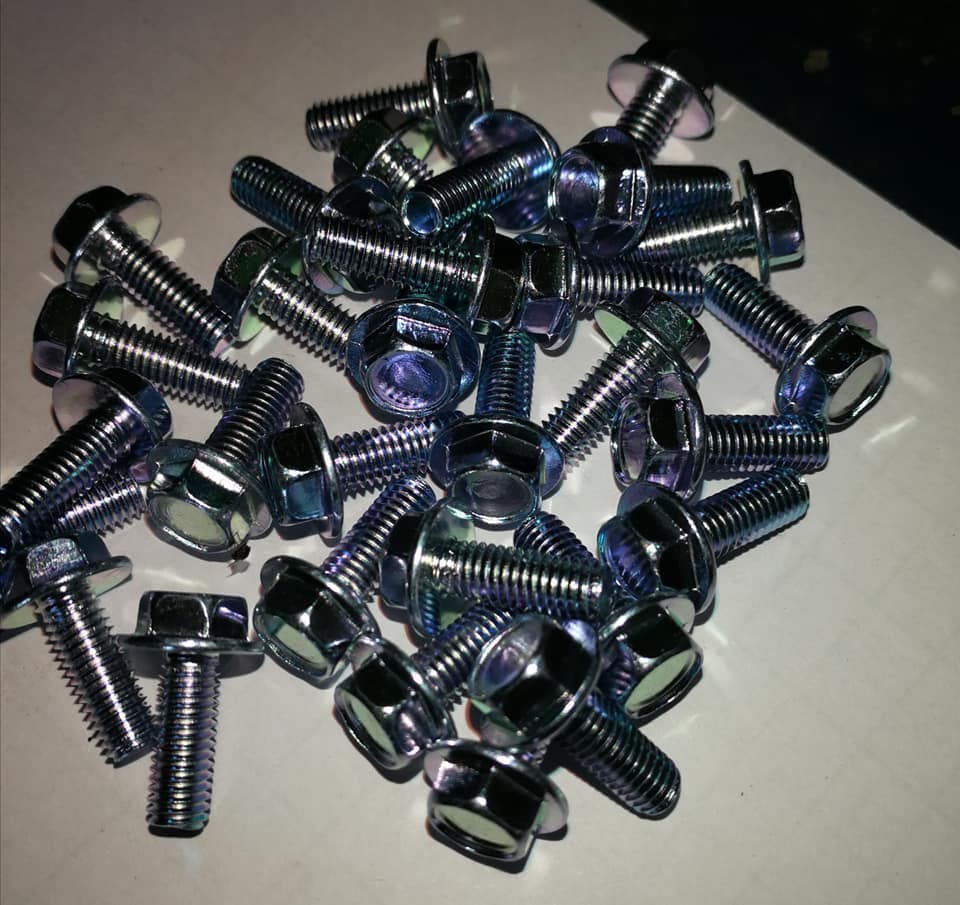
Why thickness matters
Too thin and corrosion protection falls short; too thick and threads bind or parts will not assemble—especially screws/nuts.
The right thickness balances protection against keeping the part dimensionally usable.
Common measurement methods
- Magnetic / eddy-current gauge — non-destructive, fast, great on the shop floor.
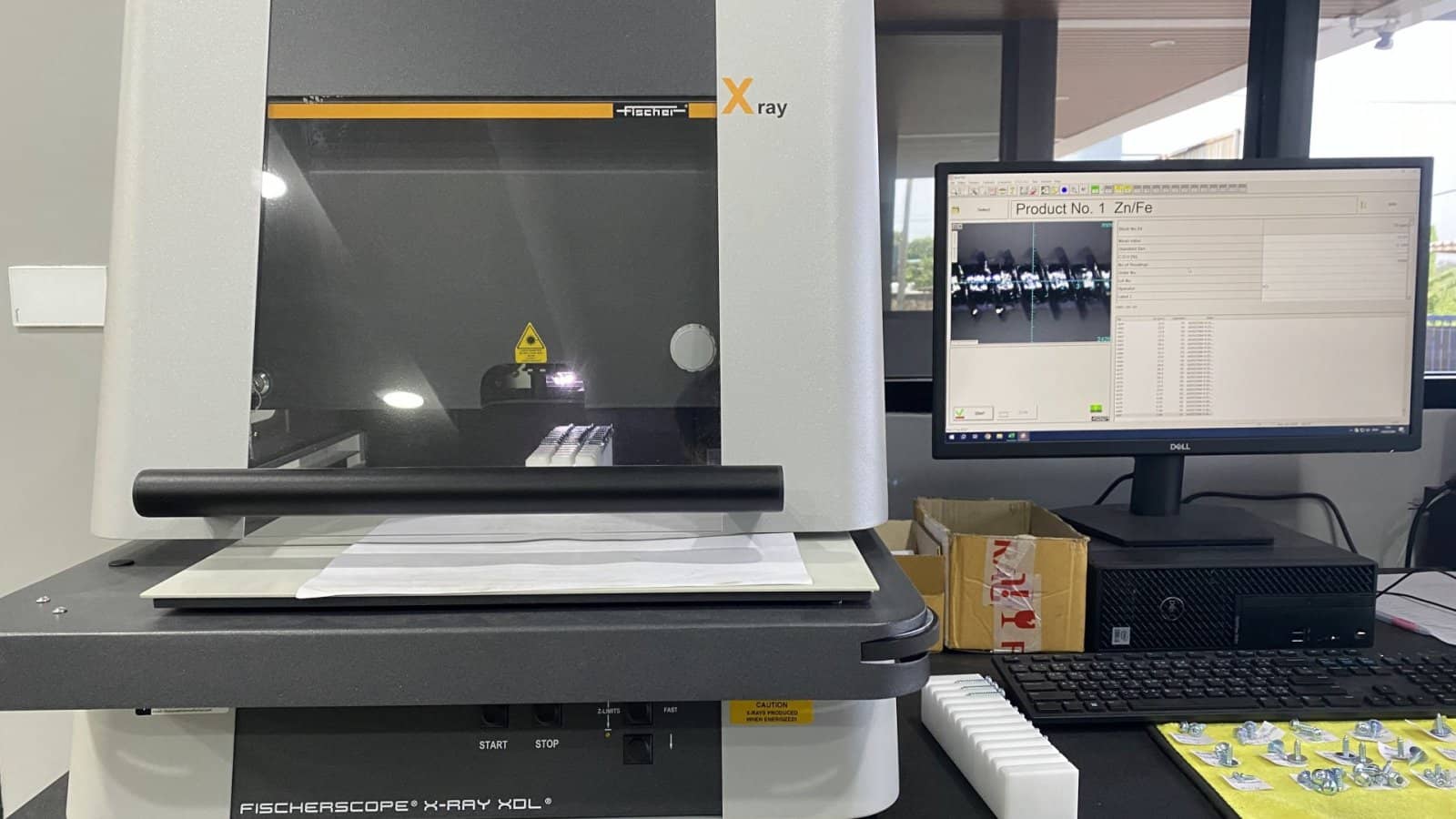
- XRF — X-ray reads thickness and coating composition, accurate for thin layers.
- Cross-section — cut, polish and view under a microscope for a true reading; used for reference/disputes.
How to specify
State a target in microns (µm) or cite a standard such as ASTM B633 for zinc plating.
We sample every lot and can issue the results with the job.
FAQ
How thick should zinc plating be?+
It depends on use—indoors maybe 5–8 µm, outdoors 12 µm and up. Tell us the application and we advise.
Is thickness measurement destructive?+
Mostly non-destructive (gauge/XRF); a cross-section uses a sample part when a precise reference is needed.
Is too thick a problem?+
Yes—threads may bind or assembly gets hard, so it is controlled to suit the part dimensions.
Free Engineering Tools
- Hardness Converter HRC ↔ HV ↔ HB
- Which Steel Grades Harden — and How Far
- Fastener Weight: pcs ↔ kg
- Finishing Specification Builder for Purchasing and QC
- Salt Spray Test Plan Builder
- Coating thickness → thread fit (GO/NO-GO)
- Hydrogen Embrittlement — is baking required?
- Bolt Tightening Torque & Proof Load
- Thread Engagement Length
- Bolt Size Estimator (from load)
- Bolt Property Class — Mechanical Properties (ISO 898-1)
What this article covers at our plant
Related comparison guides
- Zinc plating vs Dacromet / zinc flakeZinc plating vs Dacromet: which coating for screws and bolts?
- Grade 8.8 vs Grade 10.9 vs Grade 12.9Grade 8.8 vs 10.9 vs 12.9 bolts: what actually differs?
- Class 10.9 vs Class 12.9Class 10.9 vs 12.9: what you gain, and what you take on
- Electroplated zinc vs Hot-dip galvanizingZinc plating vs hot-dip galvanizing: which one does your fastener need?
Technical content review
Reviewed by the V.S. Heat Treatment QA and production team—heat-treatment and finishing operations since 1994 under an ISO 9001:2015 quality system.
View evidence and report format