Annealing
Heat, then cool *very slowly* (often in the furnace) to make steel as soft as possible—lowering hardness, improving machinability/formability and relieving stress.
Useful before further machining or bending, or for steel that is too hard to work.
Normalizing
Heat slightly above the critical range, then cool *in air*—faster than annealing.
The result is a finer, more uniform grain and slightly higher strength than annealed; often done to refine structure before actual hardening.
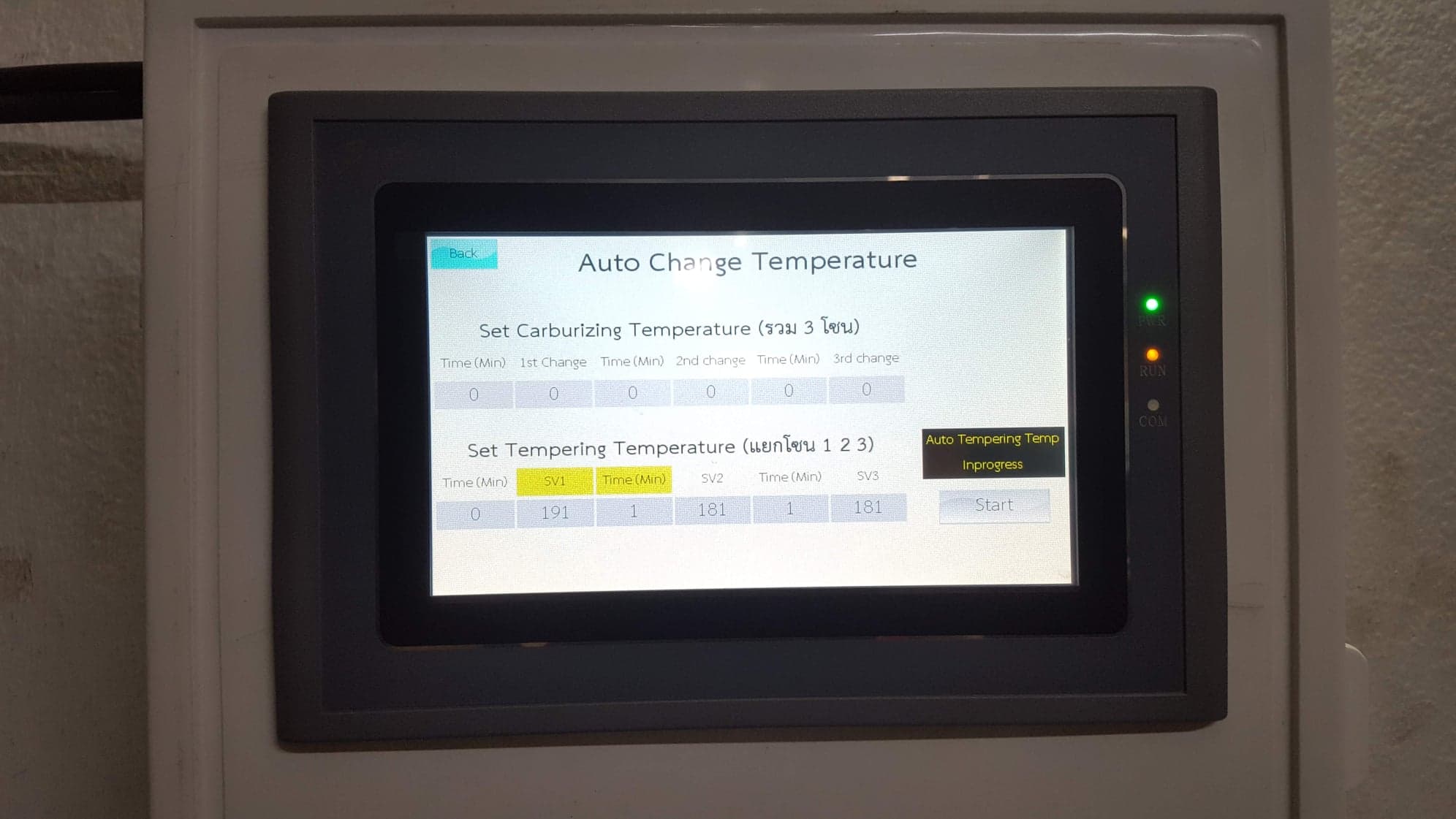
Tempering
Always done *after* a quench: reheat to 150–650°C to cut brittleness and restore toughness, trading off a little hardness.
Temper temperature sets the final hardness: low temper = very hard/less tough; high temper = tougher.
Quick summary
- Annealing = softest, furnace-cooled.
- Normalizing = grain refinement, air-cooled.
- Tempering = de-brittling after hardening.
FAQ
Annealing vs hardening?+
Annealing softens and relieves stress; hardening makes steel harder. Opposite goals.
Why temper after hardening?+
After a quench the part is hard but very brittle; tempering restores usable toughness.
Is normalizing necessary?+
Not always, but it evens out grain before hardening, making results more consistent.
Free Engineering Tools
- Hardness Converter HRC ↔ HV ↔ HB
- Which Steel Grades Harden — and How Far
- Fastener Weight: pcs ↔ kg
- Finishing Specification Builder for Purchasing and QC
- Salt Spray Test Plan Builder
- Coating thickness → thread fit (GO/NO-GO)
- Hydrogen Embrittlement — is baking required?
- Bolt Tightening Torque & Proof Load
- Thread Engagement Length
- Bolt Size Estimator (from load)
- Bolt Property Class — Mechanical Properties (ISO 898-1)
What this article covers at our plant
Related comparison guides
- Case hardening vs Through hardeningCase hardening vs through hardening: which one for screws and bolts?
- Annealing vs Tempering vs NormalizingAnnealing vs tempering vs normalizing: which one does your part need?
- Quenching vs TemperingQuenching vs tempering: two halves of one process
- Carburising vs NitridingCarburising vs nitriding: what a screw, nut or bolt actually gets
- Carbonitriding vs CarburizingCarbonitriding vs carburizing: which case-hardening for fasteners?
- S45C vs SCM440S45C vs SCM440: which steel should you harden?
- SCM435 vs SCM440SCM435 vs SCM440: one alloy step apart, and it shows
- Grade 8.8 vs Grade 10.9 vs Grade 12.9Grade 8.8 vs 10.9 vs 12.9 bolts: what actually differs?
- Class 10.9 vs Class 12.9Class 10.9 vs 12.9: what you gain, and what you take on
Technical content review
Reviewed by the V.S. Heat Treatment QA and production team—heat-treatment and finishing operations since 1994 under an ISO 9001:2015 quality system.
View evidence and report format