Published on March 15, 2026 • 4 min read
Cr3+ vs Cr6+ — what every manufacturer should know
Why industry is moving from hexavalent (Cr6+) to trivalent (Cr3+) chromium passivation — the compliance rules, corrosion performance, and what it means for small fasteners and your supply chain.
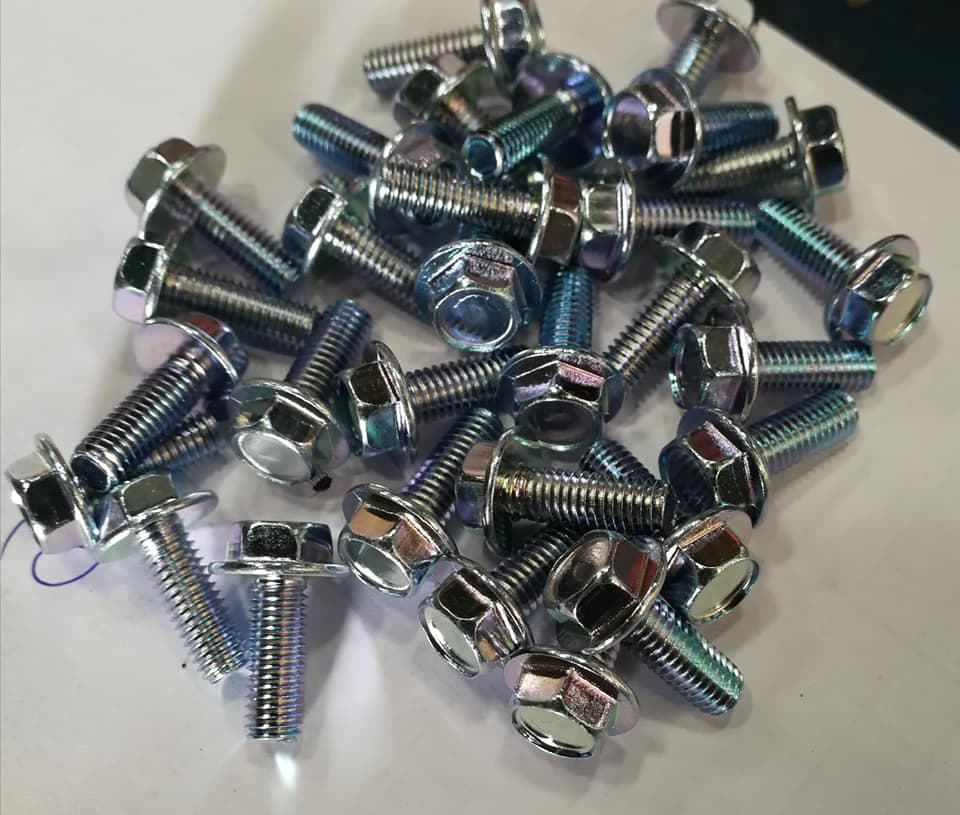
When you specify zinc plating, the chromate passivation layer on top does two jobs at once: it boosts corrosion resistance and gives the part its colour. For decades that passivation relied on hexavalent chromium (Cr6+). Today the industry has moved to trivalent chromium (Cr3+) — and if you supply automotive, electronics or export customers, the difference is not optional.
The problem with Cr6+ is health and compliance. Hexavalent chromium is a confirmed human carcinogen and an environmental hazard, restricted by the EU RoHS directive, the REACH regulation and the End-of-Life Vehicle (ELV) directive. Parts finished with Cr6+ can be stopped at customs or rejected by a customer's incoming-quality team, and the spent chemistry is hazardous and expensive to treat.
Cr3+ uses chromium in its trivalent form, which is far less toxic. Modern Cr3+ passivation — especially paired with a top-coat sealer — delivers corrosion resistance comparable to the old Cr6+ finishes. Blue, yellow, black and olive colours are all achievable with Cr3+ chemistry, so you rarely have to compromise on appearance.
Does Cr3+ protect as well? For the vast majority of fastener jobs, yes. A well-controlled Cr3+ blue typically reaches 72–96 hours to white rust in a salt-spray test, and sealed or black systems go considerably higher. The deciding factor is process control and the right sealer — not the valence of the chromium on its own.
Why it matters for small parts: screws, nuts and bolts are high-volume items that feed regulated assemblies, and a single non-compliant coating can fail an audit for the whole product. Moving to Cr3+ removes that risk, future-proofs your exports, and keeps your documentation clean.
How to switch: ask your plater to confirm a Cr6-free (Cr3+) process and to provide salt-spray and RoHS documentation per lot. If a part needs a specific salt-spray rating, specify it up front so the right chromate and sealer are chosen.
V.S. Heat Treatment migrated entirely to Cr3+ trivalent zinc in 2020. Every barrel and rack zinc job we run is Cr6-free and RoHS-ready, with test and process documentation available on request. If you are still receiving Cr6+ parts from another source, call +66 89 391 9662 and our team will help you switch cleanly.